
February 2, 2026
.webp)
Boost Flexibility with Static Stretching Exercises
Improve flexibility and prevent injury with practical static stretching exercises. Perfect for farmers, desk workers, and active lifestyles.
Practical Skills
minutes
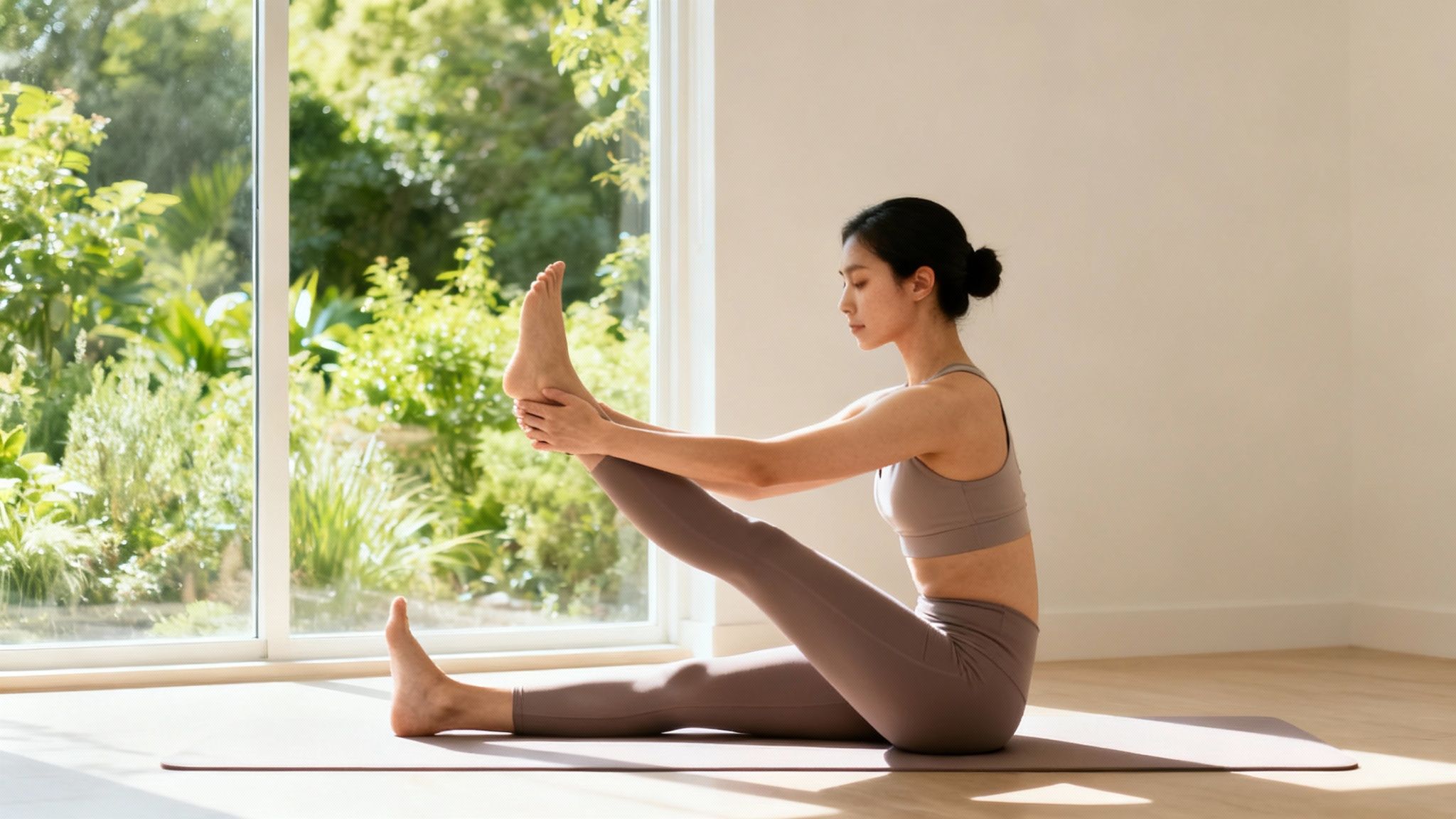
Static stretching is all about holding a particular stretch for a short time, usually somewhere between 15 and 30 seconds. The goal is to gently lengthen your muscles, improving your overall flexibility. It’s a beautifully simple way to ease muscle tension and improve your range of motion after a big day on the tools or a long session at the gym.
Unlocking a More Flexible You with Static Stretching

Feeling a bit stiff and sore after a long day? It’s a familiar feeling for so many of us. Whether you're a Kiwi farmer with a nagging back after hours in the paddock or an office worker whose shoulders are screaming from being hunched over a keyboard, your body is sending you a clear signal: it needs a release.
This is where the tried-and-true practice of static stretching really shines. By taking the time to gently lengthen your muscles, you can start to undo the daily toll our modern lives take on our bodies.
The idea is straightforward. You ease into a position that creates a mild pulling sensation in the muscle you're targeting, and then you just hold it steady. This simple act helps calm your nervous system, encouraging the muscle fibres to relax and, over time, elongate. It's a cornerstone of keeping your body in good nick.
The Real-World Benefits for Kiwis
Bringing a consistent static stretching routine into your life offers some seriously practical advantages that go way beyond just feeling a bit better. These are benefits you’ll notice in your day-to-day life, no matter what you do.
- Improved Flexibility and Range of Motion: When you stretch consistently, your joints can move through their full, intended range. This makes everyday movements like lifting a box, bending down to tie your shoes, or reaching for something on the top shelf much easier and, importantly, safer.
- Reduced Muscle Tension and Soreness: Holding a good stretch helps boost blood flow to your muscles. This can do wonders for relieving that feeling of tightness and can even lessen the muscle soreness many active Kiwis know all too well after a workout or a big day of physical work.
- Better Posture and Alignment: By loosening up tight muscles in key areas like your chest, shoulders, and hips, static stretching can help correct those postural imbalances that come from hours of sitting or repetitive physical labour.
For anyone serious about their physical wellbeing and performance, static stretching is a non-negotiable part of the equation and is often listed among the best recovery tools for athletes.
Static stretching isn't about forcing your body into pretzel-like shapes. It's about listening to your muscles, breathing deeply, and giving them the gentle release they need to recover and function optimally.
Here at Prac Skills, we're all about providing educational content that supports Kiwis across various fields. It's important to be clear that we are a private provider of practical training and not an NZQA registered college. Our mission is to share practical insights, like the tips in our guides on achieving good health in NZ, to help you build a more balanced and resilient lifestyle.
The Science Behind Safe Static Stretching
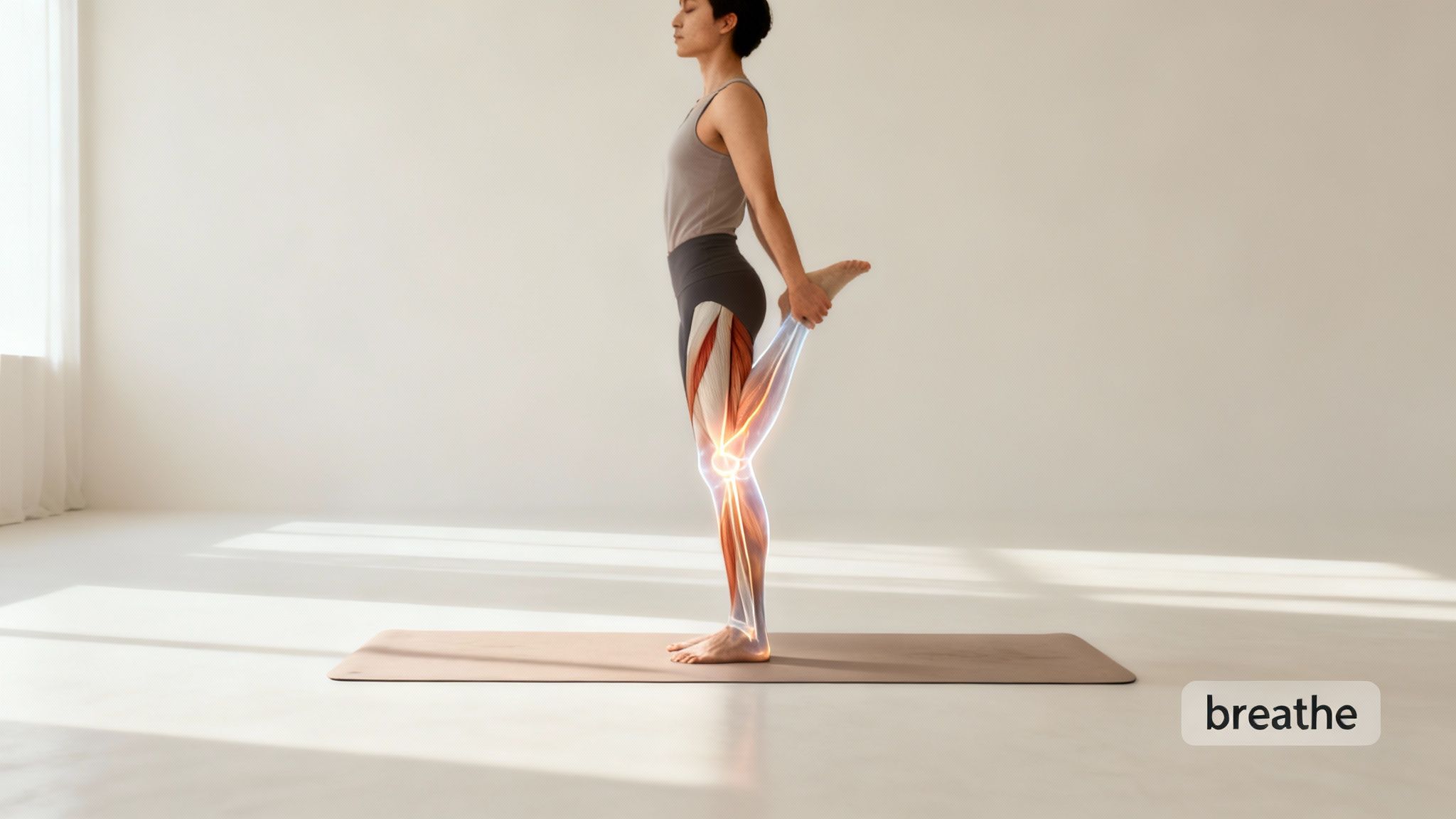
To get the most out of your static stretching, it helps to understand what’s actually happening inside your body. When you hold a stretch, you're doing more than just pulling on a muscle; you're having a conversation with your nervous system. Getting this dialogue right is the key to unlocking greater flexibility safely.
Think of it as a gentle negotiation. Your muscles and tendons are packed with tiny sensors, but the real hero here is the Golgi tendon organ (GTO). When you hold a stretch for more than a few seconds, this sensor picks up on the sustained tension.
In response, it sends a signal up to your spinal cord, which then tells the muscle to chill out and relax. This clever protective reflex, known as autogenic inhibition, is your body’s built-in safety mechanism to stop you from overdoing it. It’s exactly why holding a stretch for 15-30 seconds is the sweet spot—it gives the GTO enough time to do its job and coax the muscle into letting go.
Warming Up and Breathing Correctly
Jumping straight into a deep stretch with cold muscles is a recipe for disaster. Your muscles are a bit like rubber bands; they're much more pliable and forgiving when they're warm. A cold rubber band snaps under pressure, and your muscles aren't much different.
Before you even think about static stretching, get your body moving for five to ten minutes with some light cardio. A brisk walk, a gentle jog, or even some dynamic movements like arm circles and leg swings will do the trick. The goal is simply to get the blood flowing and raise your muscle temperature, prepping them for what's to come.
Breathing is your secret weapon here. Take a deep breath in as you get ready, and then as you ease into the stretch, let it all out with a slow, complete exhale. Keep breathing slowly and deliberately while you hold the position, imagining the tension melting away with every breath out. This simple act calms your nervous system and helps deepen the relaxation response triggered by the GTO.
The feeling you’re chasing is a gentle, comfortable pull—never a sharp or stabbing pain. Pain is a very clear signal from your body to back off immediately. Pushing through it doesn't just cancel out the benefits; it puts you at serious risk of a muscle strain or tear.
Common Pitfalls to Avoid
Knowing what not to do is just as crucial as having the right technique. A few common mistakes can easily undermine your efforts and, worse, lead to injury.
- Bouncing (Ballistic Stretching): Whatever you do, don't bounce. Those jerky movements can trigger a different reflex that causes the muscle to contract suddenly to protect itself—the exact opposite of what you're trying to achieve.
- Stretching an Injured Muscle: If you're dealing with an acute injury like a muscle tear or strain, static stretching is off the cards. It can make things worse. Let the area heal properly before you gently reintroduce stretching.
- Forgetting Consistency: Flexibility isn't a one-and-done deal. Showing up regularly is far more important than how hard you push in any single session. In fact, groundbreaking research from AUT University's Health and Rehabilitation Research Institute right here in Auckland backs this up. They found that after an intensive six-week programme, participants could maintain their hamstring flexibility with just two to three stretching sessions per week. This is great news for busy Kiwis—you don't need a daily marathon; regular, focused effort is enough to hold onto your hard-earned gains. You can explore more about these NZ-specific findings and what they mean for creating an efficient routine.
To keep things simple, here’s a quick reference guide to ensure your stretching practice is always safe and effective.
Static Stretching Do’s and Don’ts
This table is your go-to cheat sheet for performing static stretches the right way to get the maximum benefit without the risk.
Stick to these fundamentals, and you'll be well on your way to building lasting flexibility safely.
Essential Static Stretching Exercises
Alright, now that we've covered the basics of stretching safely, let's get into the good stuff. These six stretches are my go-to recommendations because they target the major muscle groups that get tight from everyday life—whether you're out on the farm, stuck behind a desk, or hitting the trails on the weekend.
As you move through these, concentrate on smooth, controlled movements and remember to breathe deeply.
The golden rule here is simple: you’re looking for a feeling of gentle tension, not sharp pain. Think of each stretch as a moment to let go, giving your muscles a chance to lengthen and relax. Aim to hold each position for 15–30 seconds on each side.
Classic Hamstring Hold
Your hamstrings, those big muscles running down the back of your thighs, are notorious for getting tight, especially from long periods of sitting. This classic move is one of the best ways to give them some relief.
Start by sitting on the floor with one leg straight out in front of you. Bend your other leg so the sole of your foot rests against your inner thigh. Now, hinge forward gently from your hips, keeping your back straight, and reach for your extended foot. Stop when you feel a comfortable pull.
A common mistake is rounding the back just to touch your toes. Forget about that. The real goal is to bring your chest closer to your thigh—that’s how you know you’re properly isolating the hamstring.
Standing Quadriceps Stretch
This is a must-do for your quads, the powerful muscles at the front of your thigh that do a lot of heavy lifting when you walk, climb, or lift anything.
Stand tall, using a wall or a chair for a bit of balance if you need it. Grab your right ankle and gently guide your heel up and back towards your glutes. Try to keep your knees close together and your body upright to really feel that stretch all along the front of your thigh.
You'll know you're nailing it when you feel a satisfying lengthening sensation without any pinching in your knee. For any weekend warrior tackling the Tongariro Crossing, this stretch is an absolute lifesaver for recovery.
Doorway Chest Opener
Let's face it, hours spent hunched over a desk or gripping a steering wheel can leave your chest muscles tight and your shoulders rounded forward. This ridiculously simple stretch uses a doorway to help reverse all that.
Stand in an open doorway and place your forearms on the frame. Your elbows should be bent at a 90-degree angle, sitting just a little below shoulder height. Step one foot forward through the doorway until you feel a gentle opening across your chest and the front of your shoulders.
Here’s a top tip for all you office workers: set an hourly reminder to do this stretch. It takes less than a minute but is incredibly effective at fighting the 'desk slump' and easing tension in your upper back.
Upper Back Release
Often called the Cat-Cow in yoga circles, this one is brilliant for releasing tension right along your spine. It's especially good for anyone doing physical work, like farmers who spend their days lifting and bending.
Get onto your hands and knees, making sure your wrists are under your shoulders and your knees are under your hips. As you breathe out, slowly round your spine up towards the ceiling, tucking your chin to your chest. Hold this "cat" position for a moment, then breathe in as you arch your back, letting your belly drop and lifting your head to look forward into the "cow" position.
Standing Calf Lengthener
Tight calves can cause a cascade of issues, from foot pain to knee problems. That makes this stretch non-negotiable for runners, walkers, or anyone who spends a lot of time on their feet.
Face a wall and place your hands on it for support. Step one foot back, keeping the leg straight and your heel firmly on the floor. Now, gently lean forward by bending your front knee until you feel the stretch in the calf of your back leg.
Want to go a little deeper? Slightly bend the knee of your back leg while keeping the heel down. You’ll feel this variation lower down in the calf, targeting a different muscle (the soleus). For more tips on building skills like this, have a look through our articles on developing practical skills.
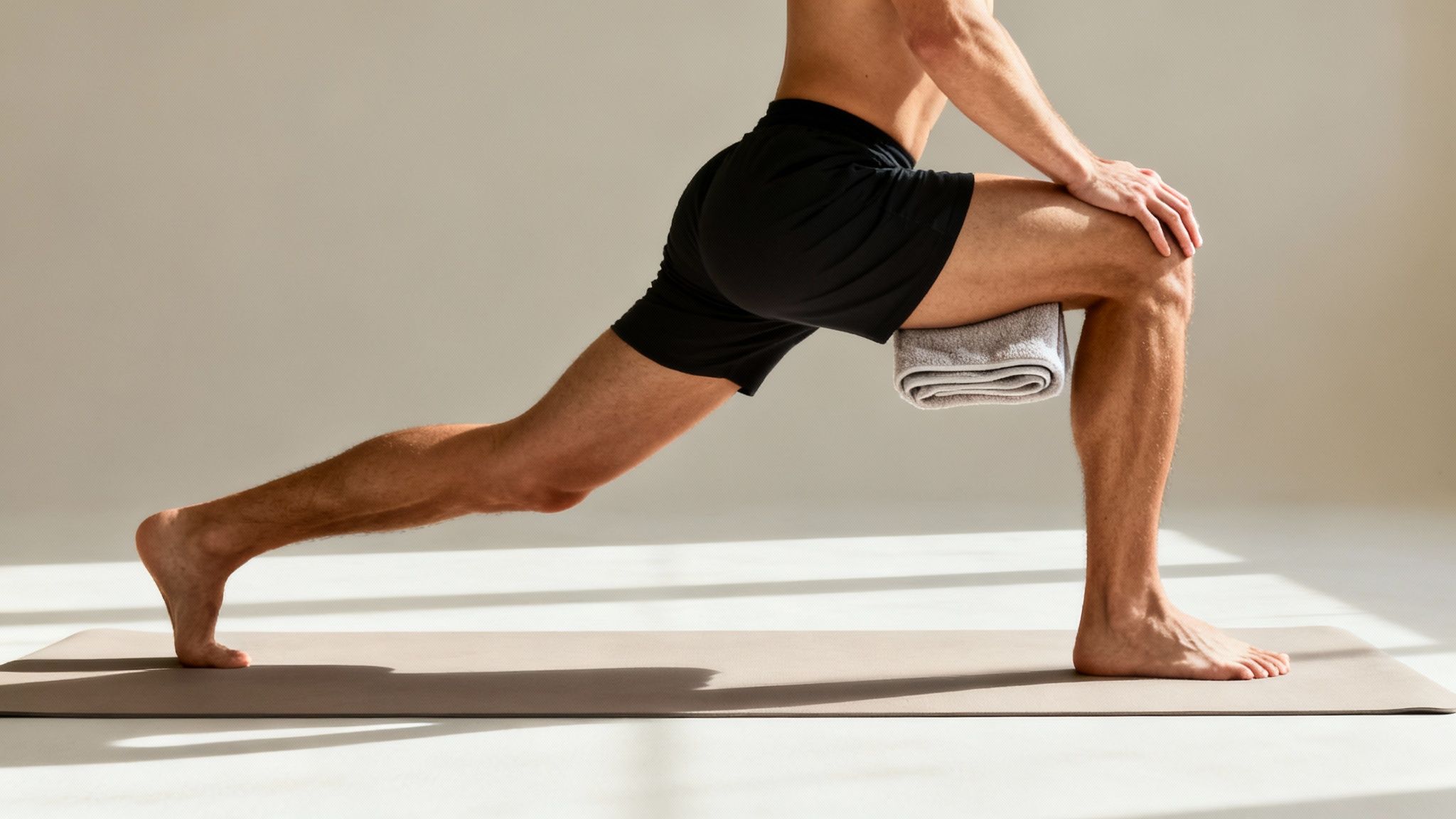
Kneeling Hip Flexor Stretch
The muscles at the front of your hips, your hip flexors, get incredibly short and tight from too much sitting, which is a common cause of lower back pain. This stretch gets right to the heart of the problem.
Kneel on one knee—pop a towel underneath if it’s more comfortable. Place your other foot flat on the floor in front of you, knee bent. With your back straight, gently push your hips forward until you feel a good stretch in the front of your hip and thigh on the kneeling side.
Tailored Static Stretching Routines

Knowing a few static stretches is one thing, but building them into a practical routine is what really delivers lasting benefits. The best routine is always one that fits your life and targets the specific demands your day places on your body.
With that in mind, we've put together three simple mini-programmes designed for common Kiwi lifestyles. Each one is a quick, effective reset you can do in just a few minutes.
The Farmer's Reset
Long hours on the farm, from lifting heavy loads to navigating uneven ground, put a huge strain on the lower back, hips, and shoulders. This routine is designed to counteract that daily grind.
- Upper Back Release: Start on your hands and knees. Alternate between arching your back up towards the ceiling (like an angry cat) and letting your belly drop towards the floor. Go through 5-8 cycles to release that built-up spinal tension.
- Kneeling Hip Flexor Stretch: Kneel on one knee, placing your other foot forward. Gently push your hips forward until you feel a good stretch in the front of your hip. Hold for 20–30 seconds on each side.
- Doorway Chest Opener: Find a doorway and stand with your forearms on the frame. Step forward to feel a broad stretch across your chest, undoing all that rounding from lifting. Hold it for 30 seconds.
For many in the farming community, building muscle resilience is just as vital as flexibility. Local research from Auckland University of Technology (AUT) found that combining long-duration static stretching with resistance training produced some remarkable results in calf muscles. In their study, range of motion shot up by 25.9% and muscle thickness grew by 23.4%. It goes to show that pairing static holds with strength work can significantly boost muscle adaptability—a huge asset for anyone working on challenging terrain. You can read the full research about these findings.
The Office De-Desk
Sitting for hours on end usually leads to a predictable cluster of issues: a tight neck, rounded shoulders, and sore wrists. This routine helps you hit the reset button right at your desk.
- Neck Release: Gently tilt your ear towards your shoulder, holding for 15 seconds on each side. Follow that by tucking your chin to your chest for another 15 seconds. Easy.
- Seated Shoulder Stretch: Bring one arm across your chest and use your other arm to gently pull it closer. You should feel a nice release in your shoulder. Hold for 20 seconds per arm.
- Wrist Extensor Stretch: Extend one arm with your palm facing down. Use your other hand to gently pull your fingers back towards your body. Hold for 20 seconds on each wrist.
This short sequence can make a massive difference to your workday comfort. If you're interested in more ways to improve your setup, check out our guide on creating a better working from home environment.
The Weekend Warrior Cool-Down
After a rewarding hike, a tough game of rugby, or a long run, your legs and core deserve some attention. This cool-down focuses on the muscles that just worked their hardest for you.
- Standing Hamstring Hold: Place one heel on a low step or kerb. Hinge at your hips—keeping your back straight—and lean forward until you feel the stretch. Hold for 30 seconds per leg.
- Standing Quadriceps Stretch: Use a wall for balance if you need it. Grab one ankle and pull your heel towards your glute, making sure to keep your knees together. Hold for 30 seconds on each side.
- Classic Calf Lengthener: Face a wall, step one foot back, and press that heel firmly into the ground until you feel the stretch right up your calf. Hold for 30 seconds per leg.
When And How Often To Stretch
Timing is everything, especially when it comes to static stretching. One of the biggest questions I hear is whether to stretch before or after a workout. You’ve probably seen athletes holding long stretches before a game, but modern advice actually points in a different direction.
The best time to get into your static stretches is when your muscles are already warm. This makes it a perfect activity for your post-workout cool-down or even as a dedicated flexibility session on its own. After you’ve been moving, your muscles are pliable and full of blood, which creates the ideal conditions for a safe, effective stretch that helps lengthen muscle fibres and kick-start the recovery process.
Pre-Workout Versus Post-Workout Stretching
Stretching cold muscles is a bit risky and can even temporarily reduce your power output right before you need it most. Instead, your pre-workout routine should be all about dynamic movements—think leg swings, arm circles, or high knees. These active warm-ups get your body ready for action by increasing blood flow and firing up the nervous system.
Getting your pre-exercise prep right is crucial. If you're looking for some solid ideas, this guide on how to warm up before exercise is a great resource for maximising performance and preventing injuries.
Static stretching really comes into its own after your workout. As your heart rate settles, these slow, deliberate holds guide your muscles back to a relaxed state. This can help shift lactic acid out of the muscles, potentially easing that next-day soreness and setting you up for a better session next time.
A key takeaway for Kiwi athletes and manual workers is that static stretching, when timed correctly, doesn't have to hurt performance. In fact, specific New Zealand-based research from the University of Waikato found no negative impact on athletic performance when static stretches were included in a dynamic warm-up. This counters some older global data, showing that a well-structured routine is key. A related AUT-led trial even saw a static stretching group significantly increase their vertical jump. Discover more insights from this NZ-based research.
Finding Your Stretching Rhythm
So, how often should you be doing these static stretches? The simple answer is that consistency is far more important than intensity. You don't need to block out hours each week to see real, tangible progress.
For steady flexibility gains, just aim for 3 to 5 sessions per week. In each session, hold your chosen stretches for 15–30 seconds, focusing on the major muscle groups you've just worked or any areas that feel tight from your daily grind.
Always listen to your body. If a muscle feels particularly sore or strained, give it an extra day of rest. Weaving these short, focused sessions into your weekly routine is a sustainable way to build and maintain a healthier, more mobile body.
Common Questions About Static Stretching
Even with the best intentions, it's natural to have a few lingering questions when adding something new to your routine. Let's clear up some common queries about static stretching so you can move forward with total confidence.
Is It Okay to Feel Pain When Stretching?
Absolutely not. You should feel a gentle pull or tension in the muscle, but never sharp, shooting, or intense pain. Pain is your body’s clear signal to ease off immediately.
Pushing through genuine pain can lead to muscle tears or other injuries. If you feel anything sharp, back out of the stretch slightly until you’re back in that comfortable tension zone. Remember, the goal is to relax the muscle, not force it into submission.
Can I Do Static Stretching Every Day?
Yes, performing gentle static stretches daily is perfectly safe and can be fantastic for relieving tension and maintaining flexibility, especially if you have a sedentary job. It's a great way to counteract the effects of sitting for long periods.
However, for maintaining flexibility gains, you don't necessarily need to stretch every single day. As highlighted by AUT research, you can effectively maintain your range of motion with just 2–3 focused sessions per week. It's all about listening to your body and creating a sustainable routine that fits your schedule without overdoing it.
The most effective stretching routine is the one you can stick with consistently. A few dedicated sessions each week will deliver far better long-term results than one intense, sporadic effort.
How Long Until I See Flexibility Improvements?
This is a classic "it depends" scenario, as flexibility gains vary based on your starting point, consistency, and individual body type.
That said, with a consistent routine of 3–5 sessions per week, most people begin to notice a tangible improvement in their range of motion within just 2 to 4 weeks. Patience and steady practice are your best friends here. Just focus on good form and regular sessions, and the results will follow.
Ready to build practical skills for your career or passion? Explore our range of online courses at Prac Skills NZ and start learning today. Learn more at pracskills.co.nz.