
February 2, 2026
.webp)
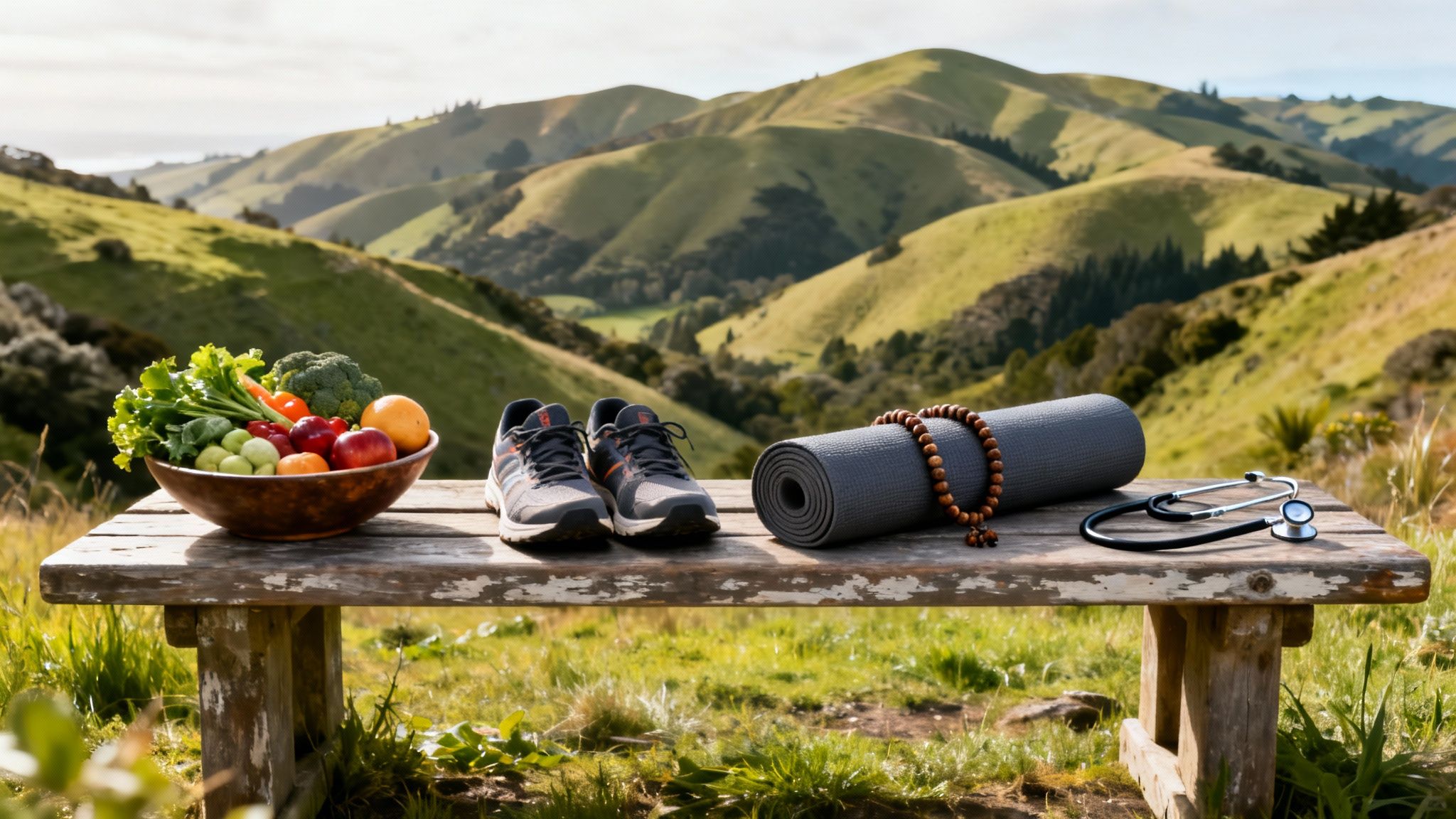
A Practical Guide to Achieving Good Health NZ
Discover what good health NZ truly means. This guide offers practical tips for wellness, navigating healthcare, and embracing a holistic Kiwi lifestyle.
Practical Skills
minutes
When we talk about good health in NZ, it’s easy to think just about physical fitness—eating right, getting enough exercise, and avoiding the flu. But here in Aotearoa, the real picture of wellness is much bigger and more connected than that. It’s about creating a life that feels balanced, vibrant, and whole.
What Good Health Really Means in New Zealand
For many Kiwis, true wellness is about looking after not just our bodies, but our minds, our relationships, and our sense of purpose as well.
This holistic view is perfectly captured in the Māori concept of hauora. It’s a framework that sees our well-being as a complete ecosystem, where every part of our lives supports the others.
Think of it like building a strong wharenui (a meeting house). To stand tall and provide shelter, a wharenui needs four solid, well-maintained walls. In the same way, our personal health is built on four essential pillars.
To bring this concept to life, here’s a breakdown of the four pillars of hauora.
The Four Pillars of Hauora: A NZ Model for Health
If one of these pillars is a bit wobbly, the whole structure can feel unstable. This is why true good health in NZ is all about finding that balance. You might be running marathons, but if you’re feeling stressed or disconnected from others, your overall well-being takes a hit.
A Kiwi Perspective on Wellness
This balanced approach reminds us that everything is linked. For example, understanding how your teeth can affect your overall health is a perfect, practical example of how one small part of our physical health can have a massive knock-on effect.
Hauora teaches us that well-being isn't just a set of numbers on a medical chart. It’s that feeling of wholeness that comes from nurturing every part of our lives—from the kai we eat to the company we keep.
This idea seems to resonate across the country. New Zealand has some impressive health outcomes, with an average life expectancy of 82 years, which is nearly a whole year above the OECD average. Better yet, a huge 86.6% of Kiwi adults say their own health is good, very good, or even excellent, showing a strong sense of personal wellness nationwide.
Building a Healthy Kiwi Lifestyle Day by Day
Good health in Aotearoa isn't something you achieve overnight with a dramatic overhaul. It’s far more about the small, consistent habits we weave into our daily lives—the little choices that build a solid foundation for feeling good long-term. Think of it as laying bricks, one by one. These daily decisions around kai, movement, sleep, and headspace are the real cornerstones of a healthy Kiwi life.
A fantastic place to start is with what’s on our plates. Fuelling our bodies with fresh, local kai is one of the most powerful steps we can take. But when we look at the national stats, it's a bit of a mixed bag. Many of us are doing okay with fruit, but our veggie intake could use a serious boost.
The New Zealand Health Survey found that about half of us (46.8%) manage to eat the recommended two servings of fruit each day. That's a decent start. But when it comes to vegetables, very few Kiwis are hitting the five-plus servings needed for optimal health.
It's not about forcing yourself to eat a mountain of broccoli tomorrow. It's about small wins. Maybe you add an extra handful of spinach to your smoothie or swap your usual chippies for some carrot sticks. These little daily victories really do add up over time. Progress, not perfection.
A brilliant, and rewarding, way to get more veggies into your diet is to grow your own. If that sounds like you, getting some practical skills in home food gardening could be a great way to get your hands dirty and your plate full.
Embracing Movement in Our Natural Playground
Let's be honest, we're spoilt for choice here in New Zealand. Our stunning landscapes offer the perfect, and free, backdrop for getting active. Good health doesn't have to mean slogging it out in a gym; it can be as simple as stepping outside your door.
The real secret is finding a type of movement you actually enjoy, something that doesn't feel like a chore. That's how you make it stick.
Daily Walks: Never underestimate the power of a brisk 30-minute walk. It’s one of the most effective and accessible ways to get your body moving, whether it's around the block or a local park.
Weekend Adventures: Head out to a local bush track or beach. A weekend tramp or bike ride isn't just great for your body; it's a massive boost for your mental health, too.
Active Hobbies: Think about things like gardening, getting a kayak out on the water, or joining a local sports team. Making fitness social and fun is a game-changer.
This approach ties directly back to taha tinana (physical well-being), strengthening our bodies and giving us the energy we need for daily life.
The Non-Negotiables: Sleep and Headspace
Just as vital as what we eat and how we move are the restorative practices of sleep and managing stress. Think of quality sleep as your body's nightly repair crew and your mind's chance to file away the day's events. Making sure you get 7-9 hours of solid, uninterrupted sleep is one of the kindest things you can do for your overall health.
In the same way, we need to actively look after our mental well-being, our taha hinengaro. This isn't about sitting in silent meditation for an hour (unless that's your thing!). It can be as simple as taking five minutes to just breathe deeply, having a proper yarn with a mate, or losing yourself in a hobby you love. These small pockets of calm help us manage stress and build a more resilient, balanced mind.
How to Navigate the NZ Healthcare System
Knowing your way around the healthcare system is a huge part of staying well. Let's break down how to access care in New Zealand so you can navigate it with confidence. The system is set up to keep Kiwis in good health, but a little inside knowledge makes all the difference.
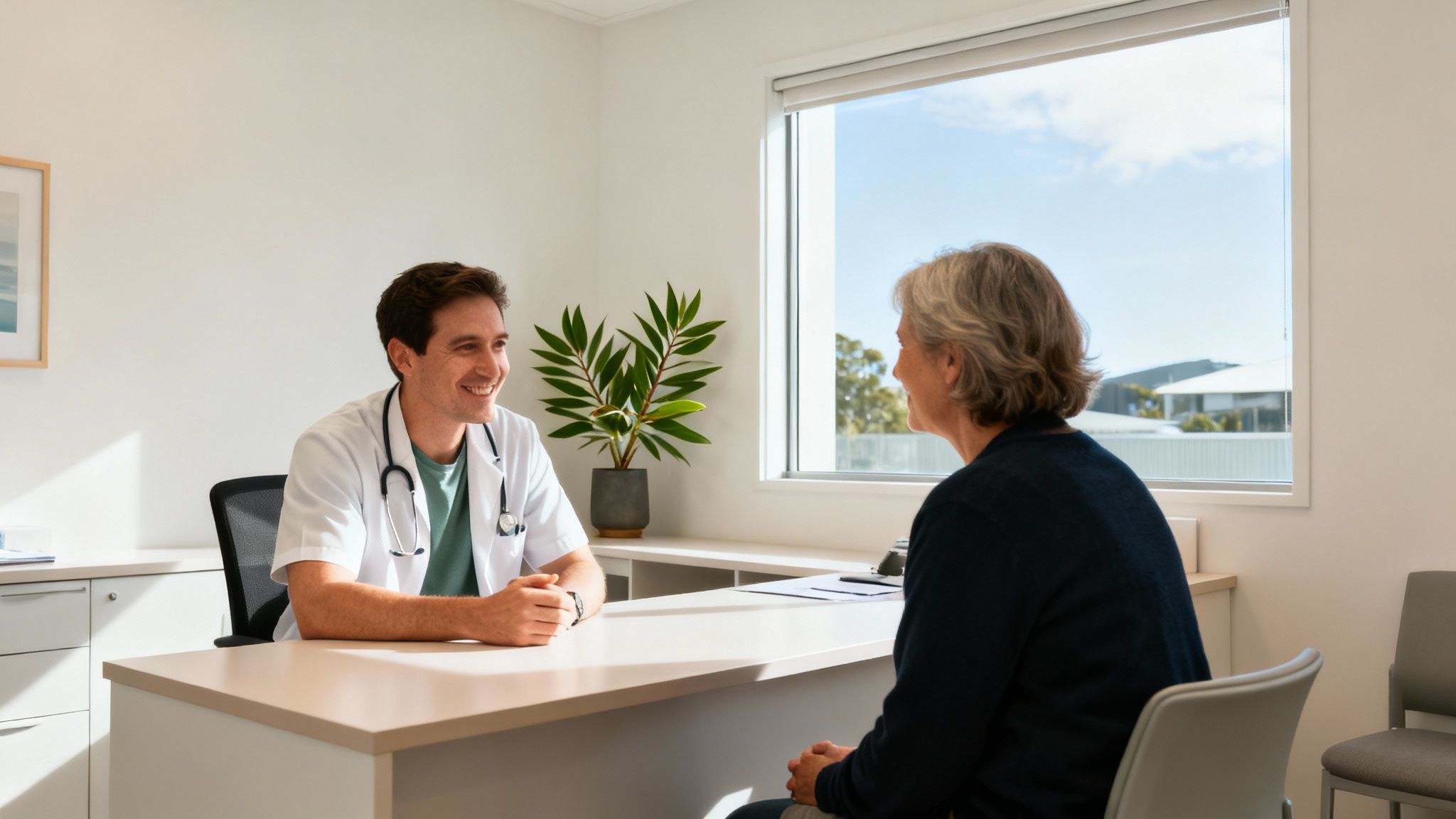
Think of your General Practitioner (GP) as your primary health partner. They're your first stop for almost any non-emergency health concern, whether you're managing a long-term condition or just need a flu shot. Honestly, building a good relationship with a GP you trust is one of the smartest things you can do for your health.
Finding and Enrolling with a GP
Your journey starts by finding a local medical practice and enrolling as a patient. Why enrol? Because it almost always means you'll pay less for appointments and prescriptions.
Here’s how you can get started:
Search for Local Clinics: Use a website like Healthpoint NZ to find doctors in your area. You can even see if they're taking on new patients.
Make Contact: Ring a few clinics to ask about their enrolment process, what their fees are, and the services they provide.
Complete the Paperwork: Once you've picked a practice, you’ll need to fill out an enrolment form. You'll typically need to show some ID, like your passport or birth certificate.
Getting this first step sorted is key. Having a regular GP means there's someone who knows your health history and can offer consistent, personalised care when you need it.
Understanding Your Visit and Referrals
When you see your GP, they'll assess what's going on. If you need more specialised care—say, from a dermatologist or a cardiologist—they will write you a referral. This referral is basically your ticket to accessing more advanced care within the health system.
Navigating healthcare can feel complex, but it boils down to this: your GP is your trusted guide. They are the ones who connect you to the wider network of services, ensuring you get the right care at the right time.
Like any system, New Zealand's has its strengths and its challenges. While 63% of Kiwis feel good about the availability of quality care, the system can definitely feel the strain at times. On the flip side, there's a strong investment in diagnostic tech, with 65 scanners per million people helping to provide clear diagnoses. You can dig deeper into these numbers over at Te Whatu Ora.
Public vs Private Healthcare Options
In New Zealand, you have a choice between public and private healthcare. The public system is excellent, especially for emergencies and serious conditions, but you might find yourself on a waiting list for non-urgent procedures.
Public System: This is funded by the government and provides care to all residents. Access to specialists or elective surgeries is prioritised based on need, which can sometimes mean longer waits.
Private System: You can access this through health insurance or by paying for it yourself. The main advantage is often faster access to specialists and elective surgeries.
A lot of Kiwis opt for private health insurance to supplement the public system, giving them a bit more flexibility and choice. It's important to clarify that our online courses are designed for personal interest and practical skill development, and are not part of any formal, NZQA-accredited qualification.
Embracing Diverse Cultural Views on Wellness
In Aotearoa, the idea of ‘good health’ isn’t a simple, one-size-fits-all concept. Far from it. True wellness is something deeply personal, shaped by our culture, our community, and our connection to the world around us. To build a healthier New Zealand for everyone, we have to embrace these different perspectives.
This means looking beyond a purely clinical view of health. It’s about acknowledging that for many Kiwis, well-being is a rich tapestry woven with the threads of identity, spirituality, and collective strength.
The Hauora Māori Worldview
For Māori, health is absolutely inseparable from identity and connection. We've touched on the four pillars of hauora, but its foundations run even deeper, grounded in the powerful concepts of whānau (family and community) and whenua (land).
Connection to Whānau: This is about so much more than your immediate family. It’s the entire network of relationships that gives you support, identity, and a real sense of belonging. A strong whānau is a cornerstone of individual well-being.
Connection to Whenua: The land isn't just a place to live; it's a source of life, identity, and spiritual grounding. This bond is fundamental to Māori health, providing sustenance and a sense of place.
When these connections are strong, an individual's hauora can flourish. It’s a perspective that shows us true health is about nurturing our relationships with people and place, not just tending to our physical bodies.
Many traditional practices, like using native plants for healing (rongoā), reflect this deep understanding of the environment. If you're interested in this area, you might find value in learning more about the principles behind our Certificate in Herbalism course.
The Pasifika Fonofale Model
Similarly, Pasifika communities in New Zealand view health through a holistic and collective lens. A widely recognised framework for this is the Fonofale model, which uses the powerful metaphor of a fale, or house, to represent a person’s well-being.
The Fonofale model illustrates that, like a house, our health needs a strong foundation and sturdy posts to remain standing. It is a beautiful representation of how culture, family, and spirituality provide the shelter for our physical and mental health.
The model is built on several key elements:
The Foundation (Fale): This represents the family, which is the absolute base for all well-being.
The Roof (Fale): This symbolises the cultural values and beliefs that shelter and protect the family unit.
The Posts (Pou): These connect the foundation and the roof, representing the spiritual, physical, mental, and other dimensions of health.
Just like the hauora model, the Fonofale framework makes it clear that no single part of our health exists in a vacuum. Everything is interconnected, showing exactly why culturally-aware support that respects family and community values is so critical for achieving good health in NZ.
Overcoming Common Roadblocks to Good Health
Let's be honest: achieving good health in NZ isn’t always a straight line. We all know what we should be doing, but real life has a funny way of getting in the middle of our best intentions. It’s important to talk about the common challenges Kiwis face so we can find practical, realistic ways to navigate them.
From the weekly grocery bill to finding a spare moment in a jam-packed schedule, the pressures can feel overwhelming. These aren't personal failings; they are shared struggles. By understanding them, we can start to build smarter strategies to keep our well-being on track.
The Financial Squeeze on Healthy Choices
One of the biggest hurdles for many of us right now is the rising cost of living. When the budget is tight, filling the trolley with fresh, nutritious food can feel like a luxury. It’s a tough reality that processed, less healthy options are often cheaper and more convenient, making it a difficult choice for many families.
This financial pressure can make healthy eating seem out of reach, creating a lot of stress around one of the most fundamental parts of our well-being. It’s a major barrier that calls for some clever planning.
Here are a few ideas to make healthy eating a bit more affordable:
Shop Seasonally: Fruits and vegetables are always cheaper when they’re in season. Have a look at what’s abundant at your local market or supermarket.
Embrace Frozen and Canned: Don't overlook the freezer aisle! Frozen veggies and canned legumes (like chickpeas and lentils) are just as nutritious as fresh versions but are much easier on the wallet and last longer.
Plan Your Meals: A little planning goes a seriously long way. Knowing what you’ll eat for the week helps you buy only what you need, cutting down on food waste and those pricey impulse buys.
Navigating Access and Time Pressures
Beyond cost, simply getting to services and finding the time for self-care can be a huge challenge. For Kiwis living in rural or more isolated areas, seeing a GP or specialist can mean significant travel and time off work. Even in our cities, long wait times for appointments are a common frustration.
This is all made harder by the feeling that there are never enough hours in the day. Juggling work, family, and everything else can push your own health right to the bottom of the priority list. This is where setting firm boundaries becomes an essential skill for protecting your well-being. Learning about the empowering magic of saying no can be a powerful first step in taking back your time and energy.
Acknowledging these barriers isn't about making excuses. It's about being honest about the landscape so we can find clever, compassionate, and sustainable ways to prioritise our health despite the challenges.
The Silent Struggle with Mental Health
Finally, we need to have a frank conversation about mental health. While awareness is definitely growing, a stubborn stigma can still make it incredibly difficult for people to reach out when they need help. Too many Kiwis struggle in silence, worried about being judged or simply not knowing where to turn.
This silence is one of the most dangerous roadblocks to achieving holistic good health in NZ. Admitting you're not okay is a sign of immense strength, not weakness. It's the first and most important step toward getting the support you deserve and finding a path back to feeling well.
Your Action Plan for Better Health Today
Feeling inspired to take charge of your health here in NZ? Fantastic. Let's channel that motivation into real, tangible action. Lasting wellbeing isn’t built on grand, sweeping changes; it’s the result of small, sustainable steps taken every day.
Think of this simple action plan as a starting point. It takes the key ideas we’ve talked about and breaks them down into a practical roadmap for building healthy habits that actually stick, helping you create a more vibrant life one choice at a time.
Simple First Steps to Take This Week
Ready to get started? The goal is progress, not perfection. Just pick one or two of these to focus on this week and see how you go.
Schedule a GP Check-up: Get on the phone and book a visit with your doctor. It’s a crucial first move to get a clear picture of your health baseline and tackle any underlying issues before they become bigger problems.
Explore a New Local Park: Find a nearby green space you’ve never been to and go for a walk. A simple change of scenery can make getting active feel less like a chore and more like a small adventure.
Try One New Healthy Recipe: This week, commit to cooking just one nutritious meal from scratch. Make a point of using colourful, seasonal Kiwi produce to really pack in the flavour and nutrients.
Connect with a Friend: Make a concrete plan to catch up with someone you care about. It could be for a coffee, a walk, or even just a quick phone call. Looking after your social connections is just as important as anything else.
Remember, the journey to better health isn't a race to the finish line. It's about consistently showing up for yourself, day in and day out, in small but meaningful ways. Every positive choice is a win.
A great way to stay on top of things proactively is to look into options for at-home health testing for longevity.
Your Questions, Answered
Got a few questions swirling around about health and wellness here in Aotearoa? You're not alone. Let's tackle some of the most common ones to give you clear, straightforward answers.
How Do I Find a Good GP in My Area?
First things first, jump onto the Healthpoint website. It’s a fantastic resource that lists local doctors and clinics and even tells you if they’re taking on new patients.
It's always a good plan to call a couple of local practices to double-check their enrolment status and ask about their fees. Finding a GP you genuinely feel comfortable with is a massive step towards looking after your long-term good health in NZ.
What Free Health Services Are Available in NZ?
While most of us pay a fee for a standard GP visit, there are quite a few essential services that are publicly funded. This safety net covers things like national health screenings (think breast and cervical screening), routine immunisations for kids, and, of course, emergency care at public hospitals.
And for those moments when you need immediate mental health support, you can call or text 1737 any time of day to chat with a trained counsellor, completely free.
Navigating the health system can feel a bit tricky at times, but it's good to remember these publicly funded services are there to provide a crucial safety net for every Kiwi's well-being.
Where Can I Find Reliable Health Information Online for Kiwis?
With so much information out there, it’s vital to stick to sources you can trust. For reliable, NZ-specific advice, Health Navigator New Zealand is an excellent, government-endorsed starting point.
The Ministry of Health and Te Whatu Ora websites are also goldmines for official guidelines and health data. And if you're looking for support with mental well-being, the Mental Health Foundation of New Zealand has practical advice and resources made for Kiwis.
Ready to build practical wellness skills? At Prac Skills, we offer a range of online courses to help you deepen your passions and live a healthier life. Explore our wellness modules and start your learning journey today at https://www.pracskills.co.nz.