
December 13, 2025
.webp)

How to make money from home in New Zealand: Practical Tips
Discover how to make money from home in New Zealand with practical ideas, step-by-step guidance, and real strategies to start earning today.
Career Development
minutes
How to make money from home in New Zealand: Practical Tips
Figuring out how to make money from home in New Zealand really boils down to two things: landing on a solid idea that works for the Kiwi market, and getting your venture set up the right way according to local rules. It's about moving past the generic fluff you see online and getting stuck into the practical steps, from sorting your IRD number to actually marketing your services to a New Zealand audience.
Why New Zealand Is Ideal for Working from Home

New Zealand offers a uniquely supportive environment for anyone looking to build an income from home. This isn't just about the freedom of setting your own hours; it's about a genuine cultural shift that values a life outside the traditional nine-to-five grind.
The work culture here is built on a foundation of balance. Kiwis are known for their strong work ethic, no doubt, but there's a widely held belief that life is for living. This isn't just a nice thought—it's reflected in how businesses operate and how people are choosing to shape their careers.
A Culture That Supports Work-Life Balance
This national focus on wellbeing has put New Zealand on the map as a global leader. For the third year running, the country ranked first overall on the 2025 Global Life-Work Balance Index. Across New Zealand and Australia, nearly 13% of full-time workers now work entirely from home, with another 28% in hybrid roles.
This trend shows a deep respect for personal time, a value even the government acknowledges in its official guide to the NZ way of working, noting that employers generally respect that 'Life is for living'. You can explore more about these global work-life trends to see just how New Zealand stacks up.
This cultural backdrop creates the perfect conditions for launching a home-based business or side hustle. It means there's a built-in appreciation for flexible work, and you're entering a market that’s already open to independent service providers and small-scale entrepreneurs.
Earning an income from home in New Zealand is about more than just finding a gig; it's about aligning your work with your lifestyle. The opportunities available here allow you to build something that fits your personal and financial goals without sacrificing what makes life in NZ so special.
Practical Advantages for Home-Based Earners
Beyond the cultural fit, there are some very real, practical benefits to starting your venture here. The business landscape is refreshingly straightforward, especially if you’re setting up as a sole trader. Getting registered with the Inland Revenue Department (IRD) is a simple process, and the resources available on government sites make staying compliant totally manageable.
Think of this guide as your practical, NZ-focused roadmap. We’ll be covering:
- Viable Opportunities: Ideas with low startup costs that are actually in demand right here in New Zealand.
- Correct Setup: The essentials of choosing a business structure, getting your IRD number, and understanding your GST obligations.
- Local Marketing: Actionable tips for reaching a Kiwi audience on the platforms they genuinely use.
Forget the generic advice from overseas. This is your plan for earning an income on your own terms, right here at home.
Finding Your Niche in the Kiwi Market
If you're serious about making money from home here in New Zealand, you need to look past the generic, cookie-cutter lists you see online. The real trick is finding something that actually fits the local market—something Kiwis genuinely need and are happy to pay for.
It all starts with spotting a gap. Forget needing a revolutionary idea or a heap of cash. The most successful home businesses I’ve seen usually solve a simple, everyday problem. Maybe it’s helping the local cafe finally get their social media sorted or offering a reliable pet-sitting service for your neighbours who want to go away for a long weekend.
It's about finding that sweet spot where your skills click with real demand, whether that’s in your local community or right across the country.
Digital Services for Kiwi Businesses
One of the easiest ways to get started is by offering digital services. Think about it: nearly every small business in NZ, from a plumber in Dunedin to a boutique shop in Ponsonby, needs some kind of online presence. The problem is, most of them are flat-out running their business and don't have the time or the know-how.
That's where you come in. With just your laptop and a decent internet connection, you can offer support that businesses desperately need.
Here are a few high-demand areas to consider:
- Social Media Management: So many local businesses struggle to keep their Facebook and Instagram pages looking fresh. You could offer simple packages to create posts, reply to comments, and run small ad campaigns to bring in more customers.
- Freelance Writing: Kiwi companies, especially in tourism and tech, are always on the hunt for good content. If you can string a sentence together, there's paid work in writing website copy, blog posts, and email newsletters.
- Virtual Assistant (VA) Services: Small business owners and busy entrepreneurs are often drowning in admin. You can be their lifesaver by managing emails, scheduling appointments, or handling customer queries.
These roles are perfect for earning from home because the startup costs are next to nothing, and the flexibility is huge. You can start with just one client and build up as your confidence and experience grow.
Hands-On Services in Your Community
If you're the type who prefers doing something more practical, there's massive demand for hands-on services. These ventures are built on that classic Kiwi community spirit and often grow purely through word-of-mouth.
The real opportunity here is in services that give people back their most precious asset: time. Busy families and professionals will happily pay for help with tasks that chew up their weekends.
Think about the skills you already have. Love animals? A dog walking or pet grooming business could be a fantastic and rewarding start. Got a knack for organisation? You could offer home decluttering services to help people reclaim their space. These ideas need very little to get going—usually just your time, a reliable car, and some basic gear. For more inspiration, check out our guide on practical side hustle ideas for New Zealanders.
Micro-Ventures and Creative Pursuits
Got a creative hobby you're passionate about? Turning it into a small business is another brilliant way to earn from home. With platforms like Felt and a thriving local market scene, it's never been easier to sell unique, handmade goods to a Kiwi audience.
This could be anything from crafting artisanal soaps with local mānuka honey to designing and selling custom art prints. The best part about a micro-venture is that you can start as small as you like. You’re in complete control of your products, your creative vision, and the hours you put in.
To get your gears turning, it's worth exploring the wide range of profitable work from home business ideas that are well-suited to the New Zealand market.
The motivation for this shift is pretty clear. Recent data shows a massive change in what Kiwis want from work, with work-life balance now being more important than pay. A huge 74% of New Zealanders now see hybrid work as the ideal setup, proving just how much we value the flexibility of earning from home. You can dig into the full Randstad Workmonitor report to see more on these trends.
Whichever path you're drawn to, remember you don't need a formal qualification to get started. Most of these opportunities are built on practical skills you can learn and sharpen as you go. The most important thing is to simply begin.
Setting Up Your NZ Home Business the Right Way
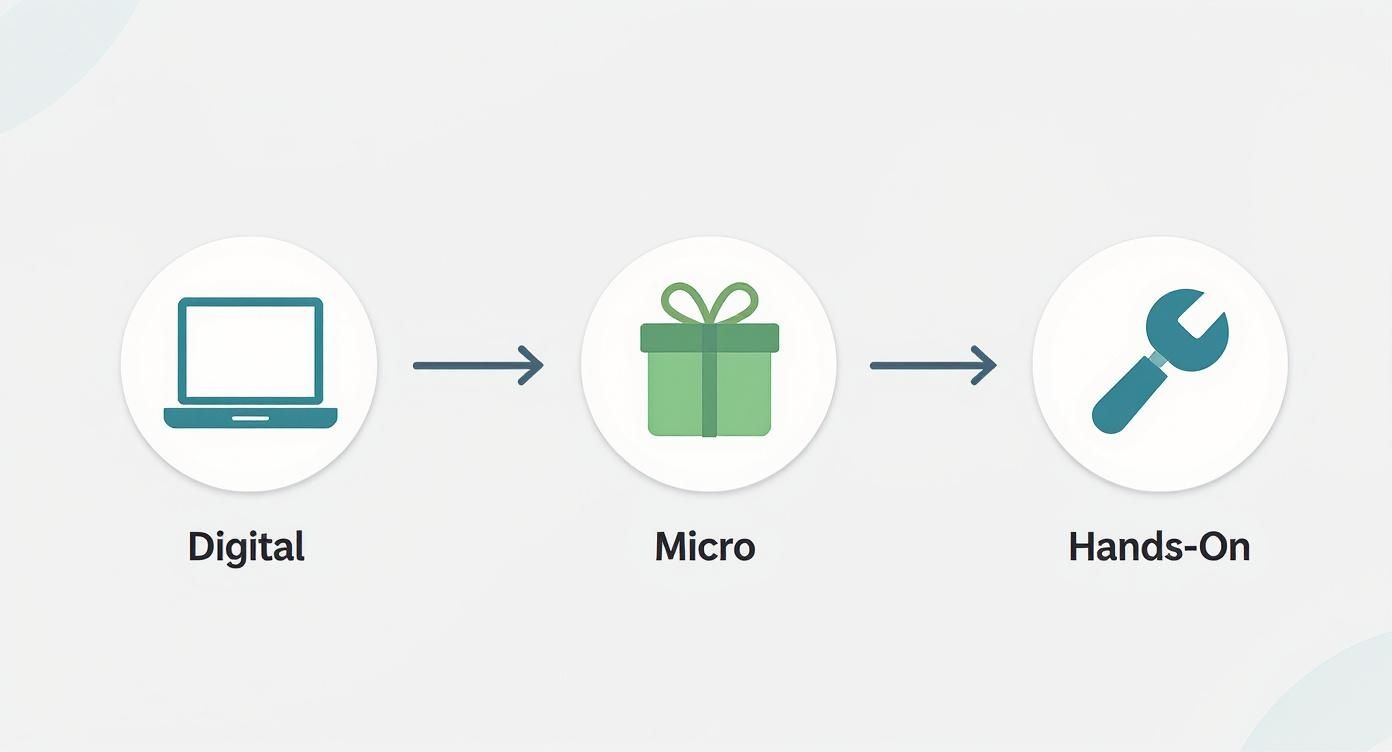
This little diagram maps out a pretty common journey for Kiwis starting out from home. You might begin with digital skills, pivot to a small product-based venture, or jump straight into a hands-on trade. The point is, no matter your starting point, there’s a clear path to building a solid income stream right here in NZ.
So, you've got a cracking idea. What's next? Getting it all set up legally. I know, the thought of sorting out the legal and financial stuff can feel a bit intimidating, but honestly, New Zealand makes it pretty straightforward.
Getting these foundations sorted from day one is one of the best things you can do. It'll save you a world of headaches later and put you on the right track for real success. This isn't about drowning in paperwork; it's a simple checklist to get your venture off the ground with confidence.
Choosing Your Business Structure
First up, you need to decide how your business will be structured. For most people starting a home-based hustle, it boils down to two main options: being a sole trader or setting up a limited liability company. Each has its own pros and cons that affect you personally and financially.
Being a sole trader is the simplest and most common way to kick things off. Essentially, you are the business. Your personal and business finances are legally the same, which simplifies things at tax time. The trade-off is that you're personally on the hook for any business debts.
A limited liability company, on the other hand, is a completely separate legal entity. This creates a firewall between the business and your personal assets—like your house or car—if things go pear-shaped financially. The downside? More admin to set up and higher ongoing compliance costs.
For most Kiwis just testing the waters with a side hustle or a small service business, starting as a sole trader makes the most sense. It’s cheap, easy, and you can always register a company later as your income grows.
To make it crystal clear, here’s a quick comparison of the two.
NZ Business Structure Quick Comparison
Choosing the right structure really depends on your situation, but as you can see, the sole trader route is a fantastic, low-risk starting point.
Getting Registered and Staying Compliant
Once you’ve picked a structure, it’s time to get sorted with Inland Revenue (IRD). This part is non-negotiable. If you're going the sole trader route, you can just use your personal IRD number to handle your taxes. Simple as that.
You'll also want to grab a New Zealand Business Number (NZBN). It’s a unique identifier for your business, it’s completely free, and it makes you look much more professional when dealing with suppliers or other businesses.
Next, let's talk GST (Goods and Services Tax). Getting your head around this is crucial.
- You must register for GST if your total income (before expenses) hits $60,000 or more in any 12-month period.
- If you're earning less than that, registration is totally optional.
Even if you're under the threshold, sometimes it pays to register for GST voluntarily. If you have a lot of setup costs, for instance, you can claim the GST back on those business purchases. For a more detailed look at the whole process, our guide on https://www.pracskills.co.nz/blog/how-to-start-a-small-business-nz breaks it all down step-by-step.
Checking Local Rules and Your Responsibilities
Finally, don't forget about your local council. Before you flick the switch and go live, it’s a smart move to check their rules. Some councils have specific regulations about running a business from a residential property, especially if you'll have customers visiting or making a bit of noise.
You also have responsibilities under the Health and Safety at Work Act 2015. Even if you’re just tapping away in a home office, you need to make sure your workspace is safe for you and anyone else who might be affected.
And since a professional online presence is key for most home businesses today, learning how to create a website for a small business is a great way to showcase what you do safely and effectively.
Marketing and Pricing for a New Zealand Audience

You've got a fantastic idea and you're all set up legally. Now for the exciting part: finding your first customers and getting paid what you’re worth. This is where a lot of new ventures stumble, either by pricing themselves too low or by trying to market themselves in all the wrong places.
In New Zealand, making money from home isn't about shouting the loudest. It's about building genuine connections and trust. The Kiwi market really values authenticity, so your marketing and pricing have to reflect that from the get-go.
Setting Prices That Work in NZ
Figuring out what to charge is often the hardest part of the whole puzzle. You’ve got to find that sweet spot between being competitive in the local market without undervaluing your time and expertise. A great first step is to have a look at what others in your field are charging, but don't just copy them.
Think about these key factors when setting your rates:
- Your Experience: Are you fresh out of the gate, or are you bringing years of expert knowledge to the table? Your price should reflect the incredible value you provide.
- Your Costs: Make sure to factor in all your business expenses. This includes everything from software subscriptions and materials right down to the portion of your power bill you’ll claim on your tax return.
- The Value You Deliver: Don't just charge for your time. Your pricing should be based on the result you deliver for your client. A brilliant logo, for instance, is worth so much more than the few hours it took you to create it.
A classic mistake is trying to compete on price alone. It’s a race to the bottom. Resist that temptation to be the cheapest option and instead focus on demonstrating your value and quality. It’ll attract better clients who truly respect your work.
Finding Your First Kiwi Customers
Forget about splashing cash on expensive ad campaigns. When you're just starting out, your marketing needs to be targeted, local, and authentic. In New Zealand, word-of-mouth is still king, so your main goal is to get people talking about you for all the right reasons.
Think about where your ideal customers hang out, both online and in the real world. That’s where you need to be.
Your first clients are often closer than you think. Start with your existing network—friends, family, and former colleagues. A warm referral is the most powerful marketing tool you have.
This focus on local connection is crucial. Have a look at these NZ-specific platforms and communities:
- Local Facebook Groups: Join community pages for your suburb or town. Be helpful, answer questions, and gently mention what you do when it's genuinely relevant. No hard selling!
- Neighbourly: This is a fantastic platform for offering hyper-local services, like pet sitting, lawn mowing, or home organisation.
- Specialised Platforms: Depending on what you do, there are dedicated Kiwi sites. Builderscrack is essential for tradies, while Felt is the go-to marketplace for handmade crafts and art.
And don't underestimate the power of just getting out there. A friendly chat at the local farmers' market or a well-placed flyer on a community noticeboard can be surprisingly effective.
Building a Simple and Effective Online Presence
You don’t need a fancy, expensive website from day one, but you do need a professional online 'home base'. This gives potential customers a place to learn more about you and see examples of your awesome work.
A simple one-page website or a well-maintained business Facebook page is often all you need to get started. Just make sure it has clear info about who you are, what you offer, how to get in touch, and—as soon as you get them—testimonials from happy clients.
The goal is to make it incredibly easy for people to say "yes" to working with you. This digital presence is your 24/7 salesperson, working for you while you focus on actually earning an income. It’s a focus made easier when working from home. As Stats NZ data reveals, the average commuter saves 7.5 hours per week by working remotely, giving you a huge time advantage you can reinvest into your business.
For a deeper dive into creating a killer plan, our guide on small business marketing strategies for Kiwis offers actionable steps you can implement straight away. It's all about working smarter, not harder, to build a reputation that brings customers to your door.
The Right Gear for Your Home-Based Venture
Once you start earning from home, having the right tools can make a massive difference. This isn’t about splurging on flashy software; it’s about being smart with a few affordable, effective resources that help you operate like a pro right from the get-go.
Think of these tools as your behind-the-scenes support crew. They handle the fiddly admin, keep your projects on track, and make sure your communication is sharp and professional. This frees you up to focus on what really matters—delivering brilliant work for your clients.
Get Your Finances Sorted Like a Pro
The moment you earn your first dollar, you need a simple way to track your income and expenses. Nailing this from the start will save you a world of headaches come tax time. Luckily, there are some fantastic NZ-specific options designed for sole traders and small businesses.
Two of the most popular choices are Hnry and Xero.
Hnry is an all-in-one service built specifically for Kiwi freelancers and contractors. You get paid into your Hnry account, and they automatically figure out and pay all your taxes (income tax, GST, ACC levies) for you. It's incredibly hands-off, which is perfect if you find the financial side of things a bit daunting.
Xero is more comprehensive accounting software that gives you far greater control. It's a massive Kiwi success story and a powerhouse for managing invoices, tracking expenses, and running financial reports. It requires a bit more hands-on management but offers huge flexibility as your business grows.
Both have free trials, so you can have a play and see which one feels like a better fit for your new venture without any upfront commitment.
Keep Your Projects and Workflow Organised
When you’re juggling multiple tasks or clients, things can get messy—fast. A good project management tool is your best friend for keeping everything organised and ensuring nothing slips through the cracks. You don't need anything complicated; a simple, visual tool is often the most effective.
The best tool is the one you'll actually use. Start with something free and straightforward. You can always move to a more powerful system later as your needs get more complex.
For this, platforms like Trello or Asana are perfect. They use a visual system of boards, lists, and cards that feels a lot like using digital sticky notes. You can create a board for each client, map out your to-do lists, set deadlines, and see your entire workflow at a glance.
The free versions of these tools are incredibly powerful and more than enough for most people starting out. They help you stay on top of deadlines and look completely professional, which is key to building a great reputation.
Communicating Clearly with Your Clients
Clear, professional communication is non-negotiable. While email is still a staple, having reliable tools for virtual meetings and quick chats is crucial, especially when you can't meet face-to-face.
- Zoom is pretty much the standard for video calls. The free version lets you host one-on-one meetings without any time limits, which is ideal for client catch-ups or project check-ins.
- Slack is brilliant for ongoing projects where you need quick, informal chats with a client. It's much faster than email and keeps all project-related talk neatly organised in one place.
Using these tools shows clients you're serious and makes working with you a breeze—a huge part of getting repeat business and referrals.
Your Go-To New Zealand Resources
Beyond the software, there are a few indispensable local resources every Kiwi entrepreneur should have bookmarked. These government and community platforms provide official guidance and support you can actually trust.
Don't overlook these crucial NZ-specific sites:
- Business.govt.nz: This should be your first port of call for any official questions. It’s a goldmine of reliable info on everything from tax obligations to employment law, all written in plain English.
- Your Local Chamber of Commerce: Joining your local Chamber can be a fantastic way to connect with other business owners in your area. They offer networking events, workshops, and support that can be invaluable as you find your feet.
Tapping into these resources means you're building your home-based venture on a solid, well-informed foundation from day one.
Got Questions About Working from Home in NZ?
As you start pulling together your plan to earn from home in New Zealand, a bunch of practical questions are bound to pop up. It's totally normal. Getting some straight answers can be just the confidence boost you need to get moving.
Let's tackle some of the most common queries I hear from Kiwis just starting out.
How Do You Actually Maintain a Good Work-Life Balance?
This is a big one. When your home doubles as your office, the lines get blurry fast. It's way too easy to fall into the trap of being "on" all the time, which is a fast track to burnout. The real secret? Setting firm boundaries from day one.
If you can, carve out a dedicated workspace. It doesn't have to be a separate room – even a specific corner of the lounge or a desk in the spare room works. When you’re in that spot, you're working. When you step away, you’re not. You also need to set clear work hours and stick to them, just like a regular 9-to-5. Let your family and mates know your schedule so they get when you're available and when you're off-limits.
Most importantly, schedule your downtime like it’s a non-negotiable meeting. Block out time in your calendar for the gym, hobbies, or just hanging out with the family, and guard that time fiercely. It's all about being proactive so work doesn't creep into every corner of your life.
What’s the Deal with Tax?
Tax on a side hustle can feel a bit daunting, but the basics are pretty simple. Here in New Zealand, you have to declare any income you earn, even if it's from a small side gig. If you're set up as a sole trader, this income just gets added to your other earnings (like from your PAYE job) and is taxed at your usual personal income tax rate.
The best habit you can possibly form is to squirrel away a chunk of every single payment you receive for tax. A good rule of thumb is to put 20-30% into a separate bank account. That way, you’ve got the cash ready to go when the tax bill arrives – no nasty surprises.
And don't forget to keep good records of all your business-related expenses. Things like your software subscriptions, a portion of your internet and power bills, or stationery can often be claimed to bring down your taxable income. Every little bit helps!
When Do I Need to Register for GST?
This is a classic point of confusion for so many Kiwis starting out. The rule is actually very straightforward: you must register for GST if your annual turnover (that’s your total income before expenses) hits $60,000 or more in any 12-month period.
If you're earning less than that, registering for GST is completely optional. A lot of people choose not to at the start just to keep the admin simple. But, if you have some hefty startup costs for things like gear or materials, registering voluntarily can be a smart move. It means you can claim back the GST you paid on those business purchases.
How on Earth Do I Find My First Client?
Landing that first client can feel like the biggest hurdle, but honestly, it’s more about connection than any complex marketing strategy. Your first port of call should always be your existing network.
Tell your friends, whānau, and old workmates what you're up to. In New Zealand, a personal recommendation is still the most powerful tool you have.
Get active in relevant online communities, too. Think local Facebook groups or industry forums where your potential clients hang out. The key is not to just spam them with ads. Instead, offer genuinely helpful advice and build a reputation as someone who really knows their stuff. That's how you build trust, and people are far more likely to hire someone they trust.
At Prac Skills, we offer practical, NZ-focused courses to give you the exact skills you need for your home-based venture. From animal care to digital marketing, our self-paced learning is designed to build your confidence and credibility. Explore our courses and start building your future today.