February 2, 2026
.webp)
Finding the Camera Best for Vlogging in New Zealand
Discover the camera best for vlogging in NZ with our complete guide. We compare top models for every style and budget to help you create amazing content.
Practical Skills
minutes
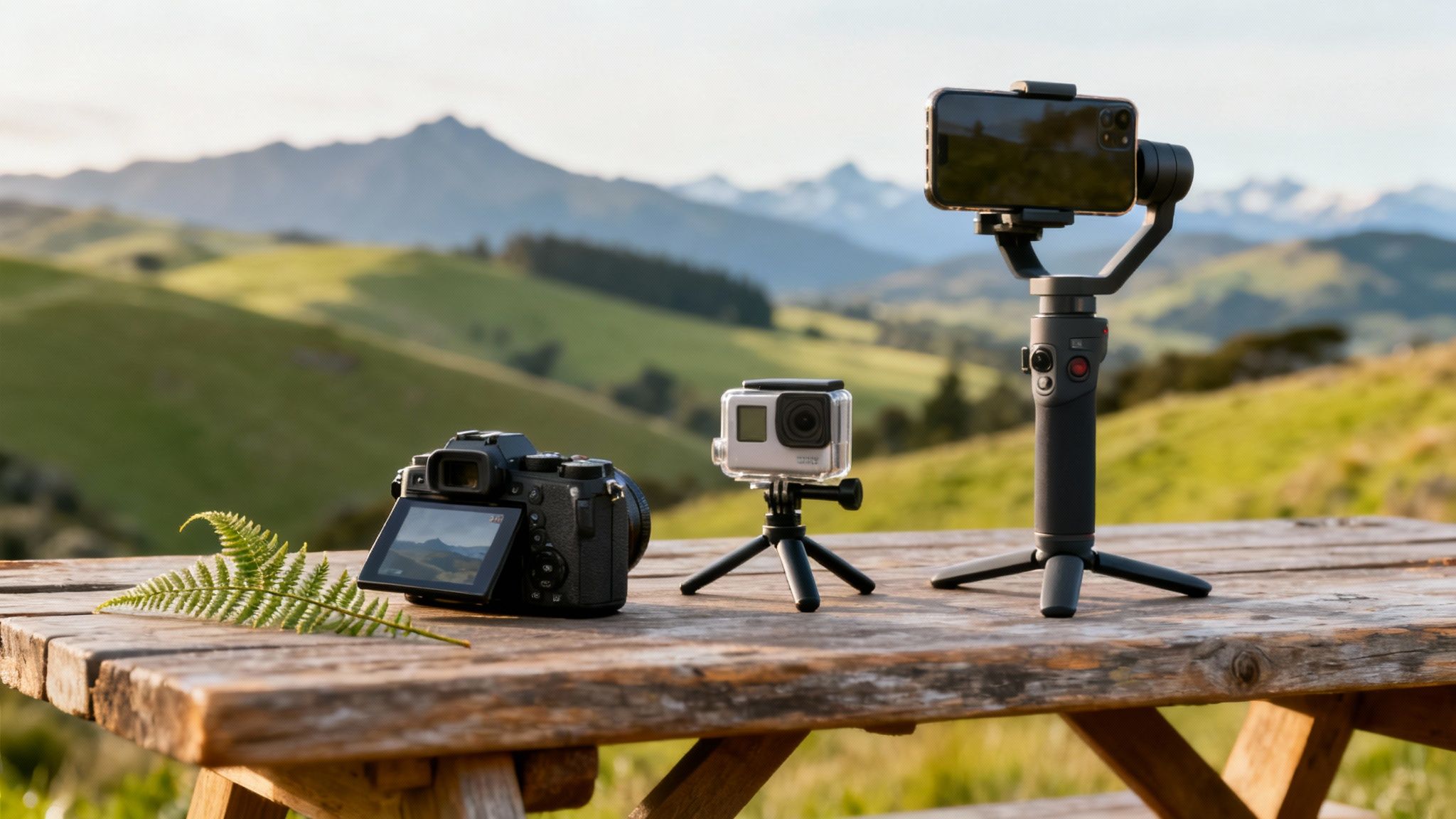
Deciding on the camera best for vlogging really comes down to your personal content style. However, if you're serious about creating great videos, there are a few non-negotiable features you'll need: a flip-out screen, dependable autofocus, and an external microphone input.
These three things are the foundation for producing high-quality content that truly connects with your audience, whether you're a lifestyle vlogger filming in Auckland or documenting the day-to-day on a farm out in the country. This guide is designed to help you find the perfect camera that fits your creative ideas, budget, and the unique filming conditions we have here in Aotearoa.
Choosing Your Vlogging Camera in New Zealand
Finding the right vlogging camera is your first big step towards making engaging content that stands out in New Zealand's growing digital scene. While the "best" camera is always subjective, some features are absolutely essential for getting that professional look. Your choice will shape everything from your video quality and audio clarity to how you actually film and edit.
The market is flooded with options, from the smartphone already in your pocket to high-end mirrorless systems. Getting your head around the key differences is crucial. For instance, if you're thinking of starting with your phone, there are some excellent tips on how to choose a good camera phone that zero in on the features that matter most for video.
This decision is especially important right now, given New Zealand's booming creator economy. Top Kiwi creators like Rose Vlogger have demonstrated the power of high-engagement content, pulling in an incredible 30.6% engagement rate—miles ahead of the usual 1-3% you see on most platforms. This really shows how cameras built for vlogging, with features like solid stabilisation and front-facing screens, can make a huge difference in how your audience interacts with your videos.
Core Features for Every Vlogger
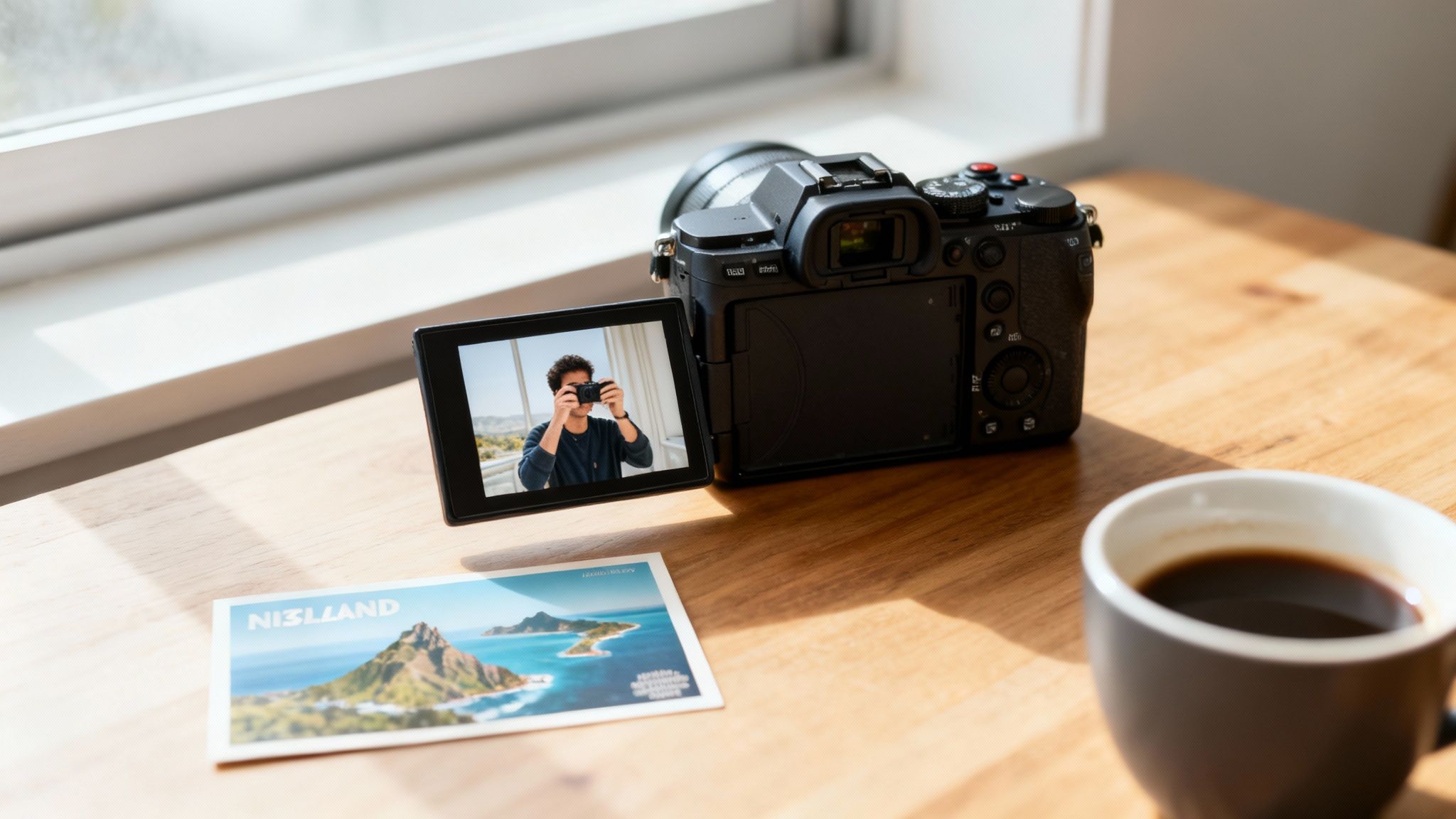
Before we get into specific models, it’s worth figuring out which features actually matter for different types of vlogging. Not everyone needs the same kit; what's essential for a high-energy action vlog in Queenstown is worlds away from a quiet studio setup in Wellington.
Use this checklist as a quick reference to see which features should be at the top of your list depending on what you plan to create.
Essential Vlogging Camera Feature Checklist
This table is a quick reference to help you prioritise the most critical features for your vlogging style, whether you're creating content solo, in the studio, or out in the wild.
Think of this checklist not as a strict set of rules, but as a guide to help you make a more informed choice. The right camera will make your workflow smoother and your final videos look and sound so much better.
Comparing Vlogging Camera Types for NZ Creators
Figuring out the best camera for vlogging in New Zealand means wading through a sea of options, all promising to be the perfect tool. But here's the thing: 'vlogging camera' isn't one specific type of gear. It's a catch-all term for everything from your phone to a full-blown professional setup. The camera you choose will shape more than just your video quality—it will define your entire creative process.
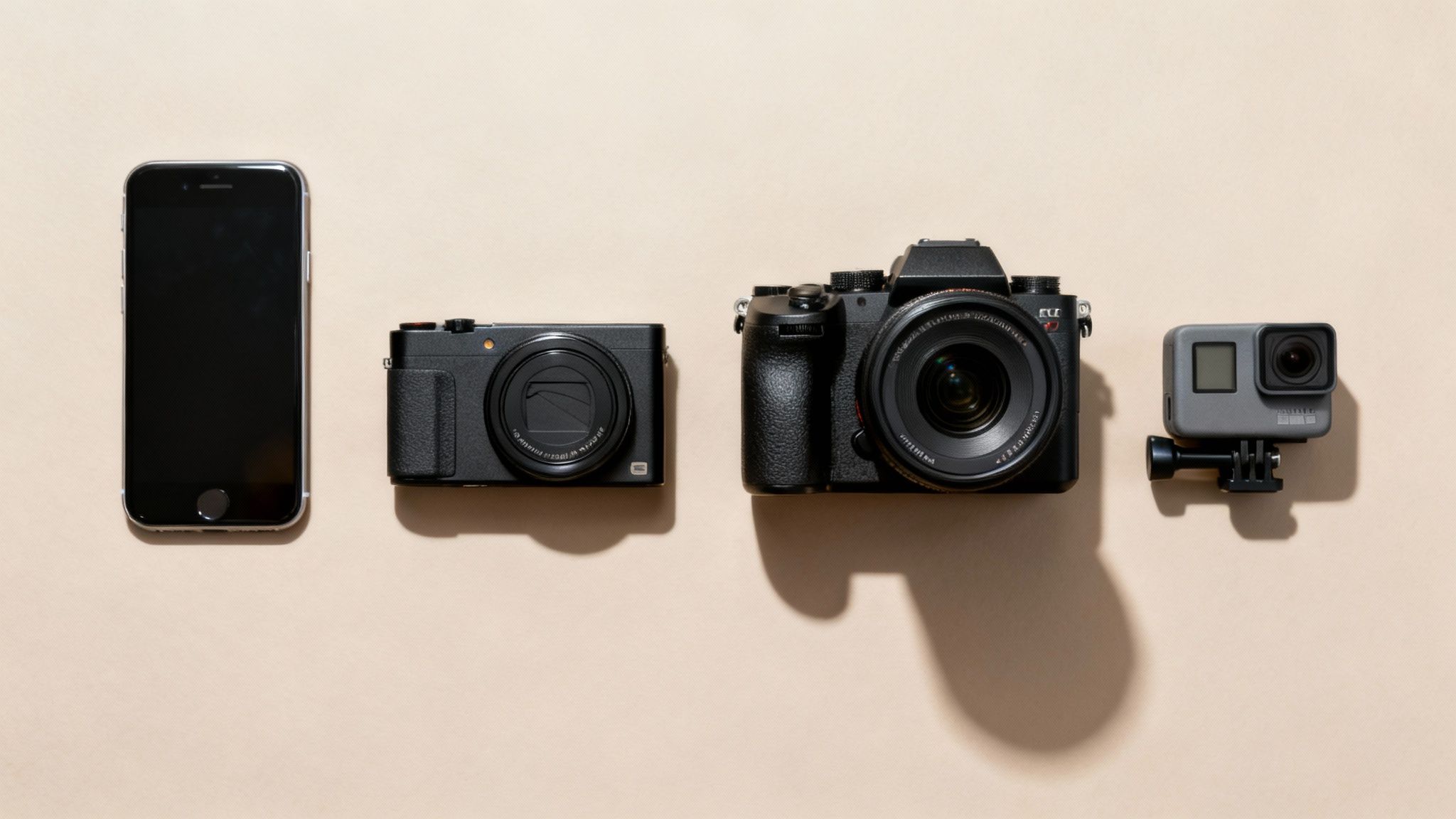
Let's move past the basic pros and cons. We’re going to dig into the real-world strengths and weaknesses of the four main players: smartphones, compact cameras, mirrorless cameras, and action cameras. By understanding the practical trade-offs, you can make a smart investment that matches your vlogging ambitions, whether you’re capturing daily life in the city or showcasing the rugged beauty of a Kiwi farm.
The Unbeatable Convenience of Smartphones
For most people starting out, the vlogging journey begins with the camera they already own. Modern flagship phones produce surprisingly sharp, vibrant video that can hold its own against dedicated cameras, especially when the lighting is good. Their killer feature is immediacy—you can shoot, edit, and upload all from one device, making them perfect for spontaneous, in-the-moment content.
But that convenience comes with some serious trade-offs. While the image quality is often great, smartphone sensors are tiny. This means your footage can get noisy and grainy fast when the light drops. Audio is the other major hurdle; the built-in mics are designed to pick up everything, which means you get a lot of background noise and not enough of your own voice. You're also stuck with the lenses you've got, which limits your creative options.
Key Takeaway: Your smartphone is a fantastic launchpad for vlogging. It completely removes the barrier to entry, but you'll quickly hit its limits with audio, low-light performance, and lens flexibility as you look to improve your content.
The Balanced Approach of Compact Cameras
Compact cameras, or 'point-and-shoots', are a huge step up from a phone without throwing you into the deep end of complex camera systems. Models like the Sony ZV series are built from the ground up for vloggers. They pack in essential features like a flip-out screen, excellent autofocus, and a much larger sensor, all in a body you can still fit in a jacket pocket. The result is cleaner footage, much better low-light performance, and that creamy, blurred background (or bokeh) that phones try to fake.
Their built-in zoom lenses give you far more framing flexibility than a phone, and most importantly, they nearly always include a proper microphone input. This one feature instantly solves your audio headaches. They strike an almost perfect balance between portability and creative control, making them a brilliant choice for travel vloggers or anyone documenting their day-to-day life on the move.
The Creative Freedom of Mirrorless Cameras
When image quality is your absolute number one priority, mirrorless cameras are in a league of their own. They have large sensors—often the same size as those in professional DSLRs—and deliver stunning, cinematic video with incredible detail, dynamic range, and brilliant performance in dim light. But their biggest advantage? You can change the lenses.
This is a game-changer for creative control. A wide-angle lens can capture sweeping landscapes or make a small room feel spacious, while a prime lens can create that beautiful background blur for interviews. Of course, this power comes at a cost. There’s a steeper learning curve, a higher price tag, and more gear to carry. A mirrorless setup demands that you understand basic camera settings and are prepared to invest in both the body and quality lenses. For anyone serious about making vlogging their profession, this is the path to take. Many of the principles for great video overlap with photography, so checking out guides on the best camera for photography can deepen your understanding of things like sensor size and lens choice.
The Rugged Reliability of Action Cameras
If your vlogs are all about capturing New Zealand's adventurous side, an action camera is probably your best bet. Gear from brands like GoPro and DJI is built tough—waterproof, dustproof, and shock-resistant right out of the box. Their electronic image stabilisation is genuinely incredible, producing buttery-smooth footage even when you're mountain biking, skiing, or hiking over rough country.
Action cameras have an ultra-wide field of view, which is fantastic for immersive, first-person shots and capturing huge scenes. That same wide view can create a bit of a distorted, 'fisheye' look, though, which isn't always ideal for talking-head style vlogs where you want a more natural perspective. While they shine in bright daylight, their small sensors mean they struggle in low light, and you'll definitely need accessories to get decent audio.
Vlogging Camera Types Head-to-Head
To help you visualise where each camera type fits, here’s a quick breakdown based on what matters most to Kiwi vloggers.
This table shows there’s no single 'best' camera—the right choice is the one that best suits your content, your workflow, and your budget. A mirrorless camera might produce the best image, but it's useless if it’s too bulky to bring with you on an adventure where an action camera would thrive.
Key Features That Elevate Your Vlogging
Figuring out what separates a decent camera from a great vlogging camera comes down to knowing which technical specs actually make a difference. It’s all too easy to get lost in marketing fluff, but a few key features are directly responsible for creating better, more engaging videos. Once you know what to look for, you can read a spec sheet with confidence and pick a tool that truly fits your creative vision.
These features are especially important for creators here in New Zealand, where a thriving digital scene offers massive potential. In this space, vlogging cameras are essential tools. YouTube alone has 4.19 million users—that’s 90.5% of all internet-connected Kiwis—providing a huge built-in audience. With trends leaning towards authentic micro-influencers, vloggers with the right gear can build a real following, whether they're filming livestock management on the farm or sharing their photography journey. You can dive deeper into these trends and what they mean for Kiwi creators in this detailed social media analysis.
Crystal Clear Resolution and Frame Rates
These days, 4K resolution is the baseline for any serious vlogger. While Full HD (1080p) is still perfectly watchable, shooting in 4K gives you incredible flexibility when you’re editing. You can crop into your footage to create a tighter shot or completely reframe a scene without losing any noticeable quality. It also future-proofs your content, making sure it looks sharp and professional for years to come.
Frame rates also play a massive creative role. Most dialogue is filmed at 24 or 30 frames per second (fps), which gives you that natural, cinematic look we’re all used to. But shooting at higher frame rates like 60 fps or 120 fps is where the magic happens—it allows you to create buttery-smooth slow-motion shots, adding a dramatic or polished flair to your videos.
Rock-Solid Image Stabilisation
Shaky footage is the fastest way to make a vlog look amateurish. Image stabilisation is your best friend here, and it generally comes in two flavours:
- In-Body Image Stabilisation (IBIS): This is a hardware-based system where the camera's sensor physically moves to counteract shakes and bumps. It’s incredibly effective for smoothing out the subtle movements from handheld shooting, making it a premium feature you'll find in mirrorless cameras.
- Digital/Electronic Stabilisation (EIS): This is a software-based solution that digitally shifts the frame to smooth out movement by slightly cropping into the image. While it's not quite as powerful as IBIS, it works wonders in action cameras and many compact models.
If you’re planning on doing any "walk-and-talk" style vlogs, good stabilisation is non-negotiable. It means you can leave bulky gimbals at home and still get smooth, watchable footage.
Autofocus That Never Misses
When you’re a solo creator, you can’t exactly be behind the camera adjusting focus. That’s why a fast, reliable autofocus (AF) system is an absolute must-have. Modern vlogging cameras come with incredibly smart AF systems featuring Face and Eye Detection, which locks onto you and keeps you sharp even as you move around the frame.
A great autofocus system works so well you forget it’s even there. It lets you focus on your message, knowing the camera has your back and is keeping you perfectly sharp.
Some cameras even have special modes like "Product Showcase," which instantly shifts focus from your face to an object you hold up to the lens—a game-changer for anyone doing review videos.
Lenses, Low Light, and Lasting Power
Beyond those core three, a few other features will make a huge difference in your day-to-day filming. The ability to change lenses on a mirrorless camera gives you incredible creative freedom, letting you choose the perfect field of view for any situation you find yourself in.
Strong low-light performance is crucial for capturing Aotearoa’s dramatic landscapes at sunrise or sunset, or even just for filming indoors without needing a ton of extra lights. As a rule of thumb, cameras with larger sensors do a much better job in dim conditions. Lastly, don't overlook battery life. There’s nothing more frustrating than a dead battery mid-shoot, so look for cameras known for their staying power or just factor the cost of a few spare batteries into your budget.
Matching Your Camera to Your Vlogging Style
The best camera for vlogging a trek through Fiordland is worlds apart from the one you'd use to film a studio-based art tutorial. Your content dictates the gear. Simple as that. The most important decision you'll make is matching your camera to your creative style, ensuring you invest in a tool that enhances your storytelling, not one you have to fight with.
This is especially true in New Zealand's buzzing creator scene. With YouTube's local audience expected to hit 4.24 million users by late 2025, the right vlogging camera is your key to capturing Kiwi life in a way that truly connects. Whether you're a farmer showcasing sustainable practices or an artist sharing your process, the right gear helps your content stand out. You can dive deeper into New Zealand's digital trends and user statistics to see just how big the opportunity is.
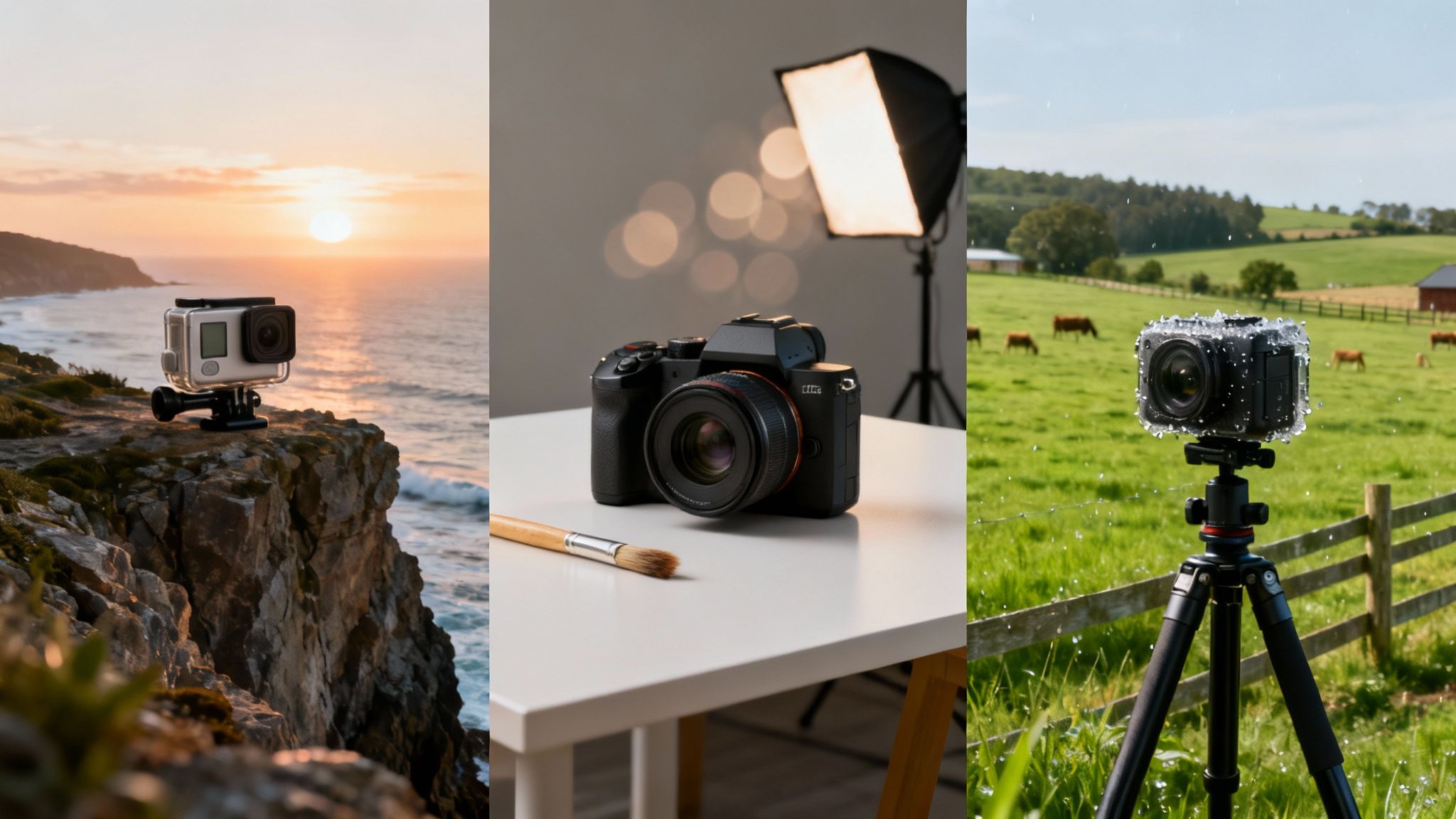
For Agricultural and Farm Vloggers
If you're documenting life on the farm, your camera needs to be as tough as your work boots. Rural New Zealand throws unique challenges your way, from unpredictable weather to long days in the field, miles from a power socket.
Your priorities should be pretty clear:
- Weather Sealing: A camera that can handle dust, mud, and a sudden downpour isn't just a nice-to-have; it's essential. Look for models with solid weather sealing to protect your investment.
- Extended Battery Life: You need a camera that can last from sunrise to sunset. Go for models known for their battery stamina, or just factor in the cost of buying a few spares.
- Durability: Let's be honest, gear gets knocked around outdoors. Choose a camera with a solid build that can take the odd bump that comes with working on the land.
A rugged mirrorless camera or a top-tier action camera usually fits this bill perfectly, giving you both resilience and high-quality footage.
For Animal Care and Pet Content
Filming animals means keeping up with chaos. Whether you’re shooting a dog training tutorial or documenting life at a cattery, your camera’s autofocus system is your most valuable player.
The one feature you can't compromise on is Animal Eye Autofocus. This technology is an absolute game-changer. It intelligently finds and tracks an animal's eyes, keeping your furry or feathered stars perfectly sharp, even when they’re darting all over the place. It frees you up to focus on capturing their personality without agonising over missed shots.
For anyone working with animals, a camera with lightning-fast and reliable animal-eye autofocus isn’t just a feature—it’s a necessity. It’s the difference between a charming, professional shot and a frustratingly blurry mess.
For Creative Arts and Studio Vloggers
When your vlog is all about visual detail—like painting, photography, or craft tutorials—your camera must deliver stunning image quality. In a controlled studio environment, raw performance trumps ruggedness every time.
Here's what to look for:
- Exceptional Colour Science: You need a camera that gets colours right, straight out of the box. This ensures your artwork or products look true-to-life for your audience.
- Lens Versatility: A mirrorless camera with a huge range of available lenses is your best bet. This gives you the creative freedom to go from a wide shot of your studio to a super-detailed macro shot of your work in seconds.
- 4K Resolution: High resolution is vital for capturing fine details. It also gives you the flexibility to crop in on your footage in post-production without losing any clarity.
Guidance for Solo Creators
Flying solo means your workflow has to be dead simple. The best camera for a one-person crew is one that feels less like a tool and more like a reliable production assistant. A lightweight model with a fully articulating flip-out screen is a must, so you can frame your shots perfectly every single time.
Pair that with a camera that has a brilliant autofocus system, and you're golden. To take it up a notch, get familiar with different angles of camera shots to add variety and a professional polish to your videos. The right camera makes the technical side of filming almost disappear, letting you concentrate entirely on your performance and your message.
Our Top Vlogging Camera Picks in NZ
Alright, let's put all that theory into action and look at some specific cameras making waves here in New Zealand. Finding the right vlogging camera is always a balancing act between features, your budget, and what you’ll genuinely enjoy using. This list pulls together some standout options at different price points to give you a solid starting point for your research.
I've focused on models with good local availability and support because nobody wants to deal with international shipping for a warranty claim. Keep in mind that prices in NZ can bounce around a bit, so the ranges here are a guide to help you budget. The best camera is the one you actually pick up and use, so think hard about which of these fits your creative style.
The Best Budget Starter Camera
Ready to graduate from your smartphone but don't want to empty your bank account? A dedicated compact vlogging camera is the perfect next step. These are built from the ground up for creators, packing the most important features into a small, no-fuss body.
A brilliant choice in this space is the Sony ZV-1 II. It's a tiny powerhouse designed specifically for vlogging.
- What we love: It has a fantastic wide-angle zoom lens, which is perfect for fitting yourself and the background into the shot. The flip-out screen is a must for self-framing, and Sony's autofocus is legendary—it just sticks to your face and eyes like glue. It even has a nifty "Product Showcase" mode for anyone doing reviews.
- Keep in mind: The battery life isn’t going to last you all day, so grabbing a spare is a smart move. Its stabilisation is digital-only; it’s decent, but not as buttery-smooth as a camera with an in-body system if you're doing a lot of running and gunning.
- NZ Price Guide: You’ll likely find this one for around $1,400 - $1,600 NZD.
The Ultimate All-Rounder
If you need something incredibly portable that delivers amazing quality for both walk-and-talk vlogs and sit-down shots, the DJI Osmo Pocket 3 is in a league of its own. It’s a high-quality camera fused with a built-in mechanical gimbal, and the result is ridiculously smooth footage.
This little device is the perfect all-in-one solution for creators who are always on the move but refuse to compromise on stability.
The DJI Osmo Pocket 3's built-in gimbal is its superpower. It produces footage so smooth it looks like it was shot with a professional rig, yet the entire device fits comfortably in your hand.
Its pocketable size also makes it incredibly discreet. You can capture candid moments without drawing a crowd. The Creator Combo, which bundles in a wireless microphone and other handy accessories, is especially good value if you want a complete kit straight out of the box.
- What we love: The mechanical gimbal gives you the best stabilisation you can get in this form factor. The ActiveTrack 6.0 technology follows subjects flawlessly, and the video quality from its 1-inch sensor is excellent, even when the lighting gets tricky.
- Keep in mind: The lens is a fixed wide-angle, so you don’t have much creative flexibility with your framing. Its tiny size can also be a bit fiddly if you have larger hands.
- NZ Price Guide: The Creator Combo usually sits between $1,000 - $1,200 NZD.
The Professional Content Creator's Choice
When you’re ready to stop compromising and invest in top-tier image quality and creative freedom, a mirrorless camera is the only way to go. The Sony a6700 hits the sweet spot, offering an incredible suite of professional features in a compact body with access to a massive ecosystem of lenses.
This is the kind of camera that delivers that cinematic look, separating hobbyist content from a professional production. Its larger APS-C sensor produces stunning detail, beautiful background blur (bokeh), and fantastic performance when the lights get low.
- What we love: It shoots breathtaking 4K video, has industry-leading AI-powered autofocus, and features in-body image stabilisation to smooth out your shots. The ability to swap lenses means it can adapt to literally any scenario you can dream up.
- Keep in mind: This is a significant investment, not just for the camera body but for the lenses you’ll want to buy. There’s also a much steeper learning curve than with a point-and-shoot camera.
- NZ Price Guide: The camera body alone is typically priced around $2,500 - $2,800 NZD. Remember to factor in the cost of at least one good lens on top of that.
Building Your Complete Vlogging Kit
Picking the right vlogging camera is a massive first step, but it’s really just the foundation of your creative setup. To create polished, high-quality videos that actually grab and hold your audience’s attention, you need to surround that camera with the right accessories. Think of it like putting together a complete toolkit, where every single piece plays a crucial role in lifting the quality of your final product.
A great camera captures beautiful visuals, but bad audio will kill a video in seconds. After your camera, a dedicated microphone is the single most important investment you can make. It's the fastest way to make your content sound professional.
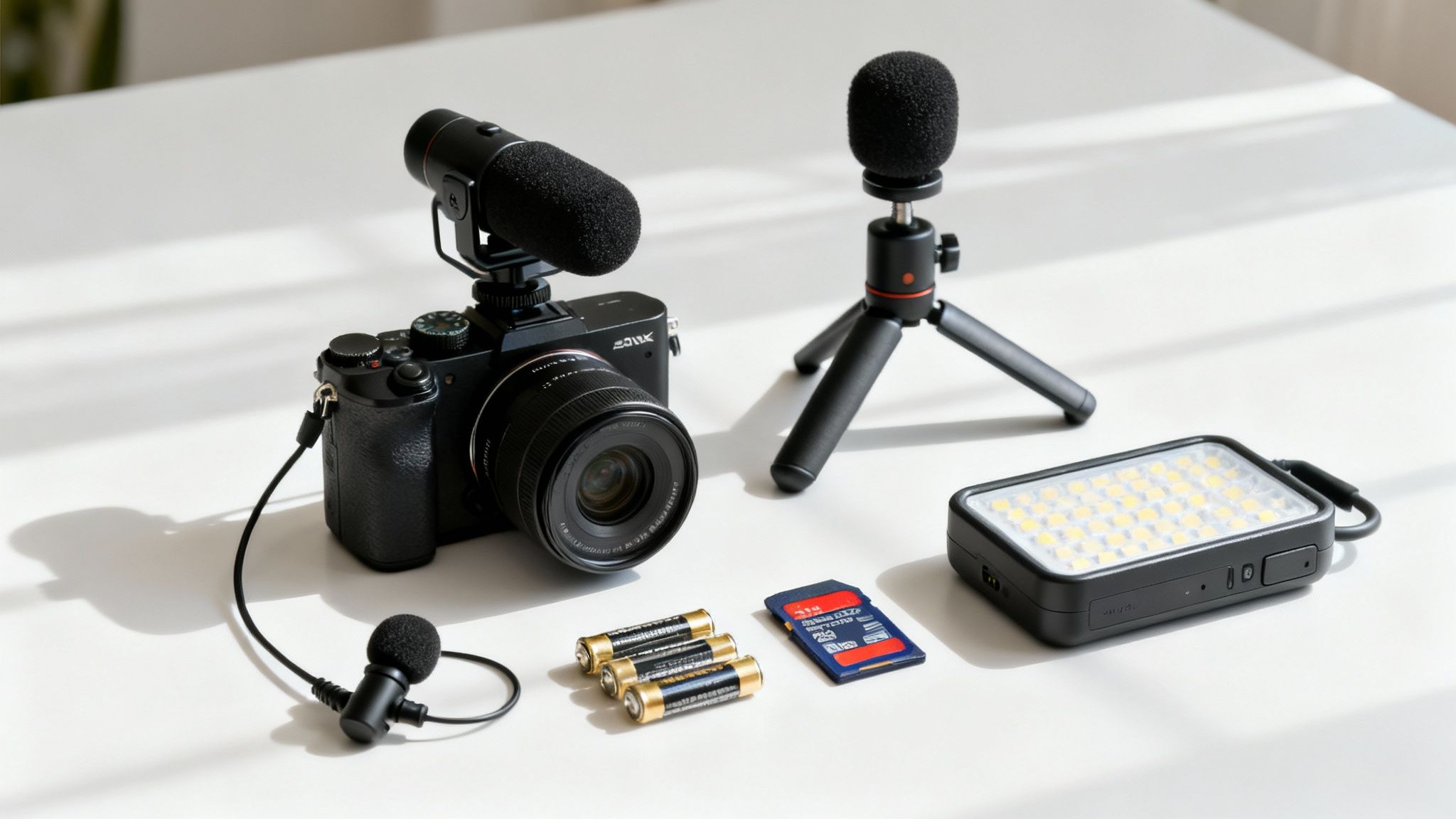
Essential Audio And Stability Gear
Your audio needs will shift depending on where you're filming. If you’re vlogging on the move, a shotgun microphone that mounts directly onto your camera is brilliant for capturing clear audio from in front of you while cutting down on noise from the sides. But if you’re doing interviews or need your audio levels to stay consistent as you move around, a lavalier (or lapel) microphone that clips right onto your shirt is the way to go.
For total freedom, wireless mic systems give you the best of both worlds, letting you stray far from the camera without being tethered by cables. Just as vital is stability. A simple tripod is perfect for static shots, but a gimbal is what will give you that buttery-smooth, cinematic motion for your walk-and-talk vlogs.
Great lighting and audio aren't just technical details; they're about respecting your viewer's time. Clear sound and a well-lit scene make your content easier to watch and immediately signal a higher level of quality and care.
Lighting And Workflow Essentials
Never, ever underestimate the power of good lighting. A small, portable LED light can completely transform a dimly lit indoor shot. It adds a professional sparkle and makes sure you always look your best on camera. For softer, more flattering light, even a simple reflector can work wonders by bouncing existing light to fill in any harsh shadows.
Finally, you have to think about your workflow. Long filming days demand spare batteries—there is nothing worse than running out of power right in the middle of a great take. High-speed memory cards with plenty of storage are also non-negotiable, especially if you’re shooting in 4K. To ensure your vlogging sessions aren't cut short, particularly when using a smartphone, it pays to look into practical accessories and learn some tips for extending phone battery life.
As you build your kit, you're not just collecting gear; you're also developing skills that are incredibly valuable for content creation, which ties directly into a much broader strategy. You can learn more about this in our guide to social media marketing.
Navigating the world of vlogging cameras for the first time can feel a bit like a maze. A few common questions always pop up, and getting clear answers can help you put your money in the right place and get the best tool for your creative vision here in New Zealand.
One of the biggest questions is always about resolution: is 4K really a must-have? While 1080p still looks perfectly fine on smaller screens, I’d strongly recommend shooting in 4K. It gives you a massive amount of flexibility when you get to the editing stage, letting you crop, reframe, or even zoom in on your clips without a noticeable drop in quality.
Can I Just Use My Smartphone?
You absolutely can. Modern smartphones are seriously impressive and can be a fantastic way to get started. But they do have their limits, especially when it comes to audio quality and shooting in low light. If you’re serious about building an audience, stepping up to a dedicated camera with an external microphone input is one of the quickest ways to level up your production value.
Another hot topic is the flip screen. For anyone creating content solo, a screen that flips out and faces you is basically non-negotiable. It takes all the guesswork out of framing your shot, making the whole filming process a lot smoother and less of a headache.
Having a flip screen means you can stop worrying about the technical side and just focus on your content and delivery, confident you’re perfectly in the frame. It’s a simple feature that solves a major problem, especially when you're just starting out.
Finally, a lot of new vloggers wonder if they need to buy a huge kit of accessories straight away. You can definitely build your kit up over time, but there are two things you should get from day one: a decent microphone and at least one spare battery. Great audio is what keeps people watching, and a spare battery means you won’t miss that perfect shot. These two pieces of gear will improve your content more than anything else you could buy at the start.
Ready to turn your passion into polished content? At Prac Skills NZ, we offer practical, hands-on courses in photography and digital skills designed for Kiwis. Learn the techniques to make your vlogs stand out by visiting us at https://www.pracskills.co.nz.