February 2, 2026
.webp)
Best camera for photography: NZ guide to mirrorless, DSLR & more
Discover the best camera for photography with our NZ guide. We compare mirrorless, DSLR, and compact cameras to help you capture landscapes and portraits.
Practical Skills
minutes
Without a doubt, the best camera for photography today is almost always a modern mirrorless camera. Their blend of compact size, advanced autofocus, and superb image quality makes them the top choice for nearly everyone in New Zealand, from beginners capturing family moments to pros shooting landscapes in Fiordland.
Choosing Your Best Camera for Photography in New Zealand
Trying to find the right camera in New Zealand can feel completely overwhelming. With so many models, confusing technical terms, and wildly different price points, it's easy to get lost in the weeds. This guide cuts through the noise by focusing on what actually matters for your photography journey.
Our goal is to help you pick a camera that not only fits what you need right now but also has room to grow with you as your skills develop. We’ll move beyond generic advice and give you a clear framework for matching your budget and creative goals with the right gear.
Understanding Your Photographic Goals
Before you even look at a single camera spec, the most important step is to think about what you actually want to do. A camera that’s perfect for capturing the rugged landscapes of the West Coast might be a terrible choice for shooting fast-paced sports in Auckland or intimate portraits in a studio.
Your main subject will always dictate which features you should prioritise. Think about it this way:
- Landscape Photographers: You’ll want high resolution for big prints, excellent dynamic range to handle bright Kiwi skies and deep shadows, and solid weather-sealing for our famously unpredictable conditions.
- Portrait Photographers: Fast lenses that create that beautiful, soft, blurry background (called bokeh) and advanced eye-autofocus are absolute game-changers for sharp, compelling portraits.
- Wildlife and Sports Shooters: High-speed burst shooting and sophisticated subject-tracking autofocus are non-negotiable. You need a camera that can keep up with fleeting moments.
- Event and Wedding Photographers: Exceptional performance in low light is crucial, and dual memory card slots for instant backup are an absolute must for reliability.
Your camera is a tool to bring a creative vision to life. The 'best' one is simply the tool that removes the most friction between your idea and the final image, letting you focus on composition and storytelling.
Mirrorless vs DSLR: The Modern Choice
For years, the DSLR (Digital Single Lens Reflex) was the undisputed king for any serious photography. But the game has changed. Mirrorless cameras have now largely leapfrogged them in both performance and popularity, offering lighter bodies, faster shooting, and much more advanced video features.
This table breaks down the key differences that really matter for most photographers today.
As we dig into the options, you'll see why mirrorless systems are now the go-to recommendation for the best camera for photography in nearly every situation. This guide will give you the detailed comparisons needed to make a choice you feel great about.
Decoding the Core Camera Technologies
To pick the right camera, you first need to get your head around the basic tech that makes them tick. It can feel a bit technical diving into camera types and sensor sizes, but these choices have a huge real-world impact on everything—from the photos you can capture to how much gear you’re willing to lug up a South Island mountain track.
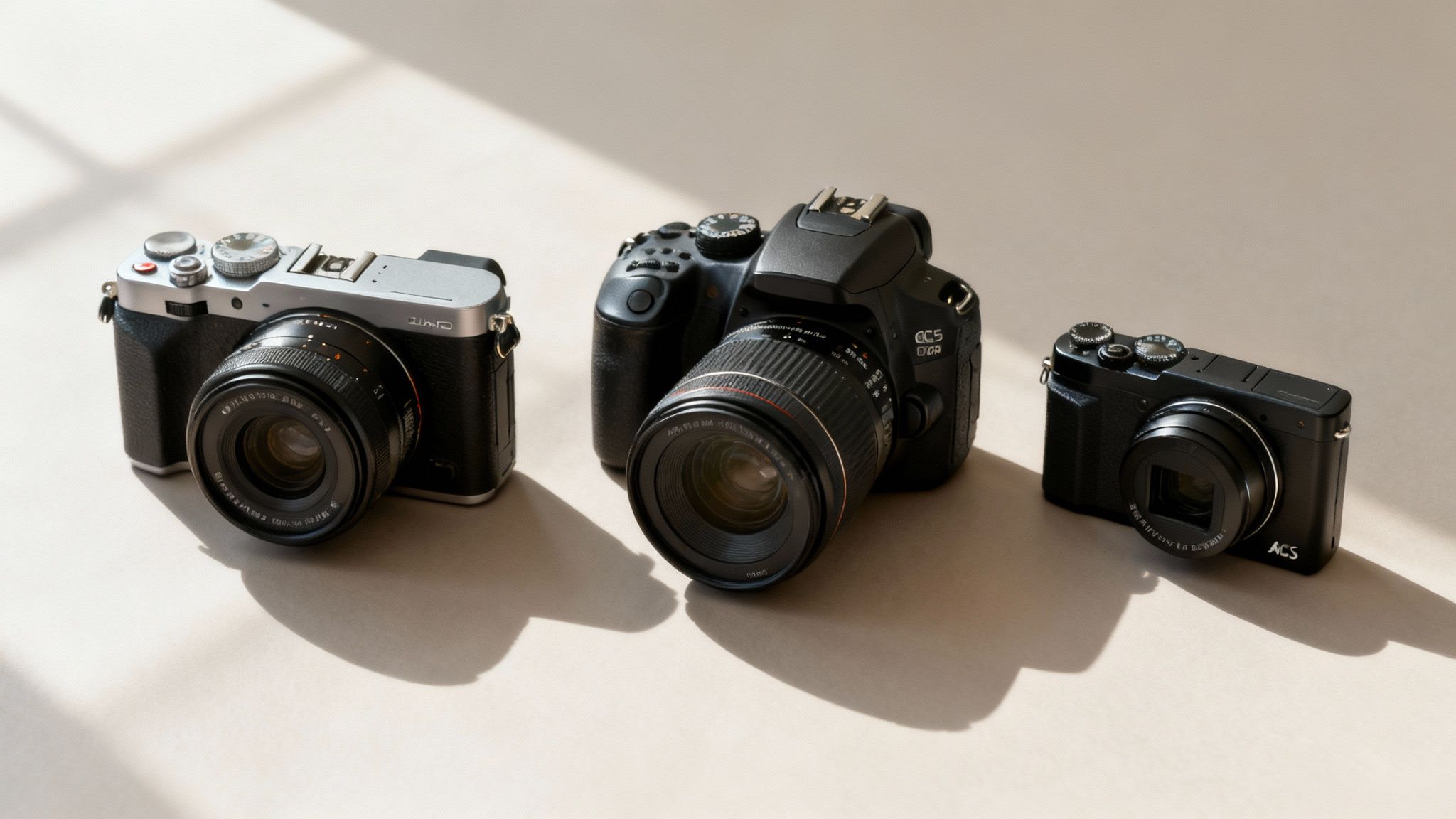
The three main players you'll see on the market are Mirrorless, DSLR, and Compact cameras. Each one is built with a different philosophy in mind, making them a better fit for different photographers and situations. Getting this first choice right is a massive step toward finding a camera that feels like it was made just for you.
Mirrorless vs DSLR vs Compact Cameras
For decades, the DSLR was the undisputed king of serious photography. Its through-the-lens optical viewfinder and solid, dependable build made it the go-to workhorse for pros everywhere. But in recent years, mirrorless technology has stormed the castle and now completely dominates the market by offering a lighter, faster, and more adaptable shooting experience.
This isn't just a global trend; you can see the shift right here in New Zealand. There's a growing demand for cameras that are both powerful and portable. The explosion of digital content, from social media to professional video work, has pushed Kiwi creators to upgrade to mirrorless systems. In fact, forecasts for New Zealand's photo and video app market predict a volume of around US$20.35 million by 2029—a number that highlights just how much we're investing in better gear. You can read more about New Zealand's digital photography market trends on Statista.
So, let's break down how these camera types actually stack up for photographers in Aotearoa.
Practical Comparison of Camera Types for NZ Photographers
This table cuts through the jargon to give you a quick look at what really matters when you're out shooting.
While DSLRs still have their place, it's clear why mirrorless has taken over.
Mirrorless is the obvious winner for most people today. The ability to see your exposure in real-time through the electronic viewfinder fundamentally changes how you shoot, removing guesswork and speeding up your creative process.
Understanding Camera Sensor Sizes
The next critical piece of the puzzle is the sensor—the digital equivalent of a frame of film. The size of the sensor is probably the single most important factor that influences image quality, how well the camera performs in low light, and even the physical size of your lenses.
Think of a sensor like a canvas. A bigger canvas can capture more light and detail, which gives you cleaner, richer images, especially when the lighting isn't great. The three main sensor sizes you'll come across are Full-Frame, APS-C, and Micro Four Thirds.
Full-Frame vs APS-C vs Micro Four Thirds
A Full-Frame sensor is the heavyweight champion, matching the size of a classic 35mm film frame. Its large surface area is brilliant at gathering light, which means it delivers amazing results in dim conditions (like shooting astrophotography over Lake Tekapo) and can produce that beautiful, blurry background (bokeh) in portraits.
An APS-C sensor, often called a "crop sensor," is a bit smaller. This allows for cameras and lenses that are more compact and affordable. The "crop factor" also acts like a built-in teleconverter, magnifying the reach of your lenses. This is a massive plus for wildlife or sports photographers trying to get closer to the action without needing a giant, expensive lens.
Finally, Micro Four Thirds (MFT) is the smallest of the main system camera sensors. This system offers the most compact and lightweight kits overall, making it a firm favourite for travellers and documentary photographers who need to stay mobile and discreet. While it can't quite match a full-frame sensor in the dark, modern MFT cameras produce incredible images in a package you'll never think twice about carrying.
Camera Features That Truly Elevate Your Photos
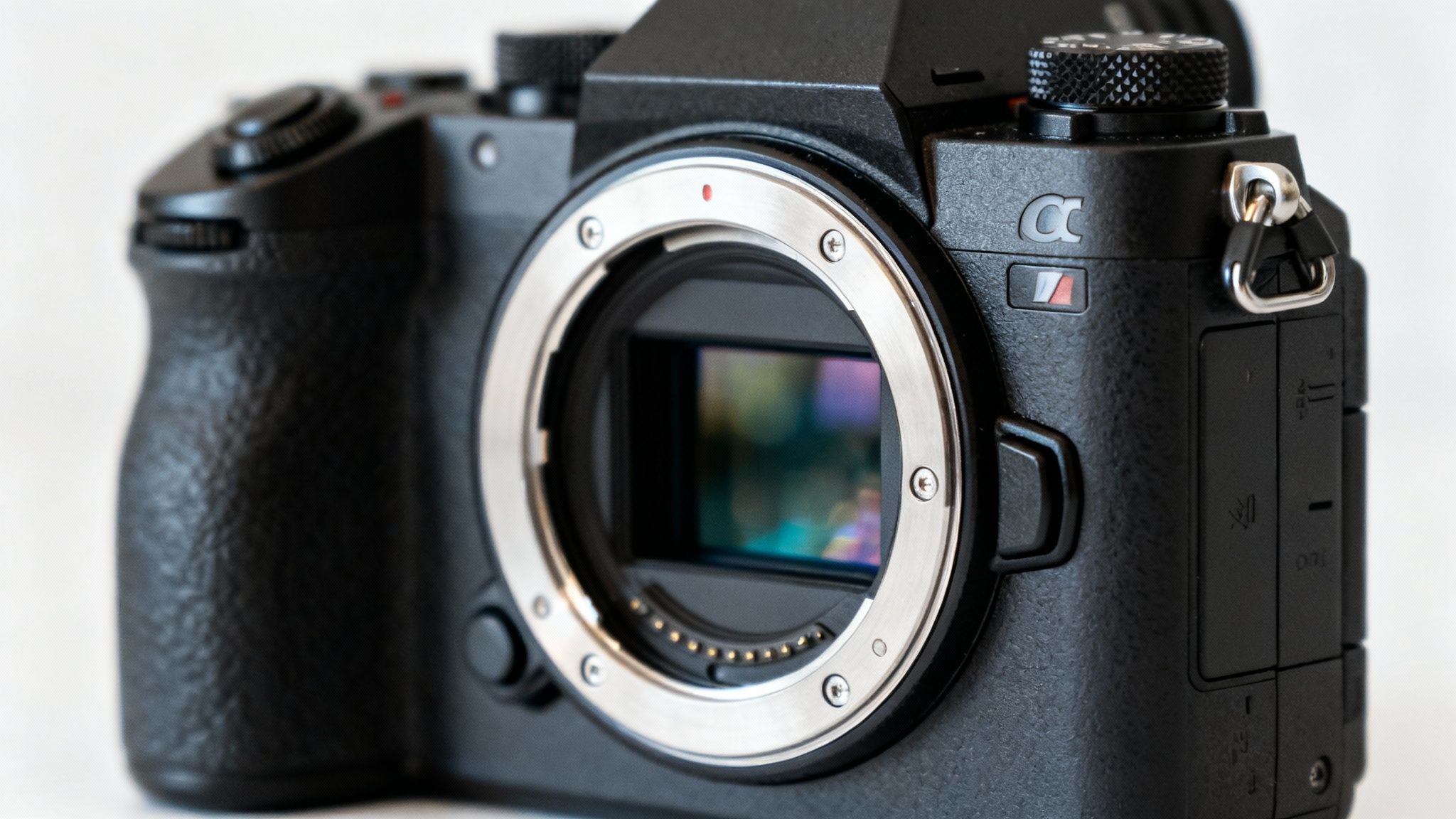
Once you've figured out the camera type and sensor size that fits your style, it's time to dive into the features that will genuinely improve your photos day-to-day. Spec sheets can be a minefield of jargon and numbers, but only a handful of features really make a difference when you're out shooting.
These are the game-changers. Focusing on these core capabilities will have a far bigger impact on your results than almost any other spec. Let's break down what actually matters for capturing sharper, smoother, and more professional images.
Modern Autofocus That Never Misses
If there's one area where camera tech has taken a massive leap forward in the last decade, it's autofocus (AF). Modern systems are ridiculously smart and fast, a world away from the old single-point focus on DSLRs. It’s the secret weapon for nailing sharp photos, especially when your subject won't sit still.
The key tech to look for is subject detection and tracking. Cameras can now use clever algorithms to find and lock onto specific things, like a person's eye, an animal, or even a car. If you plan on shooting portraits or even just photos of your pets, Eye AF is non-negotiable.
Picture this: you're trying to photograph a tūī as it darts between flax bushes. A good AF system will spot the bird, lock onto its eye, and stick to it like glue, even as it moves erratically. This frees you up to focus purely on your composition, knowing the camera has the most critical element—sharp focus—completely sorted.
In-Body Image Stabilisation for Sharp Handheld Shots
In-Body Image Stabilisation (IBIS) is a brilliant piece of engineering where the camera's sensor physically moves to counteract the shake from your hands. This is a massive plus for shooting handheld, particularly when the light gets low and you need to use a slower shutter speed to get a good exposure.
Without IBIS, you’d probably need a tripod to get a sharp shot of a sunset over the Catlins as the light fades. With IBIS, you can often leave the tripod at home, shooting handheld at shutter speeds several stops slower than you'd normally get away with. It gives you incredible creative freedom and makes your gear much easier to carry around.
Here's what IBIS helps you do:
- Get sharper photos in low light: Think cityscapes at dusk or indoor events, all without motion blur.
- Shoot smoother handheld video: It dramatically cuts down that shaky, amateurish look in your footage.
- Travel lighter: You can rely less on a tripod in many situations, which is a blessing for hiking and travel photography.
IBIS is one of those features you don't realise you need until you have it. It fundamentally changes what's possible without a tripod, making it invaluable for photographers who need to stay mobile and react to a scene as it unfolds.
Video Capabilities for the Hybrid Creator
These days, the line between photography and videography is blurrier than ever. Even if you see yourself purely as a photographer, having solid video features opens up new creative doors and makes your skillset far more versatile. For anyone wanting a camera that excels at both, a few specs are essential.
The current gold standard is 4K resolution, which gives you stunning detail and a lot of flexibility when you're editing. Beyond that, look for high frame rate options like 120 frames per second (fps) in 1080p. This is what lets you create that beautiful, cinematic slow-motion footage—perfect for adding drama to action or creating dreamy, flowing sequences.
Weather Sealing for New Zealand's Elements
Finally, let's talk about something especially crucial for us Kiwi photographers: weather-sealing. Our climate is famously unpredictable. You really can get four seasons in one day, particularly when you’re out in the wilderness.
Weather-sealing involves rubber gaskets and seals around the buttons, dials, and battery doors to protect the camera's delicate electronics from dust and moisture. While it won't make your camera completely waterproof, it provides that extra bit of resilience you need to keep shooting when the weather inevitably turns. For anyone serious about landscape, wildlife, or outdoor event photography in Aotearoa, good weather-sealing gives you peace of mind and protects your investment.
Matching Your Camera to Your Creative Passion
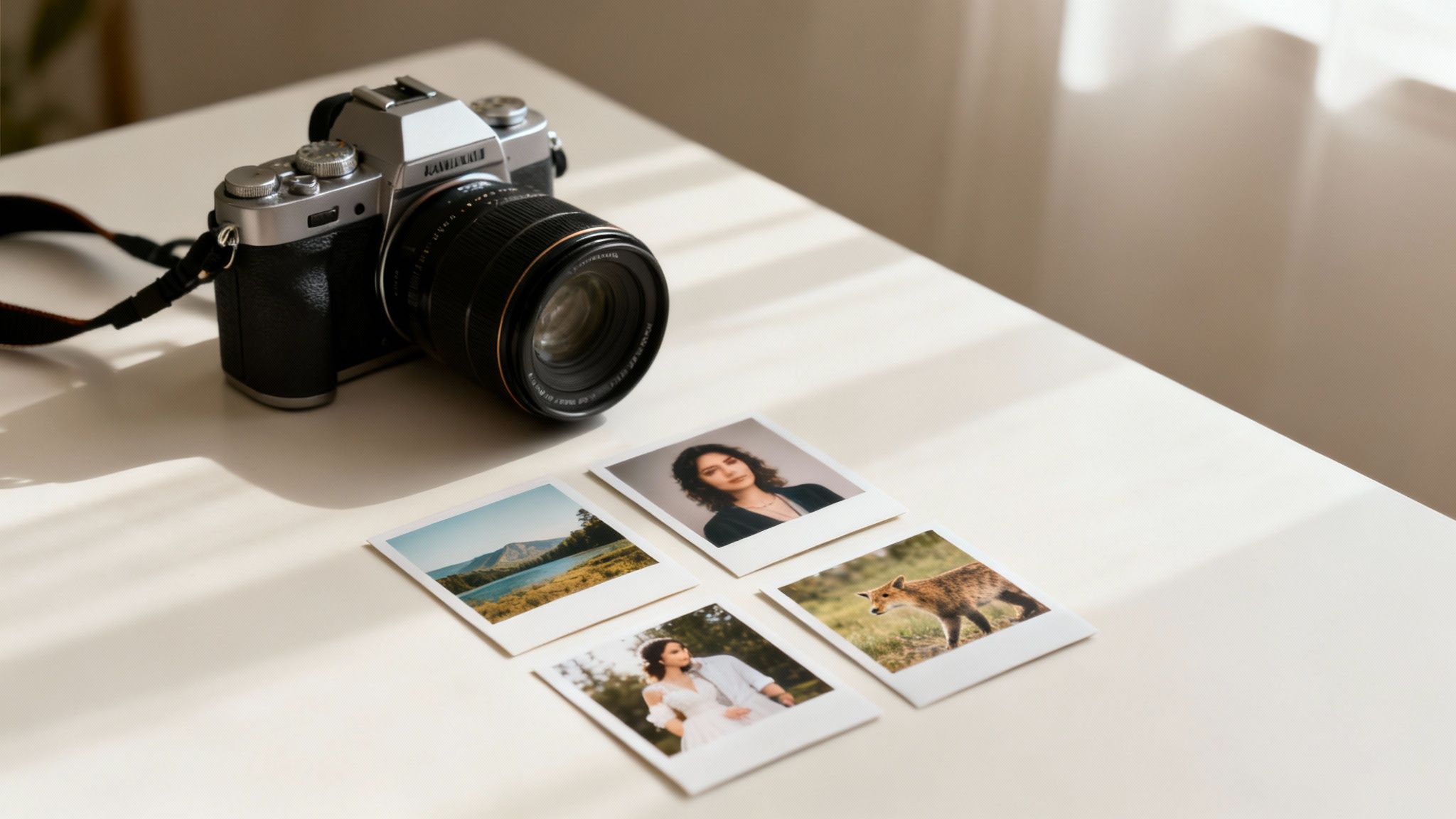
The best camera isn’t a particular brand or model—it's the one that feels like an extension of your own eyes and hands. It’s a tool that disappears, letting you focus entirely on the subjects you love to shoot. The real secret is aligning a camera's strengths with your creative passion.
New Zealand’s landscapes and culture offer up a smorgasbord of photographic opportunities. From rugged alpine scenes to buzzing city life, each style of photography asks something different from your gear. Thinking this way helps you move past confusing spec sheets and really picture how a camera will perform out in the real world.
Of course, to match a camera to your passion, you first need to have a clear idea of your unique style. This is a big part of finding your creative niche, and spending some time here can give you incredible direction before you spend a cent.
The Landscape Photographer's Toolkit
If you’re drawn to capturing Aotearoa’s epic scenery—from the golden bays of Abel Tasman to the moody peaks of Fiordland—a few features are simply non-negotiable. Your main job is to pull as much detail, colour, and tonal information as possible out of a single frame.
A camera with a high-resolution sensor and exceptional dynamic range is your top priority. This is what lets you keep the detail in both the bright, glowing highlights of a sunset and the deep, dark shadows of a forest floor. Just as critical is robust weather-sealing, because you know that southerly is going to roll in eventually.
Landscape photography is a game of patience and preparation. Your camera has to be tough enough to handle unpredictable weather and powerful enough to capture the full, breathtaking dynamic range of the scene in front of you.
Capturing Compelling Portraits
Portrait photography is all about connection. It's about emotion. Your camera’s job is to help you capture that with razor-sharp precision. The most important feature here is a clever autofocus system, especially one with advanced Eye AF tracking. This tech locks onto your subject's eye and refuses to let go, even if they move.
This frees you up to actually talk to your subject and focus on composition and expression, not gear. Pair that with a fast prime lens (like a 50mm or 85mm f/1.8), and you'll get those tack-sharp eyes against a beautifully soft, out-of-focus background—that classic bokeh. Our guide on using different camera angles and shots can help you push your portrait compositions even further.
Freezing Action with Sports and Wildlife Cameras
Maybe your passion is capturing a soaring kererū or that one decisive moment in a rugby match. If so, your needs are completely different. It's all about speed and accuracy. You'll need a camera with a high burst rate (measured in frames per second, or fps) to fire off a rapid sequence of shots.
But here’s the key: a high burst rate is useless if your shots aren't in focus. That's why an advanced autofocus tracking system is even more important. It needs to be smart enough to find, lock onto, and follow fast, unpredictable subjects across your frame. This combo is what ensures you nail that split-second, once-in-a-lifetime shot.
Reliability for Weddings and Events
Documenting weddings and events is a high-pressure gig that demands absolute, unwavering reliability. There are no second chances. For any event photographer, the single most critical feature is dual card slots. This lets your camera write every photo to two memory cards at the same time, giving you an instant backup if a card ever fails.
Exceptional low-light performance is also a must-have for those dimly lit reception venues and churches. A full-frame sensor combined with a fast lens will let you capture clean, detailed images without blasting your subjects with harsh flash. It's this one-two punch of reliability and low-light prowess that truly defines the best camera for these demanding jobs. The demand for skilled photographers in this area is only growing, with forecasts showing continued expansion in the New Zealand market.
A Smart Buyer's Guide for Photographers in New Zealand
Buying a camera is a big deal, and making the right call from the get-go can save you a world of headache and money. This guide is specifically for Kiwi photographers, designed to help you navigate the local market with confidence.
Getting it right isn't just about picking a cool-looking model. It’s about knowing where to buy, understanding the warranty situation, and even recognising when it’s smarter to rent instead of own. These decisions will shape your budget, your creative journey, and your overall peace of mind.
New vs Second-Hand Gear
The first fork in the road is deciding between brand-new gear and the bustling second-hand market. There are solid reasons for both, and it really comes down to your budget and how much risk you're comfortable with.
- Buying New: The big win here is the full manufacturer's warranty. You’re the very first owner, and the gear is flawless. You get the latest tech straight from a trusted local dealer, with zero guesswork involved.
- Buying Second-Hand: This is where you can get a lot more bang for your buck. A pre-loved camera often means you can step up to a higher-spec model that would otherwise be out of reach, unlocking pro-level features much sooner.
Good Kiwi retailers often have used departments where the gear has been checked over and comes with a limited warranty. You'll also find plenty of options on sites like Trade Me, but you need to be a bit more careful—always check the seller’s feedback and don't forget to ask about the camera’s shutter count.
A camera's shutter count is like a car's odometer. It's a simple number that tells you how many photos the camera has taken, giving you a clear picture of its history and helping you make a smarter purchase.
Local Warranty vs Parallel Importing
When you're shopping for new gear, you’ll see two options: cameras with a New Zealand warranty and "parallel imports." The difference is huge. A local warranty means the camera came through the official NZ distributor, so if anything goes wrong, it gets serviced right here in the country.
Parallel imports, on the other hand, are genuine products that have been bought from overseas distributors and resold in NZ, usually for a bit less. The catch? If your parallel-imported camera needs a warranty fix, you'll probably have to ship it back to the overseas seller. That can be a slow, costly, and frustrating process. For a major purchase like a camera, the peace of mind a local warranty offers is almost always worth the small extra cost.
When Renting Makes More Sense
Sometimes, the smartest move isn't to buy at all. Renting gear from a local hire company is a powerful strategy that every photographer should have in their back pocket.
It’s the absolute best way to "try before you buy." You can take a specific camera and lens combo out for a real-world spin before you commit thousands of dollars. Renting is also a lifesaver for one-off projects with special requirements, like needing a massive telephoto lens for a wildlife trip or a top-tier camera for a wedding you've been asked to shoot. It gives you access to professional tools without the crippling upfront cost.
This kind of strategic thinking is vital, particularly in New Zealand’s creative industry. Hundreds of professional photography businesses are operating across the country, with thousands of jobs in media relying on this kind of high-quality equipment. You can learn more about the scale of New Zealand's media industry from MCH.
Ultimately, buying the best camera is just the first step on a much longer journey. To get a real return on your investment, building your skills is just as important. Exploring practical photography courses in New Zealand will help you master your new gear and turn your vision into a properly refined skill.
Taking Your Skills to the Next Level
Choosing the right camera is a fantastic starting point, but it's the skill you bring to it that will truly make your images sing. The most expensive gear in the world is just a tool; unlocking its potential means committing to the craft and developing your own creative eye.
The real magic happens the moment you switch off "Auto". When you take manual control over your camera’s core settings—aperture, shutter speed, and ISO—you stop just capturing a scene and start creating a photograph. This control is everything. It lets you shape the light, freeze a moment in time, and craft the exact mood you have in your head.
Building a Strong Foundation
Getting to grips with a new camera can feel like a lot, but don't let all the buttons and dials put you off. The key is to build your skills one step at a time.
- Learn the Exposure Triangle: This is the absolute bedrock of photography. Get your head around the relationship between aperture, shutter speed, and ISO.
- Shoot in Aperture Priority Mode: Think of this as a stepping stone from Auto. You control the creative part (depth of field), and the camera figures out the technical side of the exposure for you.
- Practise Composition: Learn the rule of thirds, leading lines, and how to frame your subject. A well-composed photo from a basic camera will always beat a sloppy shot from a top-tier one.
The real investment isn't just in the gear you hold, but in the knowledge you gain. Education transforms a passionate hobbyist into a skilled artist, giving you the confidence to bring your creative vision to life consistently.
Investing in Practical Skills
While we're all about learning, it's important to be clear that we are not an NZQA registered college. Our focus is squarely on providing hands-on, practical learning experiences designed to get you out in the field and shooting with confidence. We believe real-world practice is the fastest way to improve.
Structured workshops and courses give you a direct path to mastering tricky techniques and getting priceless feedback. They provide a space to ask questions, experiment in a supportive environment, and learn the specific skills you need for your chosen genre, whether that’s landscapes, portraits, or events.
This hands-on approach is the most effective way to turn your passion into a refined skill and make sure your new camera doesn't just gather dust on a shelf. If you're ready to master both the technical and creative sides of your craft, a structured programme like our Advanced Photography Course Bundle can give you the comprehensive skills needed to elevate your work from good to truly exceptional.
Got Questions? We've Got Answers
Picking out your first proper camera can feel like a minefield of jargon and big decisions. Let's tackle some of the most common questions Kiwi photographers ask when they're just starting out, so you can make a choice you feel great about.
How Much Should I Really Be Spending on My First Camera?
For a beginner here in New Zealand, a budget between $1,000 and $2,000 NZD is a fantastic starting point. That’s the sweet spot for getting a really capable entry-level mirrorless camera that comes with a versatile kit lens—perfect for getting your head around the fundamentals.
This price range gets you a camera you can grow with, so you won't feel like your gear is holding you back a few months down the track. Just be sure to tuck a little extra aside for the non-negotiables: a fast memory card, a spare battery, and a decent camera bag to protect your new investment.
Is Full-Frame Actually Better Than APS-C?
Honestly, not always. It's a classic case of "it depends". Full-frame cameras are undisputed champs in low light and are brilliant for that creamy, blurred-background look in professional portraits. But that doesn't make them the automatic winner for everyone.
APS-C cameras have some serious perks. They’re usually smaller, lighter, and friendlier on the wallet. Plus, that "crop factor" you hear about gives your telephoto lenses extra reach, which is a massive win for shooting wildlife or sports without forking out for a lens the size of a cannon.
The best camera is the one you actually have with you. A lighter APS-C kit is often far more practical for a day out, a holiday, or a hike up one of our beautiful NZ tracks than a bulky full-frame setup.
Which Camera Brand is the Best to Start With?
There’s no single "best" brand, and anyone who tells you otherwise is probably just a fan of what they own! The big names—Sony, Canon, Nikon, and Fujifilm—all make absolutely brilliant cameras for beginners.
Instead of getting bogged down in brand debates, focus on what really matters:
- How it feels: Does the camera sit comfortably in your hands? Can you reach the buttons easily? This is more important than you'd think.
- The menu: Is the menu system logical to you? Can you find what you need without getting lost in a digital maze?
- The lenses: Are there affordable lenses available for the type of photography you want to do down the line?
The single best piece of advice? Pop into a local NZ camera shop and actually hold a few different models. Nothing beats that real-world, hands-on feel.
Ready to turn that new camera into an extension of your creative vision? At Prac Skills, we run hands-on photography courses designed for Kiwis who want to learn by doing. Explore our courses and kick-start your creative journey today.