
February 2, 2026
.webp)

What Are Interpersonal Skills and Why They Matter in the Workplace
Discover what are interpersonal skills and how they drive success. Learn key communication and teamwork abilities to advance your career in any NZ industry.
Practical Skills
minutes
Interpersonal skills are the everyday, practical abilities we use to connect and communicate with other people. They're about how you listen, how you speak, and how you pick up on the unspoken cues that form the bedrock of every relationship, both in and out of the workplace.
Defining Interpersonal Skills Without the Jargon
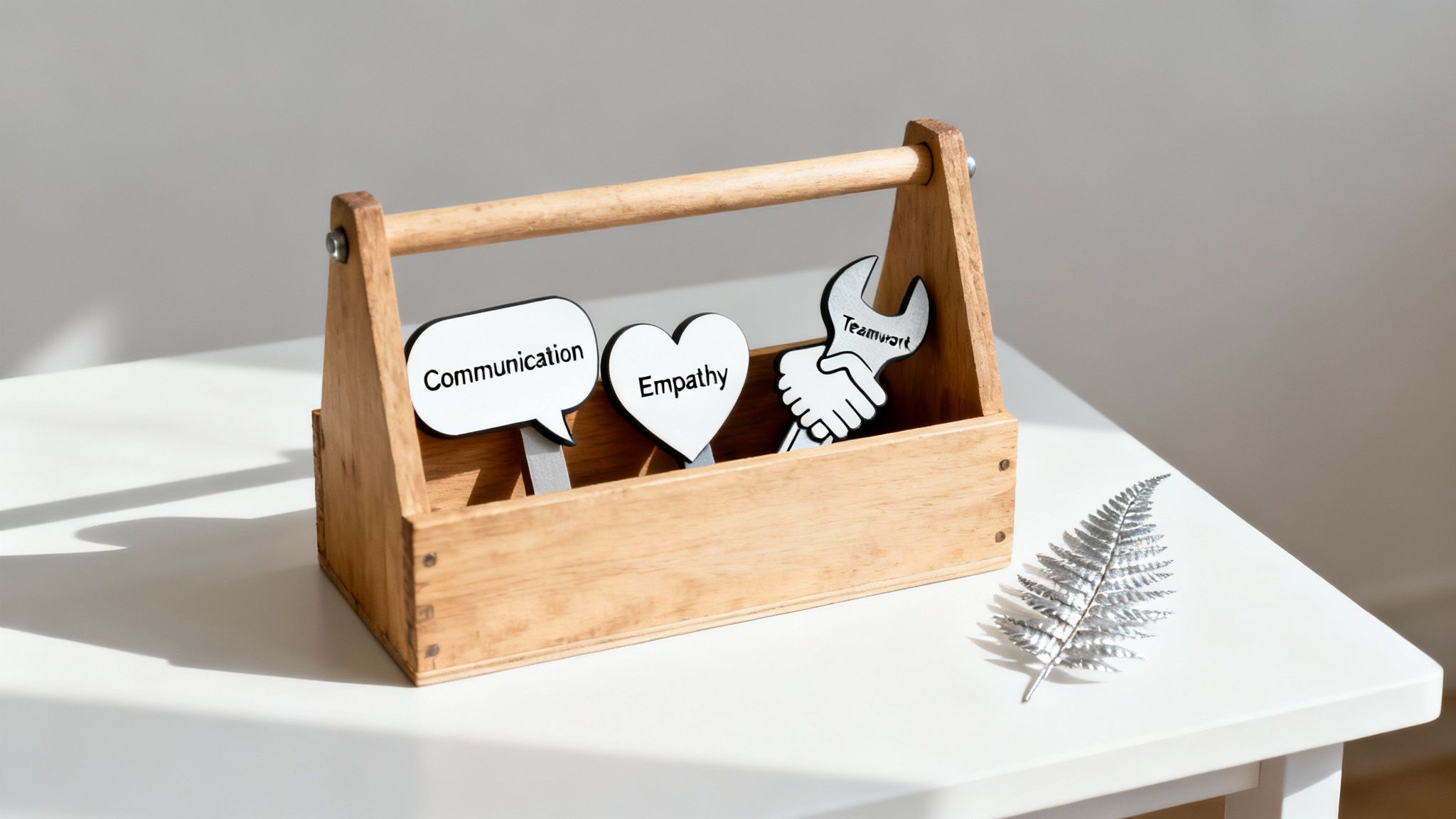
You’ve probably heard them called ‘soft skills’ or ‘people skills’. At the end of the day, these terms all point to the same thing: navigating the human side of work. The great thing is, these aren't fixed personality traits you're just born with. They are absolutely learnable, practical tools anyone can sharpen with a bit of effort.
A good way to think about interpersonal skills is like a builder's toolkit. Just as a builder needs more than just a hammer to get the job done, a successful professional needs far more than technical know-how. Each skill in your kit has a specific job in building strong, lasting relationships.
The Building Blocks of Professional Success
Let’s take a look inside that toolkit. It’s filled with essential gear for making connections and solving problems on the fly. For instance:
- Communication is your hammer and nails – the fundamental tool for joining ideas and bringing people together.
- Empathy acts as your spirit level, helping you see things from another person's viewpoint to keep your interactions balanced and fair.
- Teamwork is your measuring tape, allowing you to coordinate your efforts precisely with others to hit a shared goal.
- Conflict Resolution works like a trusty spanner, perfect for tightening loose bolts and sorting out issues before they become major structural problems.
These skills are the invisible framework holding up every successful project, team, and business. They don’t just determine what you do, but how you get it done alongside others. Getting a handle on them is key to working effectively and building a solid reputation.
Here in New Zealand, these abilities are vital across the board. Whether you’re running a dairy farm in the Waikato, launching a creative start-up in Wellington, or managing a vet clinic in Christchurch, they make all the difference. They empower you to lead teams, build real client loyalty, and navigate the curveballs that inevitably pop up in any workplace.
Strong interpersonal skills aren't just a "nice-to-have"—they're the foundation of genuine career growth and business success.
Why Kiwi Employers Prioritize People Skills

Technical abilities might get your CV noticed, but it’s your people skills that truly open doors and build a lasting career here in New Zealand. Kiwi employers know that a candidate’s ability to connect, communicate, and collaborate is directly linked to business success.
Think about it: a team that communicates well is more innovative. A manager with empathy retains talented staff. A business owner who truly listens to their clients builds unshakable loyalty. These aren't just fluffy "nice-to-haves"; they are the practical mechanics of a healthy, productive workplace.
When a team has strong people skills, they don't just complete tasks—they solve unexpected problems together, support each other through tough times, and create an environment where people genuinely want to work.
The Direct Link to Business Performance
Pouring time into developing your interpersonal skills pays real dividends. It's not just about feeling good at work; it's about driving tangible results that New Zealand employers value.
A workplace with a strong interpersonal foundation sees some pretty powerful benefits:
- Higher Staff Morale: When people feel heard, valued, and respected, job satisfaction climbs, and they’re far more likely to stick around.
- Reduced Workplace Friction: Good conflict resolution skills mean disagreements are handled constructively, stopping small issues from blowing up into major problems.
- Improved Adaptability: Teams that can collaborate effectively are nimble. They can pivot quickly to handle market changes or unexpected project roadblocks without missing a beat.
This isn't just a hunch. Data from Stats NZ shows a massive gap in job satisfaction between those with good workplace relationships and those without. Only 2.7% of workers with positive connections reported feeling dissatisfied, compared to a staggering 19% of those who lacked them.
It's no surprise that skills like communication and customer service consistently top the priority lists for roles in every sector, from the trades to office administration. You can dig deeper into these findings in the full Job Satisfaction and Wellbeing report.
Strong people skills are the glue that holds a business together. They ensure daily operations run smoothly, clients stay happy, and the whole team can move forward with a shared sense of purpose.
More Than Just a Line on a CV
At the end of the day, Kiwi employers prioritise people skills because they know a business is only as strong as its team. Someone who can listen actively, offer constructive feedback, and collaborate effectively is an asset who strengthens the entire organisation.
They're on the lookout for individuals who will contribute to a positive, resilient, and supportive workplace culture. Sharpening your interpersonal skills is one of the single most effective ways to boost your own career satisfaction and prove your value to any business you join or build.
The Essential Interpersonal Skills for Career Growth

Knowing the definition of interpersonal skills is one thing, but seeing them in action is where you really start to grasp their power. To truly get ahead in any career, you need to get good at a handful of core abilities that are the bedrock of every successful interaction.
These aren't just fluffy, abstract ideas. They are practical, everyday tools you can use to build better relationships, untangle problems, and give your career a serious shove forward. Let's break down the skills that matter most.
Active Listening
This is so much more than just hearing what someone says. Active listening is about giving your full concentration to understand the entire message—the spoken words, the tone of voice, and the body language that comes with them. It’s about making the other person feel genuinely heard and valued.
Take a freelance photographer in Auckland, for example. They're not just listening to the client’s shot list; they’re picking up on the quiet anxieties about the event running smoothly. By hearing those unspoken worries, they can offer extra reassurance and adjust their approach, leading to a much happier client and a rock-solid professional reputation.
Empathy
Empathy is your ability to truly understand and share what someone else is feeling. It's about stepping into their shoes, even for a moment, and seeing the world from their perspective. In a work setting, empathy is the glue that builds trust and creates a supportive vibe where people feel safe and understood.
Picture a pet sitter in Dunedin looking after a dog for a first-time client who’s a bundle of nerves. An empathetic sitter doesn’t just promise to feed the dog on time. They acknowledge the owner's feelings, maybe by saying, "I know it's hard leaving them," and then send a few photo updates to put their mind at ease. That small act builds a massive amount of trust.
"Empathy is feeling with people. It’s a vulnerable choice, because in order to connect with you, I have to connect with something in myself that knows that feeling."
What this really means is that genuine human connection is at the heart of great teamwork and leadership. When you get better at understanding where others are coming from, you'll see collaboration improve and professional bonds strengthen. To see how this ties into management, check out our guide on the essential qualities of leadership.
Collaborative Teamwork
Teamwork is all about a group of people pulling together to hit a common goal as efficiently as possible. Good teamwork means everyone communicates clearly, shares the load, and respects the different skills and opinions each person brings to the table. It's not about individual heroes; it's about a collective win.
Think of a small creative agency scrambling to meet a tight deadline. Instead of everyone hiding in their own silo, the graphic designer, copywriter, and account manager are in constant communication. They bounce ideas off each other, give constructive feedback, and have each other’s backs to deliver something amazing for the client.
Conflict Resolution
Let's be honest, conflict is a normal part of any workplace. It's how you handle it that counts. Conflict resolution is the art of finding a peaceful and fair solution to a disagreement. It takes a bit of patience, a lot of active listening, and a focus on finding common ground instead of pointing fingers.
Imagine two workers on a busy dairy farm who disagree on the best way to maintain a crucial piece of equipment. Instead of letting it fester, a manager with sharp conflict resolution skills steps in to mediate. They listen to both sides, help them find a compromise that keeps things safe and efficient, and in doing so, keep the team spirit positive and productive.
How People Skills Drive Success Across NZ Industries

It’s one thing to understand what interpersonal skills are, but seeing them in action is where their real value clicks into place. These abilities aren't just for corporate boardrooms; they’re the secret weapon for success in every corner of New Zealand, from a sprawling farm in the King Country to a boutique agency in Wellington.
These skills are the practical tools we use to solve everyday problems and open up new opportunities, no matter the job title. They’re what make the difference when the pressure is on.
From the Paddock to the Pet Clinic
Let's look at how these skills actually play out in professions that form the backbone of many Kiwi communities. Each scenario shines a light on a different interpersonal skill, but they all prove one thing: connecting with people is central to getting the job done right.
For the Farmer: Imagine a sheep and beef farmer near Gisborne needing a new supplier for feed. Strong negotiation skills aren’t about being aggressive; they're about clear communication and finding a win-win that builds a solid, long-term relationship. That’s how you get a fair price and a reliable partner for years to come.
For the Animal Care Professional: A pet sitter in Christchurch has a new client who's clearly anxious about leaving their dog for the first time. Using empathy, the sitter actively listens to their worries, sends a reassuring photo update later, and instantly builds trust. That’s how you turn a one-off job into a loyal customer.
For the Small Business Owner: The owner of a small creative agency is guiding their team through a tough project with a tight deadline. Their leadership and communication skills keep morale from dipping. They clarify goals, make sure everyone feels heard, and turn a stressful situation into a massive team victory.
These examples show that people skills aren't 'soft' options—they are essential tools for thriving in New Zealand's competitive economy. This isn't just a hunch; it's backed by local research. A major study found that in workplaces with a strong "Psychosocial Safety Climate"—where people feel supported and respected—psychological distress and depression dropped for 57.9% of respondents. In these positive environments, issues like bullying fell while inclusion rose, proving that people skills create healthier, more productive businesses. You can dive into the full findings in the 2018 New Zealand Workplace Barometer.
The Common Thread in Every Industry
Whether you're in horticulture, animal care, or running your own venture, the common thread is impossible to miss. Your ability to communicate, negotiate, empathise, and lead is just as vital as your technical know-how.
The most successful people in any field are the ones who understand the human element. They know how to build bridges, solve friction, and inspire action in others.
Ultimately, these are the skills that turn a great idea into a successful business, a difficult conversation into a positive outcome, and a group of individuals into a powerful, cohesive team.
Right, so you know you've got great people skills. That's one thing. But proving it to a potential boss or client? That’s a whole different ball game.
Slapping vague claims like "good communicator" or "team player" onto your CV just doesn't cut it anymore. Hiring managers have seen it a thousand times, and it often gets glossed over because there's no proof. To really catch their eye, you have to show them, not just tell them.
The secret is to turn your abilities into real, tangible achievements. Instead of just listing a skill, talk about a time you actually used it to get a specific result. This gives your claims some serious weight and helps employers picture the value you’d bring to their team.
From Vague Claims to Proven Impact
Let's be honest, it's easy to fall back on generic phrases. But transforming those claims into powerful, evidence-based statements is what makes your CV stand out from the pile.
Here's a quick look at how to rephrase common soft skills to show what you can actually do:
Transforming Your CV From Vague Claims to Proven Skills
See the difference? The second column tells a story and provides concrete evidence of your skills in action. It’s compelling because it’s real.
Tell a Story With the STAR Method
One of the best ways to frame these achievements is by using the STAR method. It's a simple framework that helps you structure your experiences into a short, powerful story.
- Situation: Briefly set the scene. Where were you? What was the challenge?
- Task: What was your specific goal or responsibility?
- Action: What exact steps did you take? This is where you shine a spotlight on your interpersonal skills.
- Result: What happened in the end? Use numbers and solid details whenever you can.
So, instead of saying you have "teamwork skills," you could use STAR to paint a picture: "I collaborated with a three-person team (Action) to streamline our stock management process (Task), which led to a 15% reduction in product waste over six months (Result)." Now that's a statement that gets noticed.
For more inspiration on phrasing your own experiences, have a look at these powerful CV skills examples that cover both hard and soft skills.
Think of your CV as the opening scene. It's your first chance to show off your interpersonal skills through clear, results-focused writing. It sets the stage for the story you’ll tell in the interview.
Bringing Your Skills to Life in the Interview
The interview is your stage. It's where your people skills are tested in real-time. Everything from your body language to the way you answer questions—and even the questions you ask—paints a picture of who you are.
Being genuine is key here. Make confident eye contact, really listen without cutting people off, and pay attention to your posture. When you're answering their questions, bring back the STAR method to structure your responses. It helps you provide clear, evidence-based examples of what you can do.
Finally, remember an interview is a two-way street. Asking smart, thoughtful questions shows you're engaged and genuinely interested in the role and the company. For some great ideas on what to ask, check out our guide on the best questions to ask in an interview. It not only shows off your communication skills but also helps you figure out if the job is truly the right fit for you.
A Practical Plan to Develop Your Interpersonal Skills
Improving your interpersonal skills isn’t a one-off task you can tick off a list; it’s a continuous journey. The good news? You can start making real progress right now with practical, everyday actions.
Just like learning any new skill, progress comes from a mix of self-awareness and consistent practice. You don't need some grand, complicated strategy to begin. Small, intentional steps can make a massive difference in how you connect with others, both at work and in your personal life.
Start With Self-Assessment
Before you can build anything, you need to know what you’re working with. A great first step is getting an honest picture of your current strengths and the areas you’d like to sharpen up. To get a handle on your emotional awareness, you can explore various free emotional intelligence test resources.
Beyond that, here are a few things you can do right away:
- Ask for honest feedback: Pull a trusted colleague or manager aside and ask for specific, constructive feedback on your communication style. Be ready to listen!
- Watch and learn: Pay attention to colleagues who just seem to get it right. Notice how they handle tricky conversations or build rapport so effortlessly. What are they doing that you could try?
- Practise active listening: In your next conversation, make a real effort to just listen without jumping in. Try summarising what you heard to make sure you’ve understood correctly.
Strong interpersonal connections have never been more important, especially for younger Kiwis. A 2024 report found 29% of Gen Z workers in New Zealand actually prefer face-to-face communication over digital methods. It’s a powerful reminder that genuine human connection is still vital for building strong professional networks.
Build Your Skills with Structured Learning
For those who want a more guided approach, structured learning can give you the frameworks and tools to fast-track your progress. That’s where we come in.
At Prac Skills, our online, self-paced courses are designed specifically to help busy Kiwis build these exact abilities in a way that’s relevant to your career.
Whether you're managing a farm or leading a creative team, our practical courses help you sharpen the skills that employers are desperate for. Our stackable, industry-relevant certificates offer a flexible way to invest in yourself, proving that your people skills are something you can always improve. To see how this fits into your career journey, check out our guide to professional development courses in NZ.
Your Questions About Interpersonal Skills Answered
You’ve got questions, we’ve got answers. Here are some of the most common things people ask about building better people skills and how you can start putting them into practice right away.
Can Introverts Develop Strong Interpersonal Skills?
Absolutely. It’s a common myth that being an introvert means you can't be great with people. Being introverted is simply about how you recharge your energy, not your ability to connect with others.
In fact, many introverts are naturally brilliant listeners and observers — two of the most important interpersonal skills you can have. The secret is to lean into your strengths instead of feeling like you need to act like an extrovert.
What’s the First Step to Improving My People Skills?
The simplest and most powerful first step is to master active listening. Try this for one week: in every conversation, make it your mission to truly hear what the other person is saying without mentally planning your response.
This small change forces you to be more present and empathetic, and you’ll likely notice an almost immediate improvement in the quality of your interactions.
Developing your interpersonal skills isn’t about changing who you are. It's about adding practical tools to your professional toolkit, so you can build stronger, more effective relationships in any setting.
How Do I Handle a Difficult Colleague?
Working with someone you find challenging can be tough. The key is to separate the person from the problem you’re trying to solve together.
Try using "I" statements to explain your point of view without pointing fingers. For example, instead of saying, "You always submit your work late," you could say, "I feel concerned when deadlines are missed because it impacts our team’s progress."
From there, focus on a common goal you both share and work backward to find a solution. Patience and a calm, professional attitude will be your greatest allies.
Ready to build the practical abilities that will set you apart? Prac Skills NZ offers a range of online, self-paced courses designed to help you succeed. Explore our courses today and start building your confidence.