December 13, 2025
.webp)
Best Online Photography Courses NZ for 2024
Discover the top online photography courses NZ offers. Compare options to find the right fit for your skill level and turn your passion into a profession.
Career Development
minutes
Best Online Photography Courses NZ for 2024
If you're looking to get into photography in New Zealand, the best online courses offer a flexible, practical way to learn that actually fits into your life. Whether you're just wanting to capture Aotearoa's incredible landscapes for fun or you're aiming to build a professional career, there's a path for you. These courses provide a structured way to finally master your camera and develop that creative eye, with options ranging from in-depth diplomas to specialised, skill-focused certificates.
Finding Your Focus in NZ's Photography Scene

Starting a photography journey in New Zealand is an amazing prospect. Let's be honest, from the snow-dusted Southern Alps to the buzz of Auckland's city life, you're never short on inspiration. But with so many learning options out there, figuring out where to even begin can feel a bit much. The good news is that online learning has completely changed the game, making it easier than ever to pick up new skills, no matter where in the country you are.
Today's online photography courses are built for a huge range of people. Maybe you're a total beginner who's keen to finally get your camera off 'auto' mode, or perhaps you're an aspiring pro ready to launch a business. Either way, there’s a course designed for your specific goals. The real win here is the flexibility—you can learn at your own pace, fitting lessons around your job, family, or travels.
Understanding Your Learning Options
As you start looking around, you'll generally come across two main types of credentials: formal diplomas and practical, skills-focused certificates. Formal diplomas are often connected to the New Zealand Qualifications Authority (NZQA), which usually means a more academic, long-term commitment.
On the other hand, you'll find many fantastic, industry-focused providers offering certificates that prioritise job-ready skills over formal qualifications. It’s important to know that providers like us are not NZQA-registered colleges, but our value is in delivering targeted, practical training that you can use in the real world.
These skills-based courses are all about building a strong portfolio and mastering the specific techniques that clients and employers are actually looking for. They offer a more direct route to turning your passion into a profession.
Why Photography Skills Matter in New Zealand
The demand for skilled photographers in New Zealand is strong and growing. The creative industries, which professional photography is a big part of, contribute over NZD 11 billion to the economy every single year. This massive economic footprint creates steady opportunities in sectors like tourism, real estate, marketing, and events.
This diverse demand means learning photography isn't just about a hobby; it's about developing a valuable skill set with real career potential. By picking the right course, you're investing in your ability to create compelling images that meet a professional standard. If you're weighing up your options, our detailed guide on New Zealand photography courses can help you figure out which path lines up best with your ambitions.
Choosing the Right Course for Your Skill Level
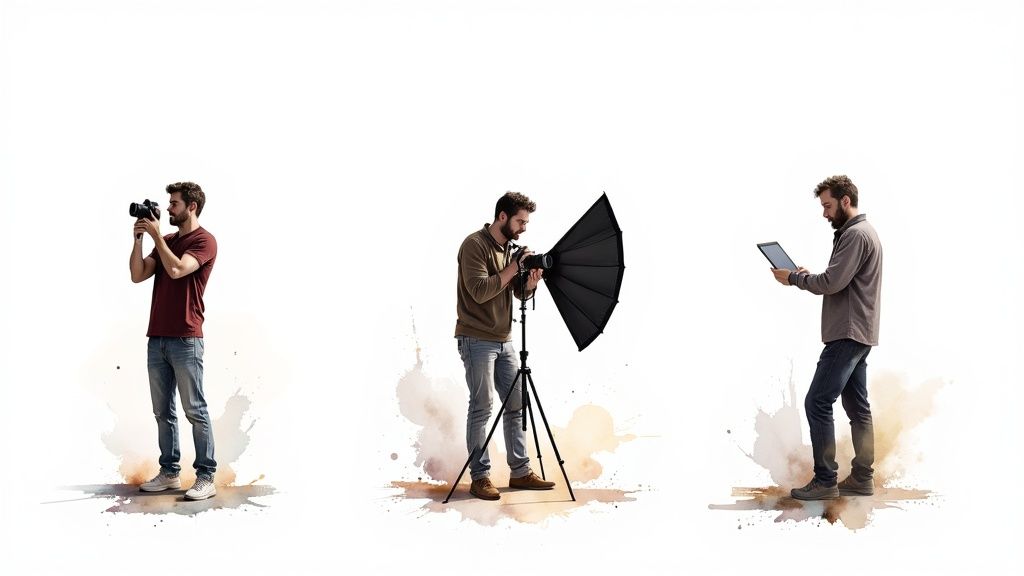
Picking an online photography course that lines up with your current ability is probably the most important decision you'll make. It’s a bit of a Goldilocks situation. Go too basic, and you’ll be bored stiff. Go too advanced, and you’ll just end up feeling overwhelmed and discouraged.
The goal is to find that sweet spot—a course that pushes you just enough to grow without knocking your confidence.
This all comes down to a bit of honest self-assessment. Are you just unwrapping your first "proper" camera? Or are you already pretty comfortable shooting in manual mode but want to nail a specific skill, like portraits or product shots? Figuring out exactly where you are on your photography journey means you’ll invest your time and money wisely, setting yourself up for success from the get-go.
And you're not alone in this. The interest in structured photography education has exploded in New Zealand, with online platforms making it easier than ever to get started. Data from the Ministry of Education shows that formal photography studies hit roughly 1,850 students by 2023. That’s a huge 54% jump over eight years, highlighting a clear trend of Kiwis wanting to get serious about their creative skills.
To help you place yourself, here’s a quick breakdown of the different course levels and what you can expect from each.
Matching Your Skills to the Right Course Level
This table breaks down the typical learning objectives for each stage of your photography journey in NZ, helping you find the perfect fit.
Essentially, you're either learning the alphabet, writing sentences, or becoming a novelist. Each stage builds on the last, so finding the right starting point is key.
The Beginner Starting Block
If you're new to the game, your main goal is to build a rock-solid foundation. Think of it like learning the chords on a guitar before you try to play a song. A good beginner course should demystify your camera and finally get you off that 'Auto' setting for good.
You'll get to grips with the core concepts that every great photo is built on. Key topics usually cover:
- The Exposure Triangle: Understanding how aperture, shutter speed, and ISO work together to control light.
- Essential Composition Rules: Learning principles like the rule of thirds, leading lines, and framing to make your shots more interesting.
- Focusing Techniques: Mastering how to get those tack-sharp images every single time.
This stage is all about building confidence. By the end, you should feel comfortable taking full control of your camera and intentionally creating the photos you see in your head.
The Intermediate Leap Forward
Okay, so you've nailed the basics. You know your way around manual mode, but your photos are still missing that something—that professional polish. This is the intermediate stage, where you start to refine your craft and develop a sharper technical and artistic eye.
An intermediate course is designed to push you beyond just taking a technically correct photo. It’s about learning how to shape light, tell a stronger story, and develop a consistent editing style that makes your work instantly recognisable.
This is where you dive into the really fun stuff. You'll learn how to use an off-camera flash to create dramatic lighting, master editing software like Adobe Lightroom to bring your images to life, and explore different genres like portraiture or landscape photography in much more depth. It's the perfect step for turning a solid hobby into a potential side hustle.
The Advanced and Niche Path
For experienced photographers, the learning never really stops. At this level, you’re not just learning techniques anymore; you're defining your unique artistic voice and mastering the business side of the industry. These courses are less about the "how" and more about the "why."
You might find yourself exploring highly specialised areas, like advanced astrophotography, commercial product shoots, or the ins and outs of running a successful wedding photography business here in New Zealand. The focus shifts to building a killer portfolio, finding and managing clients, and creating a cohesive body of work that makes you stand out. This is all about turning your passion and skill into a sustainable, professional career.
No matter where you're at, you can explore a range of practical photography courses in NZ that cater to every skill level and interest.
Navigating Photography Credentials in New Zealand
Trying to make sense of photography qualifications in New Zealand can feel a bit overwhelming, but it's key to picking a course that actually matches your goals. The path isn't one-size-fits-all. It's more like choosing between a scenic, multi-day hike and a direct flight—both get you to your destination, but they serve very different purposes.
On one side, you have the formal, NZQA-accredited diplomas. These are the structured, academic routes often offered by larger institutions like polytechnics. Think of them as the university degree of the photography world; they provide a deep, theoretical foundation and are nationally recognised.
But a huge chunk of the industry runs on a different kind of credential: practical, skills-based certificates from independent providers. To be clear, we are not an NZQA-registered college; our focus is squarely on this practical pathway. These courses are built for speed and career-readiness, prioritising the one thing that truly matters to clients: a stunning portfolio.
The Power of a Portfolio Over Paper
In any creative field, and especially in photography, your portfolio is your ultimate credential. A formal diploma can look good on a CV, but no client will ever hire you based on a piece of paper alone. They want to see your work, your style, and your ability to deliver incredible images. This is where skills-focused online photography courses in NZ really shine.
Their entire structure is built around doing. Assignments aren't just theoretical exercises; they're designed to become portfolio pieces from the get-go. You might learn a new lighting technique on Monday, and by Friday, you'll have a professional-quality portrait to show for it.
This hands-on approach means you’re not just learning about photography; you are actively being a photographer from day one. It closes that frustrating gap between theory and real-world results, which is what builds real professional confidence and a standout body of work.
This practical focus is exactly why so many of New Zealand’s top photographers have built amazing careers without formal diplomas. They invested in targeted training that gave them the specific, in-demand skills they needed to get ahead in a competitive market.
NZQA Diplomas vs. Skills-Based Certificates
So, let's break down the key differences to help you figure out which route makes the most sense for you.
The great thing about online photography education in New Zealand is this mix of flexible delivery and formal qualifications. For instance, the New Zealand Diploma in Photography (Level 5) offered by institutions like SIT provides a clear pathway for gaining foundational skills remotely through a recognised authority. You can find more details about their formal photography diploma on the SIT website.
The Value of CPD and Specialisation
Beyond your initial training, skills-based certificates offer incredible value for your ongoing growth as a professional. The photography industry never sits still—new gear, software updates, and editing trends pop up all the time. Certificates are the perfect way to upskill and stay relevant.
They're also fantastic for earning Continuing Professional Development (CPD) points. Many professionals use these focused courses to maintain their credentials and show a real commitment to their craft. This is a huge advantage, as it proves you're dedicated to upholding the highest industry standards. You can learn more about how our courses are recognised for their professional development value.
Ultimately, the 'best' qualification is the one that gets you closer to your specific dream. Whether that’s capturing beautiful family portraits on the weekend or launching a full-time commercial photography business, your education should be a direct stepping stone. For many Kiwis, the speed, practicality, and portfolio-first nature of a skills-based certificate is the most effective way to turn that passion into a reality.
What to Look For in a Great Online Photography Course
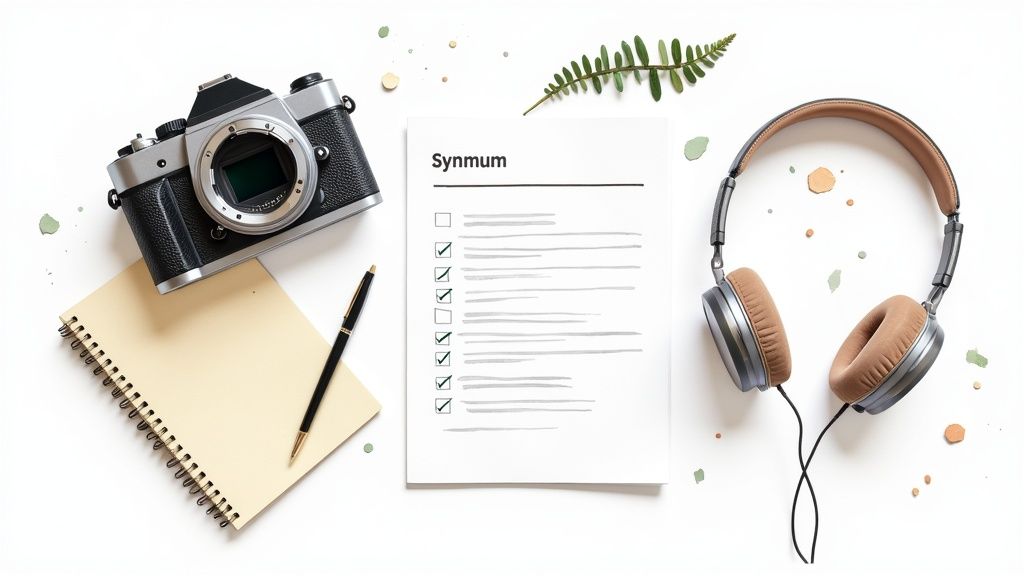
With so many online photography courses in NZ to choose from, how do you spot the ones that are genuinely worth your time? It’s easy to get drawn in by a slick website, but the real magic is in the course’s bones—its structure, content, and the support you get along the way.
A great course does more than just show you which buttons to press. It fundamentally changes how you see the world. It’s about learning the art of seeing, not just the mechanics of shooting. That means looking past the sales pitch and digging into what a course actually offers to make sure it will deliver tangible skills and move you closer to your goals.
A Detailed and Transparent Syllabus
First things first, check out the syllabus. A vague, one-page outline is a major red flag. A quality course will lay it all out for you with a clear, detailed breakdown of every module and lesson. This transparency gives you a complete picture of your learning journey before you even commit.
Just by looking at the syllabus, you should be able to answer a few key questions:
- What specific skills will I learn each week? You want to see topics like mastering manual mode, composition techniques, and post-processing workflows clearly listed.
- Does the content build logically? The course should start with the fundamentals and then build on that knowledge step-by-step, not jump all over the place.
- Is the content relevant and up-to-date? Above all, any great course must offer in-depth lessons on the non-negotiables, like the essential lighting techniques for photography, because mastering light is what separates good photos from incredible ones.
A detailed syllabus proves the provider has put real thought into creating an effective learning path. It’s your roadmap to success.
Hands-On Assignments and Portfolio Building
Photography is a hands-on skill. You can’t learn it just by reading about it. The best online courses are built around practical, hands-on assessments that push you to actually pick up your camera and shoot. These assignments are where the real learning happens.
More importantly, they're your chance to build a real-world portfolio. In New Zealand, your portfolio is your most valuable asset as a photographer—it’s how you prove your skills and vision to potential clients. A course that prioritises portfolio development gets this. Look for providers whose assignments are designed to become portfolio-worthy pieces, encouraging you to create polished, professional work from the get-go.
A course without practical assignments is like a cookbook with no pictures—it gives you the ingredients but doesn't show you what you're aiming for. You should finish your studies with more than a certificate; you should have a collection of images you’re genuinely proud to show off.
Access to Personalised Mentor Feedback
Let’s be honest, feedback from an experienced photographer is priceless. While self-paced learning offers fantastic flexibility, it shouldn’t mean you’re left to figure it all out alone. A top-tier course will provide a clear way for you to get personalised, constructive feedback on your work.
This feedback loop is what truly accelerates your growth. A good mentor can spot weaknesses you’d miss, suggest creative angles you hadn't considered, and give you the encouragement to push through tough spots. Whether it's through email, a dedicated platform, or live video calls, access to expert guidance is non-negotiable.
NZ-Specific Content and Learning Models
Finally, think about how the course fits into the New Zealand context. Generic, overseas content often misses the subtleties of the local scene. Look for courses that include modules relevant to our market, like navigating the NZ wedding industry, capturing our one-of-a-kind landscapes, or understanding local business practices.
Also, consider the learning model itself. Do you thrive on the flexibility of a self-paced programme, or do you need the structure of a group course with set deadlines to stay on track? There’s no right or wrong answer—it's about what works for you. Choosing a course that aligns with your lifestyle is the secret to staying motivated and actually finishing it.
Building Your Personal Photography Roadmap
Theory is great, but let's make this real. The best online photography courses in NZ are the ones that connect directly to your personal ambitions. Choosing a course isn't just about learning a new skill; it's about building a clear pathway from where you are right now to where you truly want to be.
To help you visualise your own journey, we’ll explore three practical learning roadmaps. Each is tailored to a common photography goal here in New Zealand, showing how a logical sequence of skills can turn your passion into a tangible, rewarding outcome.
Pathway One: The Weekend Explorer
This is for the passionate hobbyist. Your goal isn't to make money; it's to capture the breathtaking beauty of Aotearoa with skill and confidence. You want your photos to do justice to that stunning sunrise over Lake Tekapo or that dramatic West Coast sunset.
Your roadmap is all about building a solid creative and technical foundation.
Start with the Fundamentals: Your first step is a comprehensive beginner's course. This is where you finally get off 'Auto' mode for good and take full creative control over your camera. The focus is on mastering the exposure triangle, understanding light, and learning the core rules of composition.
Specialise in Your Passion: Once the basics are locked in, you can dive into what you love most. A dedicated landscape photography workshop is a perfect next step. Here, you’ll learn techniques specific to capturing New Zealand’s epic scenery, from long-exposure shots of waterfalls to mastering focus for vast mountain ranges.
Refine Your Editing: The final piece of the puzzle is post-processing. A course focused on a tool like Adobe Lightroom will teach you how to bring out the very best in your RAW files, turning good shots into incredible images you'll be proud to print and hang on your wall.
The Weekend Explorer's journey is driven by personal fulfilment. The outcome isn't a paycheque; it's a gallery of amazing images that capture your adventures and a deep, lifelong appreciation for the art of photography.
Pathway Two: The Side-Hustle Creator
You've got the passion, and you can see an opportunity to earn some extra income doing what you love. Maybe it's taking family portraits on the weekends, shooting product photos for local businesses, or selling prints of your landscape work. Your roadmap needs to blend creative skills with a healthy dose of business savvy.
Your learning journey is more strategic, focusing on developing marketable skills.
Master the Core Skills: Just like the hobbyist, you'll start with a strong foundational course. The difference is your mindset—you'll be focused on achieving consistent, professional-quality results every single time you pick up the camera.
Add a Commercial Specialisation: This is where your path really starts to fork. You need to learn a skill that clients will actually pay for. A course in portrait photography, focusing on lighting and posing, is a fantastic option. Or, a product photography module could open doors to working with local brands and artisans.
Learn the Business Basics: This step is absolutely critical. An online course that covers the fundamentals of running a small creative business in New Zealand is essential. You'll need to get your head around pricing your work, simple marketing techniques, and how to manage client expectations professionally.
As you build out your side-hustle, you'll also want to consider how you'll present your work. For artists interested in selling physical copies, learning how to photograph artwork for prints is a valuable skill in its own right.
Pathway Three: The Full-Time Pro
This is the most demanding path, aimed squarely at building a sustainable, long-term career. Your goal is to become the go-to professional in a specific niche, whether that's weddings, commercial advertising, or photojournalism. Your roadmap will be an intensive mix of technical mastery, artistic development, and serious business acumen.
This pathway requires a deep commitment to continuous learning and professional growth.
Build on Advanced Techniques: You've already got the intermediate skills down pat. Now, you need to pursue advanced courses in your chosen field. This might mean mastering complex multi-flash lighting setups for commercial shoots or learning the art of visual storytelling for wedding photography.
Focus on Portfolio Curation: Your portfolio is everything. You'll need to learn how to curate a powerful, cohesive body of work that speaks directly to your ideal client. This isn't just about taking great photos; it's about selecting and presenting them in a way that showcases your unique style and professional capabilities.
Master Client Management and Marketing: Finally, your education expands far beyond the camera. You’ll need to learn about advanced marketing strategies, contract negotiation, client relationship management, and financial planning for a creative business. This ensures your talent is supported by a solid, profitable business structure.
To bring this all together, the table below maps out what these learning journeys might look like in practice. Think of it as a starting point to help you build your own personalised plan.
Sample Photography Learning Pathways in NZ
No matter which path resonates with you, the key is to be intentional. A well-chosen sequence of courses can accelerate your progress, build your confidence, and turn your photographic aspirations into reality.
Common Questions About Online Photography Courses
Diving into the world of online photography courses in NZ can bring up a lot of questions. That’s perfectly normal. It's a big investment of your time, money, and passion, so you want to be sure before you commit.
To help you feel confident about your next move, we've put together answers to the queries we hear most often from aspiring Kiwi photographers just like you.
This decision tree helps visualise the different learning paths you can take, depending on whether your goal is personal enjoyment, a side income, or a full-time professional career.
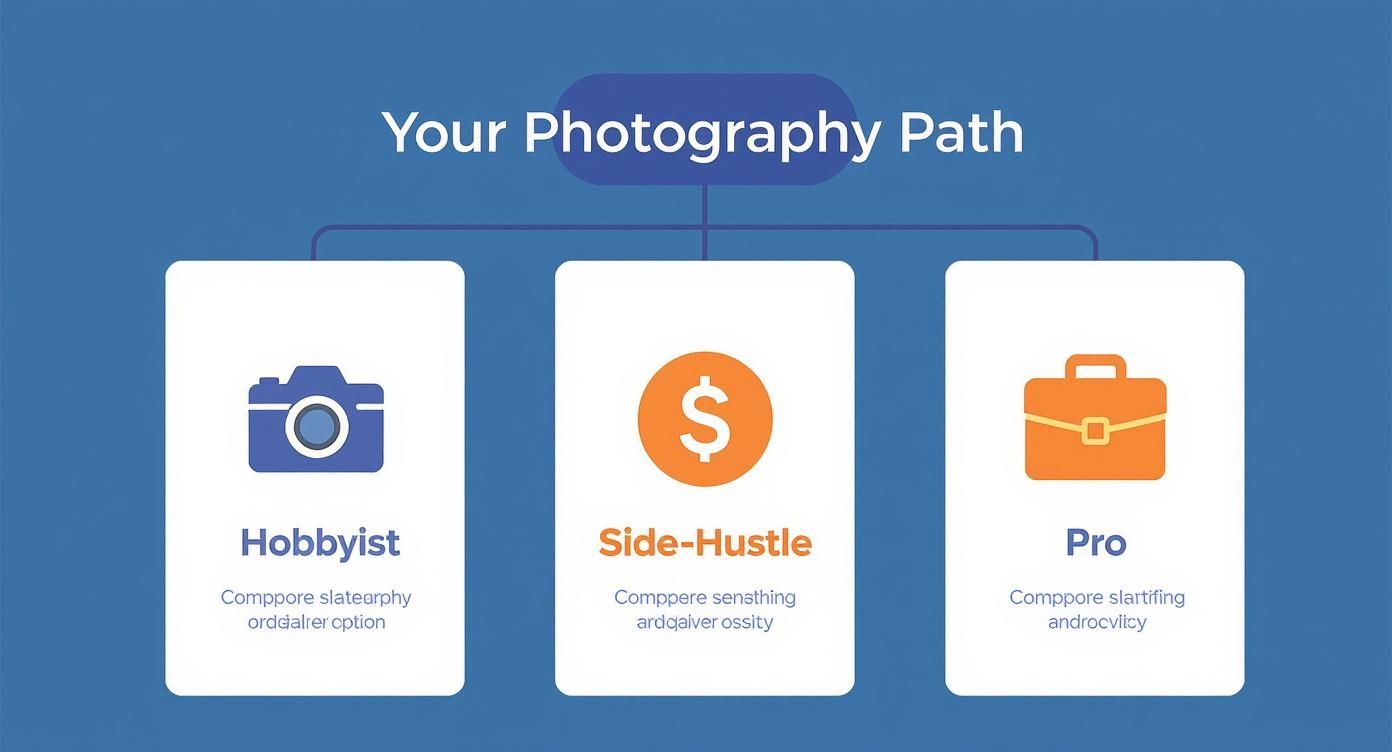
The key takeaway here is that your personal goals—whether you're a hobbyist, a side-hustler, or an aspiring pro—should be the main thing guiding your choice of photography education.
Do I Need an Expensive Camera to Get Started?
Absolutely not. This is probably the biggest myth holding people back. While a fancy DSLR or mirrorless camera is great for getting to grips with manual controls, the best beginner courses are built around the timeless principles of photography.
Core skills like understanding light, mastering composition, and telling a story through your images are universal. They apply whether you're using a top-of-the-line camera or the phone in your pocket. A quality smartphone or a simple point-and-shoot is more than enough to get you started.
The real goal is to learn how to see like a photographer. That’s a skill that has nothing to do with your gear. You can always upgrade your equipment as your skills and passion grow, but that artistic foundation has to come first.
How Much Time Will I Need to Commit Each Week?
This really varies depending on the course you choose, which is fantastic because it means you can find something that fits your life. Self-paced online courses give you the most freedom, letting you tailor your learning schedule completely.
You could dedicate just a few hours a week or really dive in for 10-15 hours if you’ve got the time. More structured courses with fixed deadlines and group chats might ask for a consistent 5-8 hours per week to keep up with lessons, practical assignments, and feedback.
Before you sign up, always check the provider's estimated time commitment. The whole point of online learning is to find a pace that works for you, not against you.
Are Online Course Certificates Valued by NZ Employers?
In creative fields like photography, your portfolio is your currency. While formal qualifications have their place, employers and clients in New Zealand care about one thing above all else: the quality of your work.
A certificate from a reputable online course acts as powerful proof that you’ve invested in your skills and mastered specific, marketable techniques. It shows you’re serious about your craft.
When you pair that certificate with a strong portfolio built up during your studies, it's a hard combination to ignore. This duo demonstrates both your formal training and your raw talent, opening doors to professional opportunities right across the country.
What Is the Difference Between a Diploma and a Certificate?
Think of it as depth versus speed. A diploma, like a New Zealand Diploma in Photography, is a formal, NZQA-accredited qualification. It's a deep academic dive that usually takes one to four years of comprehensive study.
A certificate from an independent provider, on the other hand, is all about targeted, practical skills you can learn in a much shorter timeframe. The focus is on getting you job-ready for a specific niche—like wedding photography or commercial product shots—as efficiently as possible.
As we are not an NZQA-registered college, our focus is squarely on this practical certificate pathway. Your choice really depends on your end goal: a diploma gives you a deep academic foundation, while a certificate is designed to fast-track specific, career-focused skills.
Ready to turn your passion into practical skills? At Prac Skills, we offer online photography courses designed for the modern Kiwi learner. Explore our courses and find the perfect path for your creative journey today at https://www.pracskills.co.nz.