December 13, 2025
.webp)

Your Guide to Graphic Designing Courses in New Zealand
Explore graphic designing courses in NZ. Find the right program, understand core skills, and discover creative career paths to launch your design journey.
Career Development
minutes
Your Guide to Graphic Designing Courses in New Zealand
Thinking about a career in graphic design? You're in the right place. A good graphic design course gives you a clear path to turn a creative spark into a real-world profession, teaching you everything from the core principles of design to the industry-standard software you'll need to master.
These programmes are perfect for anyone in New Zealand looking to build skills that are genuinely in demand.
Embark on Your Creative Journey in Graphic Design
Graphic design is so much more than just making things look pretty; it's a powerful way to communicate visually. Think of it as a brand's silent ambassador. A great design can tell a story, solve a problem, and connect with an audience—all without saying a single word. This skill is vital for everything, from the packaging on a supermarket shelf to the layout of your favourite website.
For a lot of Kiwis, a path into design feels more achievable than ever before. It doesn't matter if you're changing careers, a small business owner who needs to create their own marketing, or even a farmer with a creative side-hustle. There's a course out there that will fit your life. The creative sector here in New Zealand is buzzing and constantly growing, welcoming people from all sorts of backgrounds.
Graphic design is a language that speaks to everyone. Learning it means you can craft messages that inform, persuade, and inspire, giving you a powerful tool in any business or creative pursuit.
The appeal is pretty clear when you look at the numbers. Recent data shows that around 6,955 domestic students are enrolled in graphic and design studies, which really highlights how popular the field has become. This isn't just school leavers, either; it's a diverse mix of people, including mature students, proving it’s never too late to start a creative journey. You can dig into the student demographics a bit more over on Figure.nz.
This guide will walk you through the types of graphic design courses available, the practical skills you'll actually learn, and the exciting career opportunities that could be waiting for you. Let’s get started.
Navigating the Different Types of Design Courses
Picking a path in graphic design can feel a bit like standing at a crossroads. Here in New Zealand, the options are all over the map—from short workshops to more in-depth programmes, each one built for different goals and lifestyles. Figuring out these differences is your first step to making a choice that actually fits where you want to go.
Think of a short introductory course like a taster menu at a restaurant. It’s perfect for exploring your interest in design without a huge commitment of time or money. These workshops are fantastic for business owners who need to whip up basic marketing materials, or for hobbyists just wanting to dip their toes in the creative waters.
On the other hand, a more intensive programme is like the full three-course meal. These are built for career transformations.
Understanding Course Formats
When you start looking at deeper programmes, you'll see things like certificates and diplomas. These offer a much more structured and in-depth curriculum. A certificate programme usually zeros in on building specific, job-ready skills in a pretty short timeframe. It’s a great middle ground if you need practical abilities fast but want more than just a basic intro.
A diploma offers extensive training. You'll cover a broad range of theories, get your head around all the essential software, and build a portfolio of project work designed to get you ready for a full-time design career. These longer-term commitments are ideal for anyone serious about becoming a professional graphic designer. This snapshot gives you an idea of the diverse group of people currently studying design across New Zealand.
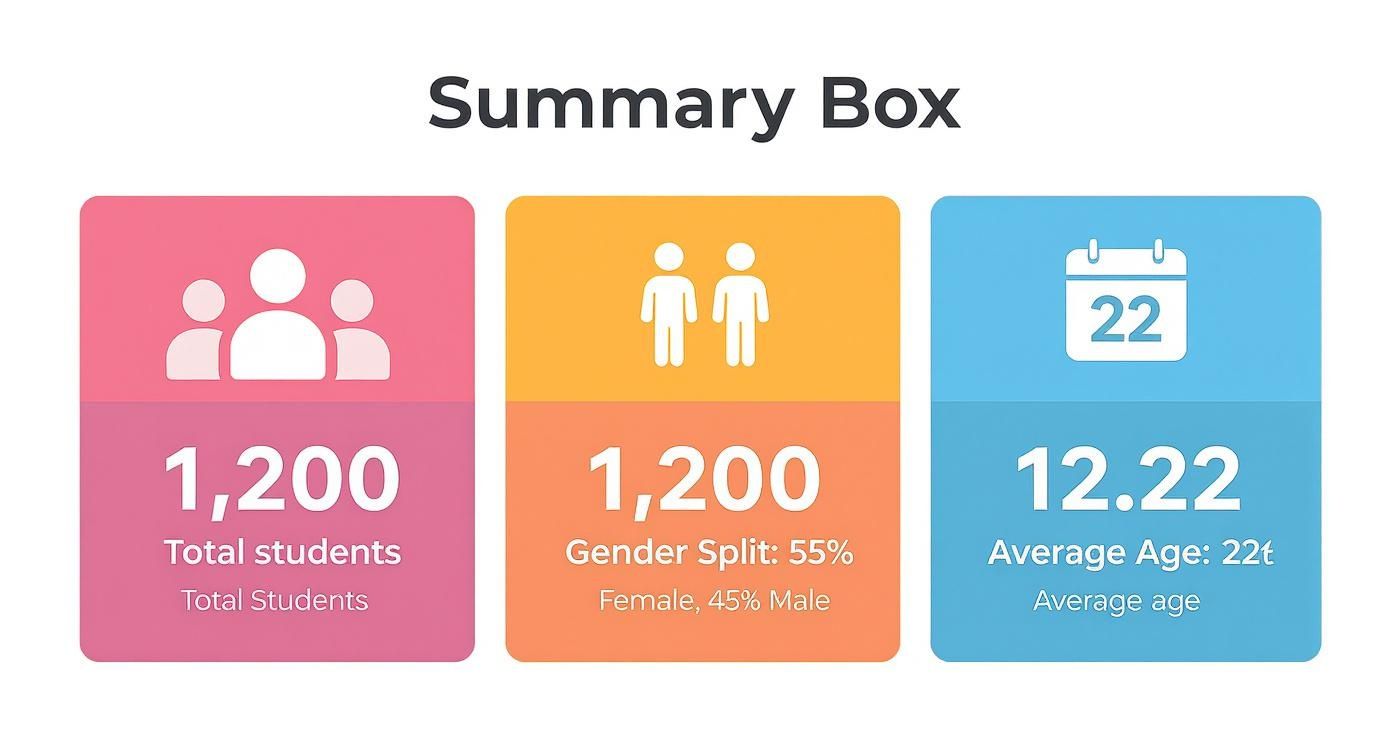
As you can see, graphic design attracts all sorts—from young adults just starting out to mature students looking for a new direction.
Here's a quick breakdown to help you map out your options.
Choosing Your Graphic Design Learning Path
A comparison of different graphic designing course formats to help you choose the best fit for your goals, time, and budget.
Each path has its own merits, and the "right" one really just depends on what you want to achieve.
Formal Education vs Practical Training
It’s also really important to understand the difference between formal education and practical, industry-focused training. Qualifications from NZQA-registered institutions are part of a national framework, which often means rigorous academic standards and prerequisites. This path is a great fit for those looking for that traditional university or polytechnic experience.
However, many people find that practical, hands-on training offers a more direct route to gaining job-ready skills. These graphic designing courses put hands-on application and current industry practices first, rather than focusing heavily on academic theory.
This approach is all about building a strong portfolio of real-world projects, which is often what employers value most. It provides a flexible and efficient alternative for busy adults, career changers, and entrepreneurs.
This type of training ensures you’re learning relevant techniques that are immediately useful in the New Zealand market. By choosing a provider that offers a range of practical creative arts courses, you can find a programme that lines up perfectly with your career or business goals—without being locked into a traditional academic calendar.
Mastering the Core Skills of a Modern Designer
A great graphic design course isn't about some mysterious, inborn artistic talent. It's about breaking down the creative process into a set of skills that anyone can learn and master. Think of it like learning a language—first, you get the hang of the alphabet, then you start forming words, and before you know it, you're crafting compelling stories.
In the same way, a solid design education starts with the absolute fundamentals. You'll dive deep into things like typography, colour theory, and composition. These aren't just fluffy, abstract ideas; they are the practical tools you’ll grab every single day to create balanced, effective, and visually sharp designs for clients or for your own brand.
To really get good at graphic design, you have to truly understand and apply these foundational concepts. You can build on this by exploring resources on mastering core design principles like repetition, which shows how simple patterns can create a really satisfying sense of visual harmony.
From Theory to Practical Application
Of course, knowing the principles is only half the battle. The real magic happens when you bring them to life using industry-standard software. Any course worth its salt will give you extensive, hands-on training in the Adobe Creative Cloud suite, which is the go-to toolkit for professional designers everywhere.
You’ll get comfortable with how these programmes work together:
- Adobe Photoshop for editing and tweaking images to perfection.
- Adobe Illustrator for creating crisp, scalable vector graphics like logos and icons.
- Adobe InDesign for laying out documents like brochures, magazines, and eBooks.
Learning these tools is a bit like a chef mastering their knives. They quickly become an extension of your own creative vision, letting you execute your ideas with precision and confidence. This technical know-how is absolutely non-negotiable for anyone looking to get into the design field.
A great course doesn't just teach you which buttons to press. It shows you why you're pressing them. It's all about connecting every technical move back to a core design principle to hit a specific communication goal.
Building a Job-Ready Portfolio
All that theory and software skill comes together in your project work. This is the heart and soul of any effective graphic design course. You won't be stuck doing abstract exercises; you'll be building a professional portfolio packed with projects that look and feel like real-world client briefs. At the end of the day, that’s what employers and clients really want to see.
Expect to get your hands dirty with practical assignments like these:
- Brand Identity Design: You'll create a complete visual identity for a fictional company, from the logo and colour palette right down to the typography guidelines.
- Marketing Material Creation: This involves designing a set of social media graphics, a promotional flyer, and a digital brochure for a product launch.
- Publication Layout: You'll put together a multi-page document, learning the ropes of managing text and images to make them readable and impactful.
Top-tier courses are now also weaving in modern skills like User Interface (UI) and User Experience (UX) principles to get you ready for designing websites and apps. They also touch on how to work with AI tools to speed up your workflow. By exploring a wide range of digital skills courses, you can make sure your abilities are competitive and ready for the future, giving you a real edge in the job market.
How to Choose the Right Course for Your Goals
With so many graphic design courses out there, picking the one that’s just right for you can feel like a pretty big decision. The best way to tackle it is to match the course directly to your own personal and professional goals.
Let's break down how different people across New Zealand can find the perfect programme for their unique situation. Your goals are the compass here. Are you looking to completely change careers, or do you just need some new skills for the job you already have? The answer will point you toward very different paths.
Courses for the Career Changer
If you're thinking about a full switch into the design industry, you’ll need a course with some real substance. Your top priority should be a comprehensive programme that’s heavy on building a professional-grade portfolio. This is your single most important asset when you start applying for jobs, so make sure the course includes multiple projects that mimic real-world work.
Look for providers that offer solid career support, like portfolio reviews and guidance on breaking into the NZ job market. A course that leads to a diploma or an advanced certificate is usually the best fit, as it shows employers you’ve made a deep commitment to mastering the craft.
Training for the Business Owner
For Kiwi business owners, time is the one thing you can't get more of. You don't need a two-year diploma; you need practical skills you can use right now to create your own branding and marketing materials. The ideal course for you is flexible, self-paced, and cuts straight to the essentials.
Hunt down programmes that teach you how to design logos, social media posts, brochures, and other key marketing assets. An online, module-based course that lets you learn around your hectic schedule is your best bet. You can browse a variety of self-paced graphic designing courses in NZ to find one that slots into your business life.
For entrepreneurs and side-hustlers, the goal isn't just to learn design—it's to gain a competitive edge. A practical course empowers you to take control of your brand's visual identity quickly and affordably.
Learning for the Side Hustler or Creative Farmer
Plenty of New Zealanders, from farmers with a creative itch to city dwellers with a passion project, are looking to turn a hobby into a side hustle. If that sounds like you, your perfect course probably sits somewhere between a quick workshop and a full-blown diploma.
You need a programme that builds a strong foundation without demanding a full-time commitment. Look for certificate-level courses that are stackable, which means you can build up your skills over time as your schedule allows. Key things to look for include:
- Practical Focus: The curriculum should prioritise hands-on projects over dense, dry theory.
- Industry Recognition: This gives you assurance that the skills you're learning meet professional standards.
- Tutor Support: Having access to expert guidance is a game-changer when you inevitably hit a roadblock.
By choosing a course with these elements, you can confidently build marketable skills that fit your creative ambitions and your lifestyle.
Unlocking Career Opportunities in New Zealand
Completing a graphic design course is more than just learning a new skill; it's about opening doors to a dynamic and growing creative industry right here in New Zealand. While the title ‘Graphic Designer’ is a common goal, the reality is that the skills you learn can launch you into a much wider range of exciting careers. Today’s Aotearoa market values design thinking across countless sectors, not just the traditionally creative ones.
These skills are your ticket to roles that blend creativity with technology and business strategy. Many graduates find themselves stepping into specialised positions that go far beyond traditional print work. The demand is strong, from agile tech startups and established marketing agencies to large corporations looking to sharpen their brand presence.

Diverse Career Paths in the NZ Market
Forget the old idea of a designer stuck behind a desk. The career landscape for visually creative people is broader and more exciting than ever. Your training can set you up for a variety of in-demand jobs where strong visual communication is the name of the game.
Some of the most popular career paths include:
- Brand Identity Designer: You’ll be the architect of a company's visual soul, crafting the logos, colour palettes, and style guides that shape how the world sees them.
- UI/UX Specialist: This is all about making technology feel human. You'll design user-friendly websites and apps, ensuring every click and swipe is a smooth and enjoyable experience.
- Digital Marketer: Here, you'll fuse your design skills with sharp marketing know-how. The goal is to create compelling visuals for online campaigns, from eye-catching social media ads to engaging email newsletters.
- Social Media Content Creator: A highly sought-after role where you'll be the creative engine behind a brand’s online community, producing graphics, short videos, and other visual content that people love to share.
If you’re keen to see who’s hiring for these kinds of roles, a great starting point is to check out directories of reputable UX agencies in Auckland. It gives you a real-world peek at the companies hungry for these specialised skills.
The Economic Value of Design Skills
Investing in a graphic design education packs a real economic punch, especially within New Zealand’s thriving tech and creative sectors. The numbers tell a compelling story.
The screen industry, which leans heavily on design professionals, generates around $3.22 billion every year. On top of that, the animation industry alone is projected to hit $5.95 billion by 2029. This isn't just slow growth; it's a rapid expansion that signals fantastic job prospects for graduates with creative and digital skills. Completing a course paints a clear picture of what a successful, fulfilling, and financially rewarding creative career in Aotearoa can look like.
Why Practical, Hands-On Training Makes All the Difference
Let's be honest, not all graphic design courses are created equal. You can spend years buried in textbooks learning deep, abstract theories, but there's a huge difference between knowing about design and actually being able to do it.
That's where practical, industry-focused training comes in. It cuts right through the noise and gets straight to the point: giving you the skills the New Zealand job market is actually looking for. It’s about learning things today that you can genuinely use on a project tomorrow.
The Value of a Kiwi-Centric Approach
Choosing a course that’s been built with the New Zealand market in mind gives you a massive head start. Our local industry has its own vibe—its own design trends, client expectations, and business culture. A course provider that gets this will shape its curriculum around the realities of working in Aotearoa.
This means the projects you work on will feel real, mirroring the kinds of briefs you’d actually get from a Kiwi business. Your portfolio ends up being stronger and far more relevant, making you a much more attractive hire for local employers right out of the gate.
Practical training is like an apprenticeship for the modern age. It closes the gap between knowing about design and actually being able to do it effectively in a professional setting.
Flexible Skills for a Modern Career
How you learn is just as important as what you learn. These days, many of the best providers offer ‘stackable’ courses, which is a game-changer for flexibility. Think of it like building with LEGO—you can start with a foundational certificate to get your bearings, then add more advanced skills over time as your goals change or life allows.
This approach is perfect for busy adults juggling work, family, or other commitments. You get to build up your expertise at your own pace, without having to lock yourself into a rigid, multi-year programme from day one.
Plus, gaining industry recognition is a vital stamp of approval. It confirms the training you’re getting is up to current professional standards. This kind of agile, focused learning gives you the real-world skills you need, in a way that actually fits your life.
Got Questions About Graphic Design Courses? We’ve Got Answers.
Dipping your toes into any new field is going to stir up a few questions. When it comes to graphic design, we find that most aspiring creatives have the same things on their minds. Getting clear, straightforward answers is the best way to move forward with confidence and turn that creative curiosity into a solid plan.
Let's tackle some of the most common questions head-on.
Do I Need to Be Good at Drawing to Succeed in Graphic Design?
Absolutely not. While drawing skills can be a handy bonus, modern graphic design is really about visual communication and clever problem-solving. It's much less about sketching a perfect portrait and far more about your ability to arrange elements, choose the right fonts, and use colour to create a specific feeling or message.
A good course will focus on teaching you the core design principles and software skills needed to bring your ideas to life. No natural artistic talent is required.
What Kind of Computer and Software Will I Need?
To stay in line with professional standards, you'll want a reliable computer—either a Mac or a PC—that can comfortably run the industry-standard software. The main toolkit for any designer is the Adobe Creative Cloud suite. You’ll be spending most of your time in Photoshop for image work, Illustrator for logos and vector art, and InDesign for page layouts.
A hot tip: many training providers offer student discounts for software subscriptions. It's always a good idea to check with your chosen course before you buy anything, as this can save you a fair bit of cash.
Is the Graphic Design Market in NZ Too Competitive?
It's definitely an active field, but the demand for skilled designers is consistently growing, especially in the digital space. Think about it—businesses all over New Zealand need experts in UI/UX design, social media content, and digital marketing. There’s a constant need for fresh visual communication.
Designers who build a strong, modern portfolio and keep their skills up to date will always find great opportunities. Finding a niche you're passionate about is also a fantastic way to stand out from the crowd.
How Long Does It Take to Get a Job After a Course?
This one really depends on the type of course you take and the quality of the portfolio you build during your studies. Graduates from practical, project-based graphic designing courses are often ready to apply for junior roles or pick up freelance work almost immediately after finishing.
The key is having a portfolio that showcases your ability to solve real-world problems. This is exactly what employers want to see, and it should be the primary focus of any quality, hands-on training programme you consider.
Ready to turn that creative spark into a real-world skill? At Prac Skills, we offer practical, NZ-focused courses designed to get you job-ready. Explore our creative arts programmes and start building your future today.