December 13, 2025
.webp)
Finding the Right Digital marketing courses in New Zealand
Explore the best digital marketing courses in NZ. Our guide helps you compare formats, learn essential skills, and choose the right path for your career.
Career Development
minutes
Finding the Right Digital marketing courses in New Zealand
Picking the right digital marketing course is a massive decision for any Kiwi professional or business owner wanting to get ahead. It’s all about finding training that’s practical, relevant to what’s happening on the ground right now, and actually delivers results you can see—not just a certificate based on dusty old theory. This guide is squarely focused on skill-based training providers, skipping the formal academic institutions, to get you the training you can use the very next day.
Why Practical Digital Marketing Skills Matter in NZ

The way New Zealand businesses find and talk to their customers has completely changed. Whether you’re a startup in Auckland or a farming operation in Canterbury taking your products online, a strong digital presence isn’t just a nice-to-have anymore. It’s absolutely critical for survival, let alone growth. This massive shift has created a huge demand for people who have real, hands-on digital marketing skills.
Think of it like this: knowing the theory of how to build a house is one thing, but it’s the person who can actually lay the bricks and put up the framing that gets the job done. It’s the same in marketing. Understanding the concepts is a good start, but being able to launch a sharp Google Ads campaign that targets the right people or make sense of your website analytics is what actually drives a business forward.
The Growing Demand for Actionable Expertise
Across New Zealand, employers are starting to look past degrees and are prioritising candidates who can prove they have practical abilities. They need people who can walk in the door and start adding value straight away, without needing months of on-the-job hand-holding.
This isn’t happening by accident. A few key things are driving this demand:
- A Crowded Online Space: The internet is a noisy place. Businesses need smart marketers who can help them cut through the clutter and grab the attention of Kiwi consumers.
- The Need for Measurable Results: Digital marketing gives you hard numbers. Companies want people who can track what’s working, measure the return on every dollar spent, and use that data to make better decisions.
- Getting Bang for Your Buck: Small and medium-sized businesses are the backbone of the NZ economy, and they don’t have bottomless budgets. Mastering small business marketing strategies lets them punch above their weight and compete with the big guys.
Today, success is defined by what you can do, not just what you know. A high-quality course gives you a toolkit of practical skills—like SEO, social media management, and email marketing—that you can put to work from day one.
Upskilling for Immediate Impact
For business owners, side-hustlers, and anyone looking to make a career change, this skills gap is a golden opportunity. Investing in a practical digital marketing course is the fastest, most direct way to get where you want to go. Whether that’s boosting sales for your e-commerce store, building a personal brand, or landing a fantastic new job, the right training gives you the power to make a real, tangible impact.
This guide is here to help you sort through the options and find a learning path that delivers the hands-on expertise you need to thrive in the unique New Zealand market. We’ll break down what these courses actually teach, how to spot a good one, and how to line up your learning with your specific goals.
What You Will Actually Learn in a Digital Marketing Course
A top-notch digital marketing course is about much more than just ticking boxes on a list of topics. Think of it like a chef learning fundamental cooking techniques rather than just memorising recipes. Instead of only knowing what SEO is, you’ll learn how to actually use it to get a local Hamilton business noticed online.
This skill-building approach means you can adapt to new challenges and whatever new platform comes along next. The real goal is to walk away with a practical grasp of the core pillars of digital marketing, ready to apply them to a Kiwi business or your own career from day one.
The Core Pillars of Digital Marketing
Every solid digital marketing strategy is built on a few key disciplines that all work together. A comprehensive course will walk you through each one, showing you how they connect to create a powerful engine for business growth.
This table breaks down the essential skills you should expect to see covered, what they aim to achieve for a Kiwi business, and the practical abilities you’ll walk away with.
Core Skills Covered in NZ Digital Marketing Courses
Mastering these areas gives you a complete toolkit to build and execute a marketing plan from start to finish. You’ll learn the theory, but more importantly, you’ll learn how to put it all into practice.
From Theory to Practical Application
The difference between a good course and a great one is how well it bridges the gap between theory and the real world. Knowing the definition of a "keyword" is one thing; knowing how to find the right ones for a Dunedin café or a Queenstown tourism operator is something else entirely.
A practical course gets you doing the work. You'll be tasked with real-world projects that build both your confidence and your competence. This hands-on approach is what makes the knowledge stick.
The real value of a digital marketing course is in the "doing." It’s about creating your first ad campaign, analysing your first analytics report, and writing content that genuinely connects with an audience.
Many courses in New Zealand are specifically designed for our unique market. They understand the tighter budgets, the competitive pressures, and the need to connect with a Kiwi audience. For example, when you see a "Certificate in Digital Marketing," it will often cover SEO, social media, and analytics all through the lens of what works for businesses here, not in New York or London.
For more specifics, you can check out guides like starting social media marketing, which offer practical steps that you would cover in a good course.
Understanding the Strategic Connections
Finally, a quality course will show you how these different pillars don’t exist in a vacuum—they all support each other.
You'll see that SEO and content marketing are two sides of the same coin; great content helps you rank higher in search results, and strong SEO makes sure people actually see that great content.
You’ll discover how the data from your paid ad campaigns can reveal high-value keywords for your SEO strategy. And you’ll learn how to use your social media channels to promote your blog posts, driving traffic back to your website and generating new leads.
This integrated understanding is what separates a technician from a true digital marketing strategist. It’s the ability to see the bigger picture and use every tool in your kit to get the best possible results for a Kiwi business.
Comparing Course Formats and Training Providers
Picking the right course is about more than just the curriculum. The learning environment itself—how, when, and where you study—is just as crucial. Digital marketing education comes in a few different flavours, and your job is to find the one that actually fits your life, not the other way around.
Across New Zealand, your options will generally fall into a few camps. You've got everything from super-flexible online courses you can chip away at after the kids are asleep to live, interactive workshops. Understanding the good and the bad of each is the first step to making a smart call.
Understanding Your Training Options
Let's break down the most common formats you’ll come across:
- Self-Paced Online Courses: These are the definition of flexibility. You get a login, and all the materials—videos, readings, projects—are there for you to work through on your own schedule. This is a lifesaver for busy parents, full-time workers, or anyone who needs to fit study into the gaps of a packed life.
- Live Virtual Workshops: Think of these as a scheduled class, but online. You log in at a specific time and get direct interaction with your instructor and classmates. It’s perfect for real-time Q&A, group discussions, and for anyone who thrives on the structure and accountability of a timetable.
- Blended or Hybrid Learning: This approach mixes the best of both worlds. It often pairs self-paced online work with scheduled live sessions, workshops, or even one-on-one mentoring. You get a great balance of flexibility and guided, interactive learning.
The real question to ask yourself is: how do I actually learn best? Do you need the discipline of a set schedule to show up? Or is the idea of learning at 10 PM on a Tuesday your version of a dream true? Be honest with yourself here, and you'll immediately narrow down your options.
Formal Qualifications vs Practical Skills Providers
It's also really important to get your head around the two main types of training providers in NZ. This isn't about which one is "better" – it's about what’s right for your goals.
University or Polytechnic Programmes usually lead to a formal, academically recognised qualification like a diploma or a degree. These are typically longer, more theoretical, and give you a broad grounding in business and marketing principles. They're a solid choice for a school-leaver or someone starting a career who wants a deep, academic foundation.
Practical Skills Providers, on the other hand, are all about job-ready skills. These organisations, which are not NZQA-registered, design their digital marketing courses to be laser-focused and immediately useful. The goal is to give you the specific, hands-on abilities that employers are desperate for right now—like how to actually run a Google Ads campaign or get a local business to show up on Google Maps.
If you’re looking to upskill quickly, switch careers, or apply new marketing tactics to your own business tomorrow, a practical skills provider is often the most direct path to get you there.
Finding the Right Fit in Your Region
Where you live in New Zealand can influence the types of training available, but perhaps not as much as you'd think. Major centres naturally have a wider mix of in-person options.
In Auckland, for example, the huge demand for marketers means there's a fantastic range of digital marketing courses that blend online learning with face-to-face mentoring and real-world projects. You can see the quality in their customer feedback, with many of the best providers pulling in 4.3 to 5 stars from hundreds of Google Reviews. It’s a good sign that what they're teaching is actually hitting the mark.
But here’s the great news: the boom in high-quality distance learning means your location is no longer a barrier. Excellent training is now available whether you're in a big city or a small rural town. This flexibility is a total game-changer, giving Kiwis everywhere access to top-tier instruction. If you're weighing up your remote study options, our guide to distance learning courses in NZ is a great place to get more insights.
At the end of the day, the best choice will always be the one that lines up with your life, your learning style, and what you’re trying to achieve.
How to Choose a High-Quality Digital Marketing Course
Not all digital marketing courses in New Zealand are created equal. Far from it. With so many popping up, telling the difference between a high-value programme and one that’s just fluff can be tough.
A great course is a serious investment in your future, so you need to know what to look for. It’s about looking past the slick ads and focusing on what’s actually being taught and, more importantly, how it's taught. The real goal is to walk away with practical skills that Kiwi employers are desperate for right now.
Look for Tutors with Fresh Industry Experience
First things first: who is actually teaching the course? This is probably the most critical thing to check. Digital marketing moves at a dizzying speed; tactics that were gold last year can be completely useless today.
This is why your instructors need to be active in the industry, not just academics who haven't run a real campaign in years. A tutor who is currently managing campaigns, digging into data, and using the latest tools brings priceless, up-to-the-minute knowledge to the table. They can show you what’s working in the New Zealand market today, not what was big in 2018.
Here’s a quick checklist:
- A Professional Profile: Jump on LinkedIn. Are they currently in a marketing role or running their own agency? Do they have recent, relevant experience?
- Real-World Examples: Look for tutors who share current case studies or examples from campaigns they’ve personally managed. Theory is one thing, but results are another.
- Tool Proficiency: Can they show you the ropes on the latest versions of essential tools like Google Analytics 4, Meta Business Suite, or popular SEO software?
Prioritise Hands-On Learning Over Pure Theory
Knowing what SEO stands for is fine. Actually optimising a webpage for a local business in Christchurch is a whole different ball game. The best digital marketing courses are built around project-based learning, where you’re constantly applying what you learn to solve real-world problems.
This hands-on approach is what builds real skill and confidence. Instead of just sitting through lectures, you should be doing the work. This method ensures that by the end, you don't just have a certificate—you have a portfolio of actual work to show a potential boss or to use in your own business.
A course that only teaches theory is like a cookbook with no ingredients. You might understand the recipe, but you can't actually cook the meal. Look for a curriculum that gets you in the kitchen from day one.
Check for Industry-Recognised Certifications
While a certificate from the course provider is great, the real power comes from training that also preps you for globally recognised certifications. These are the credentials that employers all over New Zealand (and the world) know and respect.
A top-notch course will weave training for these platforms right into its curriculum. It’s a massive green flag that the content is up to snuff with current industry standards.
Valuable certifications to look out for include:
- Google Certifications: Things like the Google Ads Search Certification or the Google Analytics Individual Qualification.
- Meta Blueprint: The official certifications for running ads on Facebook and Instagram.
- HubSpot Academy: Awesome credentials in content marketing, email, and inbound strategies.
Think of these as "stackable" certificates that prove your practical skills. They show you’ve been tested not just by your course provider, but by the very platforms that run the industry. It makes your CV stand out and gives you instant credibility. Ultimately, choosing the right digital marketing course is about finding one that obsesses over practical experience, current knowledge, and real, tangible outcomes.
Matching Your Learning Path to Your Career Goals
Why are you looking to learn digital marketing? That’s the single most important question you can ask, because it dictates everything that comes next. A one-size-fits-all course just won't cut it. The best learning path is the one that lines up perfectly with what you’re trying to achieve, whether that’s growing your business or kicking off a new career here in New Zealand.
Think of it like packing for a trip. You wouldn't throw the same gear in your bag for a week of tramping in Fiordland as you would for a business trip to Auckland. It’s the same with digital marketing. The skills a small business owner in Tauranga needs are worlds away from those of a creative side-hustler in Wellington. Let’s map out some clear, practical roadmaps for a few common Kiwi ambitions.
For the Small Business Owner Dominating a Local Market
Let's say you run a local business—a café in Tauranga or maybe a plumbing service in Christchurch. Your goal isn't to conquer the world; it's to be the first name that pops into a local’s head when they need what you offer. Your learning needs to be laser-focused on what works right here, right now, in your community.
Here’s what you should prioritise:
- Local SEO: This one’s non-negotiable. You have to master your Google Business Profile, get your head around local keywords (like "best coffee Tauranga"), and learn how to encourage those all-important positive reviews. This is how you build trust and show up when people are searching.
- Hyper-Targeted Social Media Ads: Forget trying to reach everyone. You need to learn how to use platforms like Facebook and Instagram to run ads that only show up for people within a few kilometres of your front door. It’s an incredibly cost-effective way to drive actual foot traffic.
- Community Management: Build a genuine local following. This means getting active in community groups online, sharing content that resonates with your neighbours, and making your business a part of the local conversation.
This targeted approach makes sure every dollar and every minute you spend on marketing is pulling its weight, getting more local customers through your door.
For the Creative Side-Hustler Building an Online Brand
Now, picture a creative in Wellington—a photographer or a graphic designer, for instance. They're looking to build a personal brand that attracts clients from all over Aotearoa, not just down the road. The goal here is different: you need to showcase your talent, build authority, and create a reliable stream of project enquiries.
Your essential skills roadmap looks more like this:
- Content Marketing: Your portfolio is your secret weapon. Learning how to create killer blog posts, insightful case studies, or video content that puts your work in the spotlight is key to proving your expertise.
- A Visual Social Media Strategy: Platforms like Instagram and Pinterest are your best mates. You’ll need to master creating a visually stunning feed, using the right hashtags to get discovered, and engaging with potential clients and collaborators.
- Email Marketing: Don't sleep on email. Building an email list is crucial for nurturing leads. Focus on creating a simple, valuable newsletter to share your latest work and promote special offers to an audience that’s already interested.
For you, digital marketing isn't just about local sales; it's about building a reputation that brings in high-quality work from anywhere. To get a better feel for where these skills could lead, you might want to explore your digital marketing career path and see what’s possible.
For the Farmer Selling Directly to Consumers
Finally, let’s head to the heartland. Imagine a farmer in Canterbury ready to move beyond the traditional supply chain and sell their produce directly to Kiwis online. This pivot demands a really interesting mix of e-commerce savvy and authentic marketing.
Your learning journey would need to cover:
- Basic E-commerce Management: You’ll need the fundamentals of setting up a simple online store, keeping track of inventory, and making sure orders get out the door smoothly.
- Social Media Storytelling: This is your chance to shine. Use Facebook and Instagram to tell the story of your farm. Show people where their kai comes from, introduce them to your process, and build a connection that’s about more than just a transaction.
- Paid Social Ads for Lead Generation: Learn how to run targeted ads to find local customers who are passionate about fresh, farm-to-table produce, and send them straight to your online shop or produce box subscription.
This flowchart breaks down the key decision points when you’re choosing a course to match these kinds of goals, highlighting the importance of industry relevance, practical application, and valuable certifications.
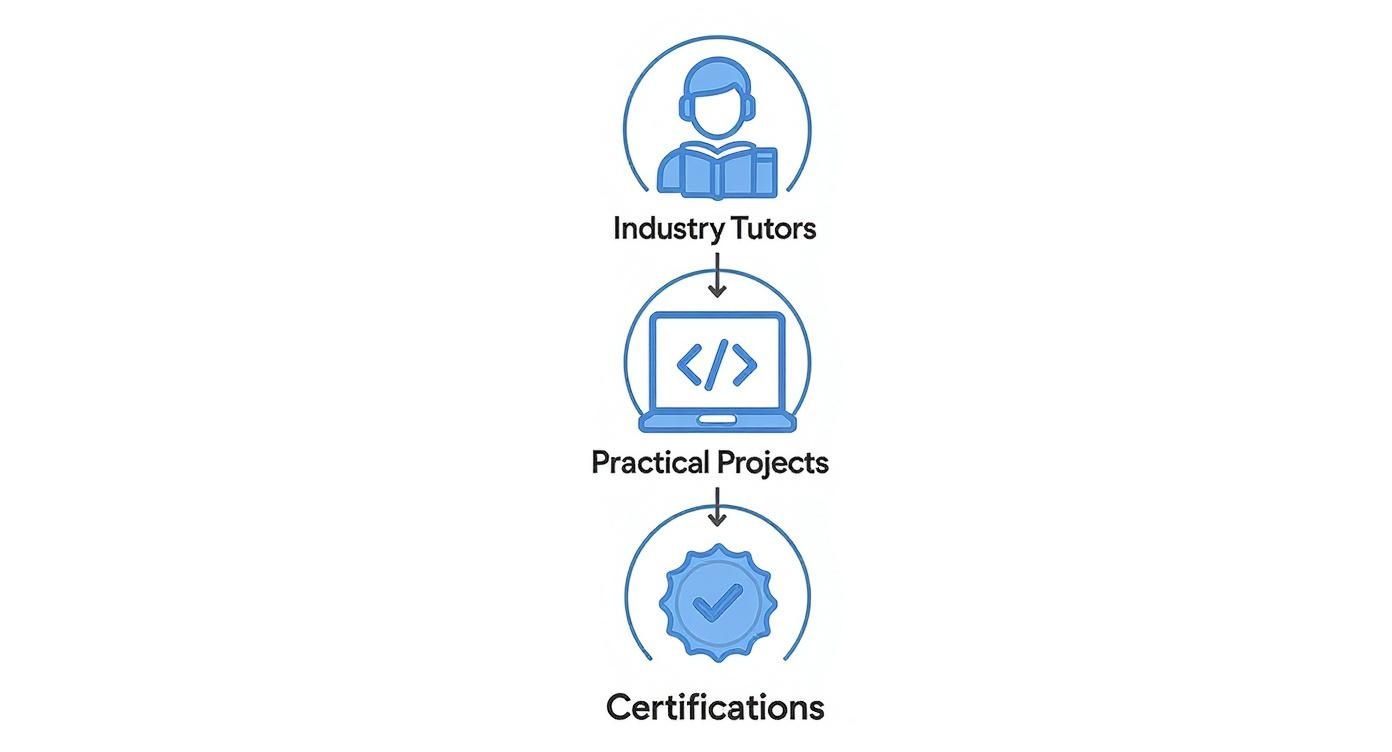
As you can see, the journey from learning to earning really kicks off when you choose tutors who are still active in the field. From there, it's all about courses that prioritise hands-on projects and lead to certifications that actually mean something to employers.
To help you visualise this, here’s a quick breakdown of which skills matter most depending on what you’re trying to achieve.
Recommended Digital Marketing Skills by Goal
Remember, this isn't about learning everything at once. It's about picking the right tools for the job you want to do.
The way Kiwis use technology shapes what skills you need. With social media use sitting at 79.1% of the population and mobile connections at a massive 118% of our population size, it's clear that a mobile-first, socially-savvy approach is essential for reaching people here. The right course will teach you exactly that.
By figuring out your end goal first, you can pick the right digital skills course that gives you the specific tools you need to get there. It makes the whole journey so much more effective and, honestly, a lot more rewarding.
Common Questions About Digital Marketing Courses in NZ
Deciding to invest in yourself is a big deal, and it's totally normal to have a few questions swirling around. When it comes to digital marketing courses in New Zealand, you want clear, straight answers to help you make a choice you feel good about.
Let's cut through the noise. Here are the most common questions we hear from Kiwis trying to figure out their next move.
Do I Need a Degree for a Digital Marketing Job in NZ?
Honestly? Not always. While a university degree definitely has its place, the hiring game in New Zealand has changed. More and more Kiwi businesses are looking for practical, provable skills over a formal qualification.
Think of it this way: a degree tells an employer you can learn, but a portfolio packed with real-world projects proves you can do.
For a lot of roles, what you can actually achieve for a business is far more valuable than the paper you hold. A hands-on course that helps you build a portfolio is often the most direct path to showing off what you're made of and landing a great role.
How Long Does It Take to Learn Digital Marketing?
That’s a great question, and the real answer is: it depends. You can get a solid grasp of the fundamentals and be job-ready in just a few months with a focused, well-designed course. These programmes are built to get you skilled up efficiently.
But here’s the thing about digital marketing: it never sits still. New platforms pop up, Google changes its mind, and new strategies emerge all the time. Because of this, the best marketers are the ones who never stop learning.
A quality course will do two crucial things for you:
- Build a Solid Foundation: It gives you a strong, practical understanding of the core stuff like SEO, social media, paid ads, and content.
- Teach You How to Adapt: It gives you the mindset and skills to keep up with new trends and tools, especially those that matter right here in the NZ market.
What Is the Average Cost of a Digital Marketing Course?
The price tag on digital marketing courses in New Zealand can vary quite a bit, depending on what you're getting.
You’ll find short, specialised online workshops for a few hundred dollars. At the other end of the scale, more comprehensive certificate programmes that cover the full spectrum of skills typically land somewhere between $1,000 and $4,000.
When you're comparing costs, it's so important to look past the number and think about the value. Ask yourself what's actually included. Do you get direct access to experienced instructors? Do you build real projects you can add to your portfolio? Is there any career support? A slightly more expensive course that delivers on these things is often a much smarter investment in the long run.
Can I Learn Digital Marketing for Free by Myself?
Yes, you absolutely can. The internet is overflowing with amazing free resources—blogs, YouTube tutorials, you name it. If you've got the discipline and a ton of time, you can definitely forge your own path.
But that DIY route comes with a few big hurdles. The main ones are the lack of structure, no expert to give you feedback, and a curriculum that isn't built for the unique opportunities and quirks of the New Zealand market. It can be a slow, and frankly, frustrating process of trial and error.
A paid course offers a guided, efficient path. It saves you a massive amount of time by curating all the essential info for you, making sure you learn the most in-demand skills without getting bogged down in outdated or irrelevant content.
Ready to build practical, job-ready digital marketing skills designed for the NZ market? Prac Skills offers flexible, career-focused courses that give you the hands-on expertise you need to succeed. Explore our courses and start your journey today at https://www.pracskills.co.nz.