
February 2, 2026
.webp)

What Is Traffic Impact Assessment?
Discover what is traffic impact assessment, why it matters for NZ resource consents, what it covers, and how it protects your development project.
Career Development
minutes
A Traffic Impact Assessment, or TIA for short, is a specialised report that looks into the future. It’s all about predicting how a new development—be it a subdivision, a supermarket, or a new office block—is going to affect the transport network around it.
Think of it as a traffic forecast. It helps councils and developers get a clear picture of what the local roads, intersections, and even public transport will look like after the project is built, long before the first shovel hits the ground.
Your First Look At Traffic Impact Assessments
Here's another way to think about it. Imagine your new project is a car wanting to merge onto a busy motorway during rush hour. A TIA is the expert check that makes sure you can merge smoothly without causing a massive jam or, worse, a pile-up.
This document, put together by specialist traffic engineers, is a real cornerstone of the resource consent process here in New Zealand. Its main job is to flag potential traffic headaches before they become real problems and then map out practical, sensible solutions. It’s all about making sure your project fits into the existing community safely and works for everyone.
What Is The Core Purpose Of A TIA?
At its heart, a TIA is a proactive planning tool. It swaps guesswork for solid, data-driven answers to those make-or-break questions about how a development will impact local infrastructure. It's worth noting that this fits into the general concept of impact assessment, which is a much broader practice used across many fields.
Specifically for traffic, the report handles several key jobs:
- Predicting Future Traffic: It crunches the numbers to estimate how many new trips—by cars, pedestrians, and cyclists—your project is likely to create.
- Assessing Network Performance: It analyses whether the surrounding roads and intersections can actually handle that extra load without grinding to a halt or becoming unsafe.
- Ensuring Safety: The assessment takes a hard look at potential safety risks for everyone using the road, from drivers and cyclists to the kids walking to school.
- Meeting Council Requirements: Crucially, it shows the local council that you've done your homework and have a solid plan for managing the traffic effects, which is absolutely essential for getting that resource consent signed off.
A well-executed TIA doesn't just tick a box for the council; it provides a clear, evidence-based roadmap for integrating a new development into the community responsibly. It protects your investment by preventing future access issues and ensuring long-term viability.
This guide will walk you through everything you need to know about navigating the TIA process. For more insights on developing professional skills for projects across New Zealand, explore the topics on our https://www.pracskills.co.nz/blog.
Why TIAs Are Essential for New Zealand Developments
A Traffic Impact Assessment is so much more than just another box-ticking exercise for a resource consent application. Think of it as a crucial piece of due diligence—a foundational part of responsible and sustainable urban planning across New Zealand that ensures new developments actually improve their communities, rather than creating headaches down the road.
For developers, a TIA is a way to protect your investment. It’s about making sure your project can slot seamlessly into the existing transport network, confirming that the site is properly accessible and that its long-term success isn’t sabotaged by unexpected traffic snarls.
Upholding Council Plans and National Legislation
Here in New Zealand, councils rely heavily on these reports to make smart, informed decisions. A TIA provides the hard evidence needed to uphold the principles of the Resource Management Act (RMA) and enforce the specific rules laid out in local District Plans, like Auckland's well-known Unitary Plan.
These documents are a critical tool for local authorities. They help stop new buildings or subdivisions from creating unsafe road conditions or completely overwhelming the local infrastructure with a sudden flood of traffic nobody planned for.
Mitigating Public and Economic Costs
Getting ahead of potential traffic issues has massive benefits that ripple out far beyond the project's boundary. Gridlock and road accidents come with huge public and economic costs, from lost productivity and wasted fuel to the strain on emergency services.
The financial fallout from unsafe roads is genuinely staggering. Data from 2021, for example, revealed that road crashes cost New Zealand around $7 billion USD—that’s equivalent to a massive 3% of the country’s GDP. This number alone really drives home why rigorous traffic studies are so vital before any digging begins. You can explore more data on New Zealand's road safety economics to get the bigger picture.
A Traffic Impact Assessment acts as a preventative measure. By modelling future traffic flow and identifying potential safety hazards, it allows for solutions to be implemented before a single car arrives, saving money and protecting lives.
For any business or developer, getting your head around this process is absolutely key to a successful project. To learn more about the team helping Kiwis build their skills for ventures just like this, you can find out about us on our main page.
Ultimately, a TIA ensures that development happens in a structured, safe, and sustainable way. It’s all about balancing the needs of the developer with the well-being of the wider community, making sure that progress doesn't come at the cost of public safety or a functional transport network.
Deconstructing A Standard TIA Report
If you’ve ever wondered what goes into a Traffic Impact Assessment, it helps to peek inside the final report. While they can look pretty technical, these documents are actually quite logical. They tell a story about your project and its future relationship with the local roads.
Think of it like a narrative with a clear beginning, middle, and end. The story starts by setting the scene, then introduces the main character (your development), analyses the potential plot twists (the traffic impacts), and finally, offers a resolution (the solutions). Understanding this structure helps cut through the jargon and shows you exactly what you’re paying for.
This simple flow chart visualises how a TIA connects your new project to improving the wider road network and keeping everyone safe.
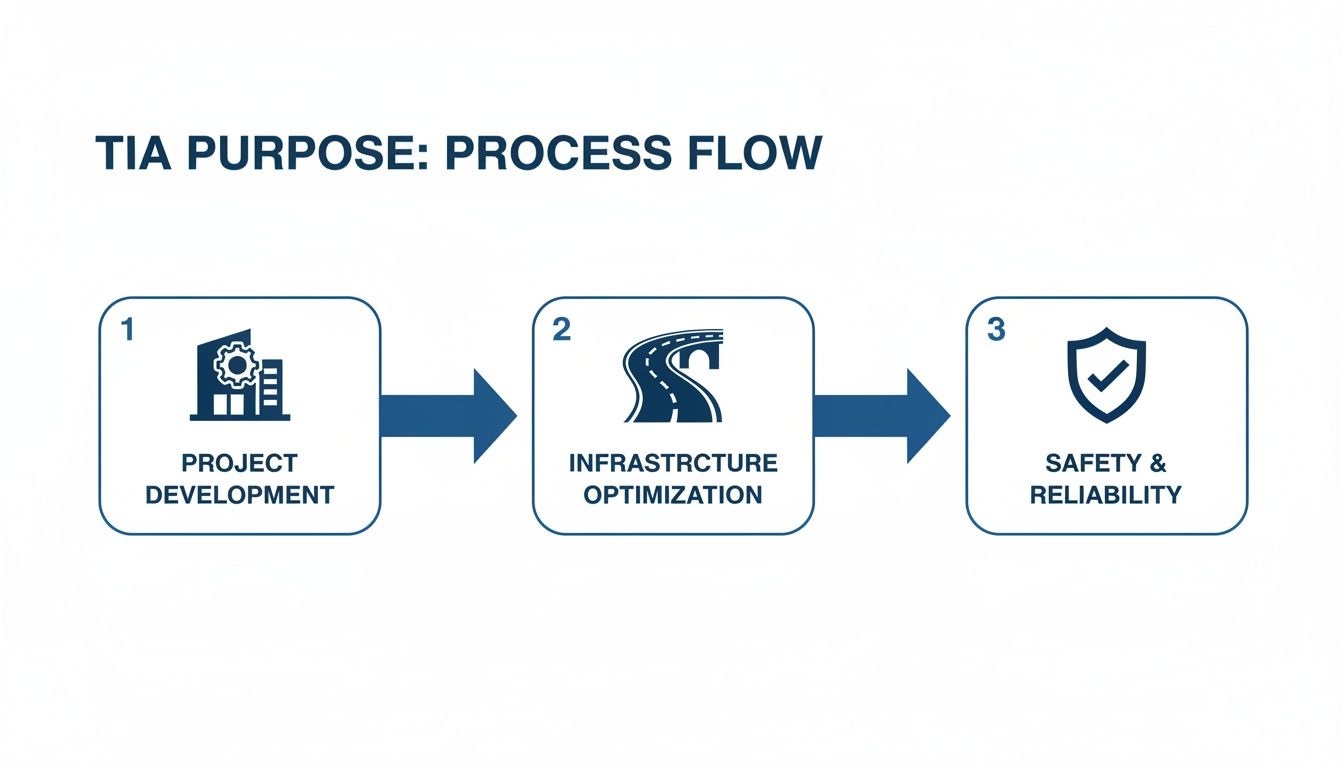
As you can see, it’s all about making sure any new development results in a transport environment that’s optimised and safe for the whole community.
Setting The Scene: The Existing Conditions
Every TIA kicks off with an Existing Conditions analysis. This section is a detailed snapshot of the transport environment just as it is right now, before your project comes into the picture. It’s the crucial baseline that all future impacts are measured against.
Our traffic engineers will be out there gathering data on:
- Current traffic volumes on the surrounding streets, often broken down by time of day.
- How key intersections are performing, looking at things like queue lengths and delays.
- Existing footpaths, cycleways, and bus stops for pedestrians, cyclists, and public transport users.
- A review of historical crash data from Waka Kotahi NZ Transport Agency to spot any existing safety black spots.
Introducing The Main Event: Trip Generation And Distribution
Next up, the report dives into Trip Generation. This is where we estimate how many new vehicle trips your development will create, especially during the morning and afternoon peak hours. For example, a new 50-place childcare centre will generate a fairly predictable number of trips during the drop-off and pick-up rushes.
Once we know how many trips to expect, the Traffic Distribution section maps out where all that new traffic is likely to go. Using their knowledge of local travel patterns, engineers assign these new trips to the surrounding road network, highlighting which routes will feel the biggest impact.
The Climax: Future Analysis and Safety
This is where it all comes together in the Future Traffic Analysis. Here, the engineer merges the existing traffic data with the new trips your project will generate. Using specialised modelling software, they simulate what the road network will look like in the future—usually five or ten years after your development opens its doors.
This analysis is the real heart of a TIA. It moves from theory to tangible prediction, pinpointing exactly where and when issues like longer queues, frustrating delays, or general congestion are likely to pop up. It answers the council's biggest question: "Can the existing network actually handle this?"
Working alongside this is a Safety Assessment, which looks at how the proposed changes might affect road safety. This involves checking things like the visibility from your new access points and identifying potential conflict spots between cars, cyclists, and people on foot.
Finally, the report wraps up with Mitigation Measures. These are the practical, real-world solutions recommended to fix any problems we’ve identified, making sure the project can go ahead safely and smoothly.
How Traffic Engineers Conduct Their Analysis
A proper traffic impact assessment is where data science truly meets road sense. It’s a methodical, evidence-based process that translates raw traffic information into a clear forecast of what’s to come. This isn't about making educated guesses; it's a technical discipline built on precision and analytical rigour.
The entire analysis rests on a solid foundation of comprehensive data collection. Getting this first step right is absolutely crucial for establishing an accurate picture of the current transport environment.
Gathering The Essential Data
To paint a complete picture, traffic engineers use a variety of techniques to gather on-the-ground intel. Think of them as detectives, piecing together clues to understand exactly how the local road network operates right now.
This fieldwork usually involves a few key activities:
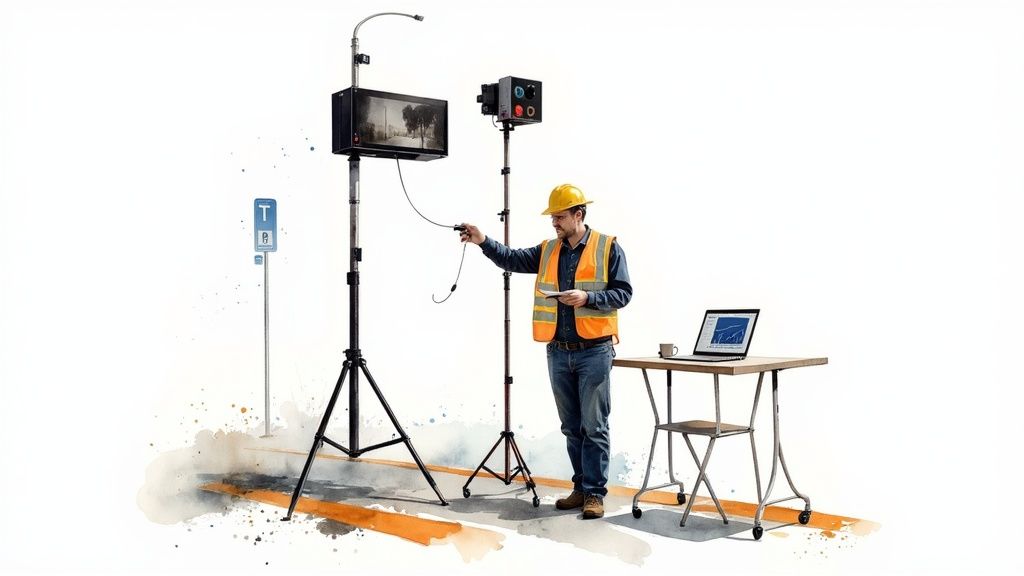
- Automated Traffic Counts: Setting up discreet pneumatic tubes across roads to automatically count vehicles over a set period, often for several days. This captures the rhythm of typical weekday and weekend traffic volumes.
- Manual Turning Counts: Stationing surveyors at key intersections during peak hours to manually record every vehicle turning left, right, or going straight. This data is vital for understanding how well an intersection is performing under pressure.
- Safety History Analysis: Sourcing and analysing historical crash data from Waka Kotahi NZ Transport Agency. This helps flag any existing safety issues or black spots in the area that a new development could potentially make worse.
- Site Observations: Personally visiting the site to get a feel for it and assess things like pedestrian pathways, sight lines from driveways, and the proximity of bus stops and cycle lanes.
From Data To Digital Simulation
Once all this raw data is in hand, it fuels the next stage: sophisticated computer modelling. This is where the magic happens. Engineers can test different scenarios and accurately predict future conditions without a single cone ever being placed on the road.
This modelling phase is the predictive heart of a traffic impact assessment. Engineers use advanced software to build a digital twin of the road network, allowing them to simulate future traffic flows and precisely measure the effects of a new development.
These powerful tools can forecast everything from potential queue lengths at traffic lights to the subtle impacts on pedestrian safety. Modern assessments in New Zealand also go beyond just vehicle movements to consider wider environmental factors. For instance, some studies use advanced models like the Traffic Impact Model (TIM) version 3.1 to predict air pollutant concentrations from roads, which can cover all urban areas at a 10m resolution for incredibly precise health risk evaluations. You can learn more about these advanced traffic modelling techniques used in NZ and how they contribute to a fuller, more responsible picture of a project's real-world impact.
Exploring Common Mitigation Solutions
A traffic impact assessment doesn’t just point out problems. Its real value is in proposing practical, effective solutions to make your project work.
When a TIA flags potential traffic issues, a huge part of the report is dedicated to recommending mitigation measures designed to sort them out. These are the tangible actions that help ensure your development can move ahead smoothly and safely.
These recommendations typically fall into two buckets, each tackling a different aspect of your project's footprint. Getting your head around both is crucial for developers, as these measures often translate directly into project costs and can become legally binding conditions of your resource consent from the council.
On-Site Measures: Getting Your Own House in Order
First up are the improvements within the boundaries of your own property. These are called on-site measures, and they're all about managing traffic flow and safety right where your development meets the public road. Your project team has direct control over getting these things built during the design and construction phases.
Common examples of on-site mitigation include:
- Smarter Access Design: This means carefully planning entry and exit driveways to give drivers clear sight lines, preventing nasty surprises or conflicts with pedestrians and passing traffic.
- Enough Car Parking: Providing the right number of on-site parking spaces to meet the demand your project will create. This stops overflow parking from clogging up local streets for the neighbours.
- Secure Bicycle Facilities: Including dedicated, secure bike parks and even end-of-trip facilities like showers to encourage staff and visitors to cycle instead of drive.
- Loading Zone Management: For commercial properties, this means creating well-designed loading and service bays that keep delivery trucks off the main road and out of everyone's way.
Think of on-site measures as getting your own house in order first. They are the foundational steps you take on your own property to ensure you aren’t creating a new headache for the wider community.
Off-Site Upgrades for the Wider Network
The second category involves off-site measures. These are upgrades made to the surrounding public transport network—things like roads, intersections, and footpaths. While these happen outside your property line, your development is required to contribute to or fully fund them because it’s the source of the new traffic impact.
These upgrades are often a point of negotiation with the local council and Waka Kotahi. For instance, a new retail complex generating a heap of extra traffic might be required to fund a roundabout upgrade at a nearby intersection.
Other common off-site solutions include adding a new pedestrian crossing to improve safety, installing a right-turn bay to stop queues from backing up, or upgrading traffic signals to handle the increased vehicle flow more efficiently. This part of the TIA is where the report's findings are translated into real-world infrastructure improvements that benefit everyone.
Engaging a Consultant and Planning Your Next Steps
The very first step in navigating the traffic impact assessment process is a big one: finding and engaging a qualified traffic engineering consultant. It's so important to get this specialist on your team as early as you possibly can in your project's life.
Think of them less as someone who just writes a report, and more as a strategic partner. Bringing them in early helps you see around corners—anticipating council requirements, dodging expensive redesigns, and preventing your resource consent application from getting stuck in a costly delay. A proactive chat now is always cheaper than a reactive fix later.
Preparing for Your First Meeting
To make that first conversation count, you'll want to have some key project details ready to go. Your consultant needs a clear picture of what you're trying to achieve to give you solid advice and a realistic fee proposal.
Try to have this information handy:
- A Detailed Project Description: Lay out what you're planning to build. Is it a handful of new townhouses, a childcare centre, or a big commercial hub? The more detail you can share, the better.
- Concept or Site Plans: Architectural drawings or even just some early sketches are incredibly helpful. These visuals give the engineer a concrete idea of the proposed layout, where cars will get in and out, and the overall scale of things.
- Your Desired Timeline: Let them know when you're hoping to lodge the resource consent application. This helps them fit the TIA work into your schedule.
If there's one thing to take away, it's this: treat this initial engagement as a strategic investment. Getting an expert on board from the get-go paves the way for a much smoother project approval, saving you a heap of time and money down the track.
Understanding Costs and Timelines
So, how much will a TIA cost and how long will it take? The honest answer is, it depends entirely on your project's complexity. A small-scale development might only need a pretty straightforward assessment, while a massive subdivision will require some serious data collection and traffic modelling.
As a general guide, a simple TIA for a small project might take a few weeks. In contrast, a comprehensive report for a major development could easily take several months to pull together. Your consultant will give you a clear estimate after they've reviewed your project's specifics, so there are no nasty surprises. This early planning helps clarify what is traffic impact assessment in the context of your specific needs, making the whole path to approval much clearer.
For Kiwi professionals looking to build their own expertise across different project types, you can explore the career-focused courses we offer to expand your capabilities.
Common Questions We Hear About TIAs
Even when you've got a good handle on the process, there are always a few specific questions that pop up for developers and property owners. Let's tackle some of the most common queries about what a traffic impact assessment really involves.
Does Every Single New Development in New Zealand Need a TIA?
Not always, no. The need for a TIA is usually triggered by the sheer scale of your project and, crucially, the specific rules laid out in your local council’s District Plan. A small-scale project that's only going to create a tiny bit of new traffic might get a pass.
But for the most part, if you're planning any commercial, industrial, or medium-to-large residential development, you can bet a TIA will be on the cards. Your best first move is always to check the council rules or simply have a quick chat with a traffic consultant.
How Long Is a Traffic Impact Assessment Actually Good For?
Think of a TIA as a snapshot in time. It’s prepared for a specific resource consent application and is valid for that process, based on the road conditions and your proposed plans right now.
If your project changes in a big way—say, you decide to add more units or completely change the land use from retail to apartments—the council will almost certainly ask for an updated assessment. Likewise, if the council undertakes major upgrades to the surrounding road network, that could also make your original report outdated.
A TIA that flags significant traffic problems won't automatically kill your project. Its real job is to find these issues early so that smart, effective solutions can be designed and folded into your plans.
A good traffic engineer won't just dump problems on your desk. They'll work with you to propose practical fixes, like better access points, new footpaths, or intersection upgrades, that solve the impacts their report has identified.
At Prac Skills, we create practical, career-focused online courses designed to help Kiwis get ahead. Whether you're building a business or chasing a passion, our content is made for the New Zealand market. Explore our courses at Prac Skills and pick up the skills you need to thrive.