
February 2, 2026
.webp)
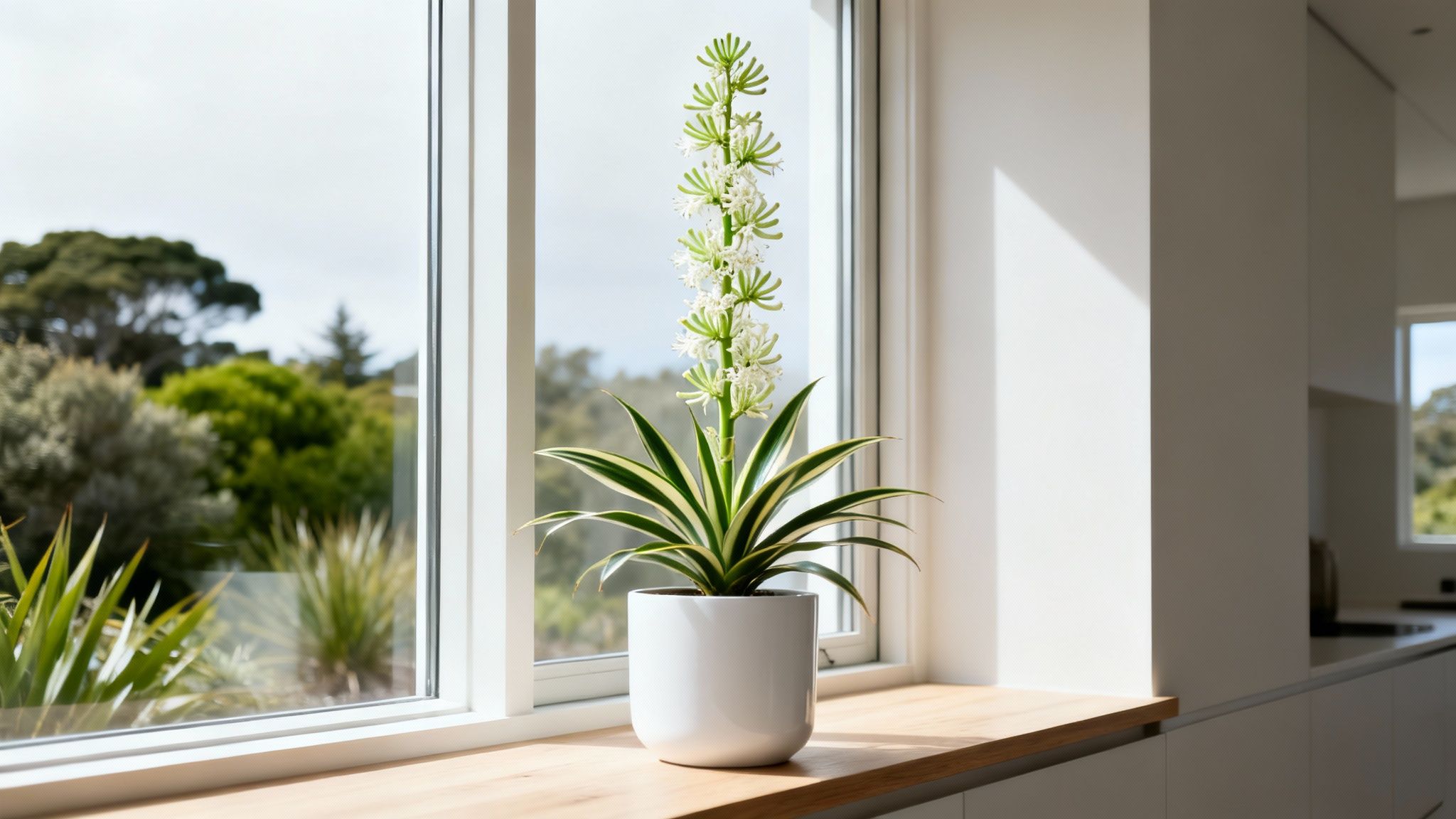
A Guide to Rare Snake Plant Flowers in New Zealand Homes
Unlock the secrets to snake plant flowers. Learn what causes these rare blooms in NZ, how to identify them, and get expert tips to encourage your own.
Practical Skills
minutes
Yes, your famously tough snake plant can flower, but spotting one in a New Zealand home is a genuinely rare event. If you do see these delicate blooms, it’s usually a sign your plant is under a mild, positive kind of stress, which kicks its survival instincts into gear to reproduce.
The Surprising Truth About Snake Plant Flowers

For most Kiwi plant owners, the Dracaena trifasciata is all about those striking, architectural leaves and its nearly indestructible reputation. The idea that it could suddenly send up a delicate flower stalk often comes as a complete shock. It’s an event that transforms a familiar piece of decor into a fascinating botanical display, seemingly overnight.
This rarity is exactly what makes discovering snake plant flowers so special. It’s not a predictable, seasonal bloom you can set your calendar by, like a daffodil. It’s more of a delightful bonus—a secret reward from a plant that usually asks for very little in return.
Why Is Flowering So Uncommon in New Zealand?
The main reason you might go years without seeing a flower is simple: your plant is probably too comfortable. Snake plants originally come from West Africa, and flowering is often a reaction to conditions that echo their natural habitat, including spells of mild neglect. When a plant gets a bit root-bound or experiences a shift in light or watering, it can take these as cues to start reproducing.
Here in New Zealand, we overwhelmingly grow snake plants as indoor foliage plants. This controlled environment partly explains why flowering is so rarely reported here compared to warmer parts of the world. In practice, our indoor conditions keep the plant so content that many Kiwi owners can go 5–10 years without ever seeing a single flower spike.
When flowering does happen in an NZ home, it’s usually an anecdotal, unpredictable surprise rather than an annual event. This fits perfectly with the plant's reputation as a foliage workhorse, not a floral feature.
In essence, happy, well-cared-for snake plants often have no reason to flower. The appearance of blooms means your plant is mature and healthy enough to handle the energy-intensive process of reproduction.
If you’re keen to nurture your green thumb, digging into the different sides of plant care can be incredibly rewarding. For those looking to really grow their knowledge, our practical horticulture courses are a fantastic way to learn more.
Ultimately, seeing a snake plant flower is a game of patience and providing just the right conditions. It’s a testament to the plant’s incredible resilience and a little reminder that even the toughest greenery has a delicate side waiting to be revealed.
What to Look For: Spotting Snake Plant Flowers and Their Scent
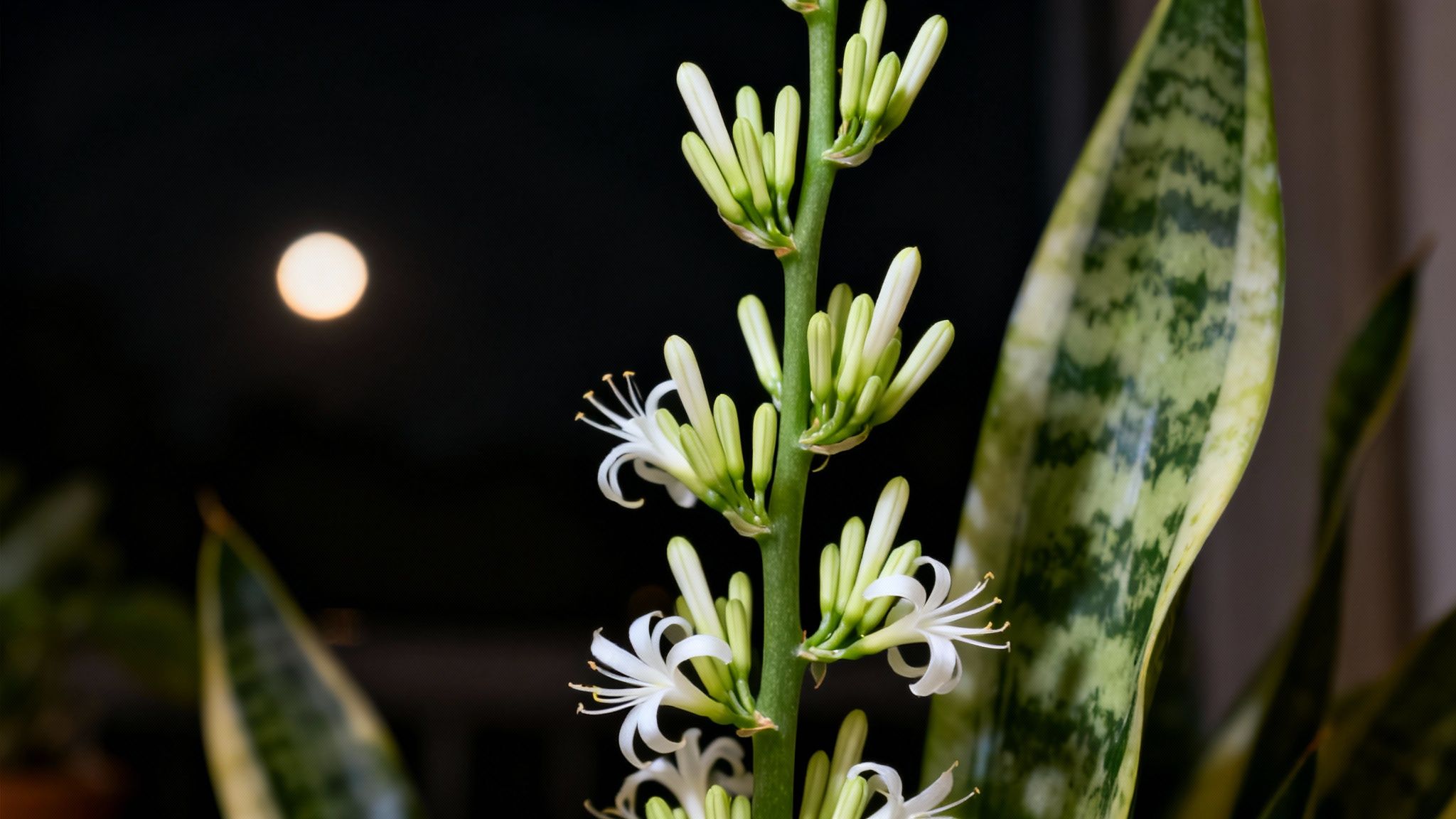
When a snake plant finally decides to bloom, the first clue is often a long, slender spike shooting up from the centre of a leaf rosette. This stalk can get surprisingly tall, sometimes reaching up to a metre high. It’s a sight that can genuinely take you by surprise, especially on a plant known for its stoic, leafy good looks.
This initial growth is really just the warm-up act. Before you know it, delicate buds will start forming in dense clusters all the way up the stalk. Don’t expect big, showy petals; snake plant flowers are far more subtle and elegant than that.
What the Flowers Actually Look Like
The blooms themselves are small, thin, and tubular, usually a creamy white or greenish-white colour. They create a really soft, lovely contrast against the plant’s bold, dark green leaves. When they finally open, their petals tend to curl back, almost like tiny, star-shaped lilies.
One of the most interesting things about them is that they're a bit of a night owl. The blooms often stay closed up during the day, choosing to open as dusk settles in. This little nighttime display is all about their pollination strategy back in their native habitat.
You might also notice a sticky, sweet-smelling nectar coating the flowers and stalk. It can be a little messy, but it's a clear sign that your plant is in full reproductive mode and feeling its best.
That Unforgettable Fragrance
Honestly, the real showstopper isn't what you see, but what you smell. Snake plant flowers are famous for their incredibly potent and sweet fragrance, which is at its absolute strongest at night. This is the plant’s clever way of attracting its natural pollinators, like moths.
Many people find the scent familiar, comparing it to some of the most beloved floral aromas out there. Think of a rich blend of:
- Jasmine: With those heady, sweet notes that can fill an entire room.
- Lily: A powerful and sophisticated floral perfume.
- Honeysuckle: That sweet, nectar-heavy fragrance that’s both comforting and delightful.
This powerful scent is often the very first clue that your plant is even blooming. It’s not uncommon for owners to catch a beautiful floral smell in their home for a day or two before they finally track down the source.
For instance, a Kiwi plant lover shared a story about hunting for the source of a lovely, sweet smell that filled their living room every evening. After checking for open windows and air fresheners, they finally discovered the delicate white flowers unfurling on a long-neglected snake plant tucked away in a corner.
This whole sensory experience is what makes spotting snake plant flowers such a memorable event. The combination of the unexpected visual—a graceful stalk rising from such a tough plant—and that captivating nighttime fragrance makes it a rare and wonderful reward for any plant enthusiast.
How to Encourage Your Snake Plant to Flower
While seeing a snake plant bloom is a rare treat, you can absolutely nudge your plant in the right direction. It’s not about following a rigid checklist, but more about recreating the specific conditions that signal to the plant that it's time to shift its energy into flowering.
The trick is to apply a little bit of positive stress. You want to create just enough of a challenge to trigger its natural reproductive cycle without actually harming the plant. Think of it as mimicking a change in its natural environment, a cue that a mature, healthy plant will respond to by producing those incredible flowers. These little nudges are perfectly suited for our indoor conditions here in New Zealand.
Let It Get a Little Crowded
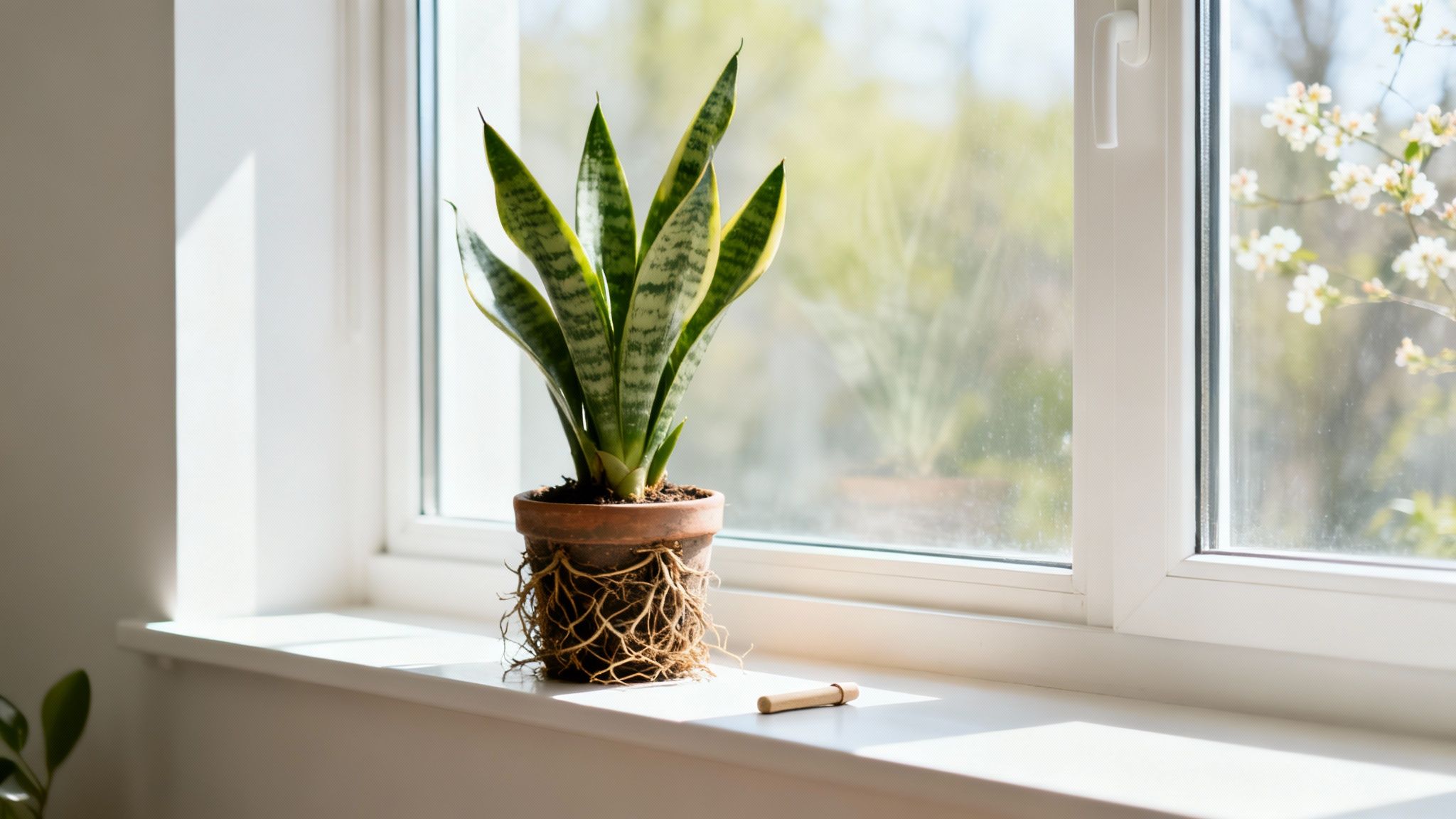
One of the most reliable ways to encourage flowering is to let your snake plant get slightly root-bound. When the roots fill the pot and don’t have much room left to grow, the plant gets the message that its resources are limited. This confinement can kickstart a survival instinct to flower and produce seeds for the next generation.
A plant swimming in a spacious pot is just too comfortable and has no real reason to bloom. A snugger fit, on the other hand, is closer to how they'd grow in a tight rock crevice in their native habitat. Just keep an eye on it—you want it snug, not so pot-bound that the pot is cracking or the plant looks distressed.
Increase the Light Exposure
Snake plants are legendary for their tolerance of low light, but if you want any shot at seeing flowers, they need a whole lot more. Moving your plant to a brighter spot is a non-negotiable step. For those of us in NZ, a spot near a bright, north-facing window is usually the sweet spot, giving it plenty of indirect sun without the scorching afternoon rays.
Try to give it at least 6-8 hours of bright, indirect light each day. If you see the leaves starting to lean towards the window, you know you’re doing something right. That extra light provides the fuel needed for the energy-intensive process of sending up a flower stalk.
A classic Kiwi scenario is a snake plant that has lived happily in a dim hallway for years. The owner moves it to a sunny living room for a season and is suddenly surprised with a flower stalk for the very first time. It's often that simple.
Tweak Your Watering Schedule
Simulating a bit of a drought is another powerful trigger. Snake plants are pros at storing water in their leaves, so holding back on watering for a bit won't hurt a healthy plant. This mimics the dry seasons they experience in the wild, which are often followed by a rainy period that prompts flowering.
As spring approaches, try stretching out the time between waterings. Let the soil dry out completely, and then wait another week or two before giving it a drink. This dry spell can be the final push it needs. When you go back to a more regular watering schedule in spring, the plant might just thank you with a bloom.
Making these subtle adjustments to a plant's environment is a key part of horticulture. For anyone looking to get a deeper understanding of plant biology and cultivation, exploring something like our Certificate in Horticulture programme can provide fantastic, in-depth knowledge on how to get the best out of all your plants.
The table below breaks down the simple shifts you can make from everyday care to flowering-focused care.
Care Adjustments to Promote Flowering
To help clarify these changes, here’s a quick comparison of standard snake plant care versus the gentle tweaks aimed at encouraging blooms.
These adjustments create the perfect storm of conditions that tell a mature snake plant it's an ideal time to reproduce.
Ultimately, patience is your best friend here. A young, immature plant simply won't bloom, no matter how perfect the conditions are. But by combining these three elements—a snug pot, more light, and a drier spell—you give a mature plant every reason to show off with those rare and wonderful flowers.
Caring for Your Snake Plant After It Blooms
So, your snake plant put on its rare flower show—what an exciting moment! But what comes next? Flowering takes a massive amount of energy out of any plant, and a little post-bloom care ensures your Dracaena trifasciata bounces back and continues to thrive for years. The good news is, the aftercare is just as straightforward as its usual low-key maintenance.
Once the novelty wears off and the delicate flowers begin to fade, you'll notice the entire stalk starting to wither and turn brown. Don't panic; this is a completely natural part of the cycle. It’s the plant's way of saying it’s done with reproduction for now and is ready to get back to focusing on leaf and root growth. While leaving the spent stalk on won’t hurt anything, it can look a bit untidy.
Pruning the Spent Flower Stalk
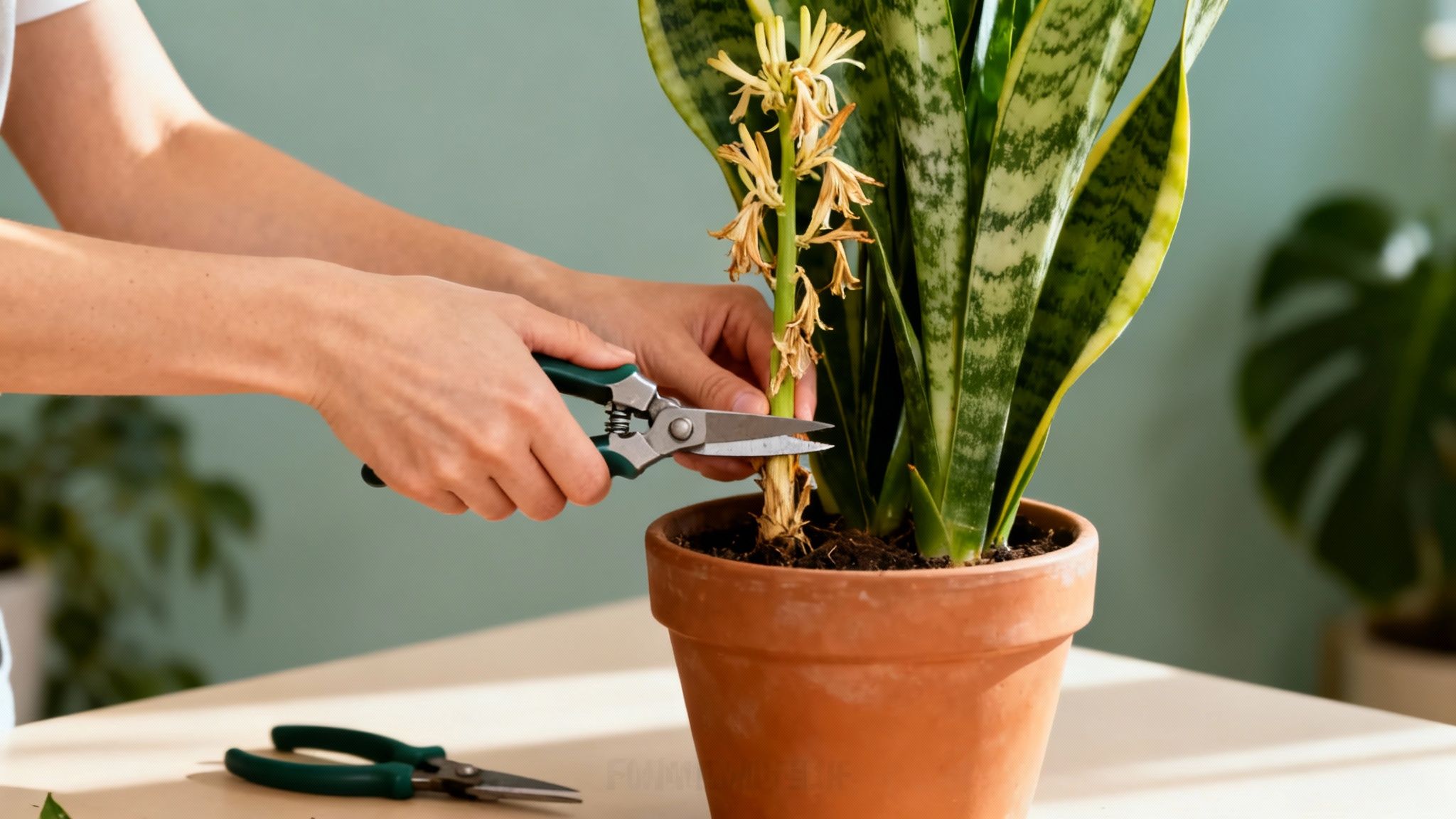
When that flower stalk is looking dry, brown, and crispy, it’s time for a little trim. This simple clean-up helps the plant conserve energy and keeps it looking sharp. It’s a quick, easy job that only needs one tool.
Here’s the right way to do it:
- Grab the right tool. A clean, sharp pair of scissors, secateurs, or snips will do the trick. I always give the blades a quick wipe with rubbing alcohol first, just to be safe and avoid introducing any nasty bacteria to the plant.
- Make one clean cut. Trace the stalk all the way down to where it emerges from the base of the plant. Snip it off with a single, clean cut as close to the soil as you can get without nicking any of the surrounding leaves.
And that’s it! Removing the old stalk lets the plant redirect all its resources back into new growth.
Post-Flowering Recovery Care
After the snip, your snake plant will appreciate a bit of support to help it recover. It doesn’t need anything intensive, but a few tweaks to its routine can make a real difference. Think of it as helping a friend recover after running a marathon.
A light feed with a balanced, diluted liquid fertiliser is a great way to replenish the nutrients it used up during flowering. Just wait until its next scheduled watering, then add the fertiliser according to the package directions—usually at half-strength for succulents. After that, you can go right back to your normal routine of letting the soil dry out completely between drinks.
A common question I hear is whether a snake plant dies after flowering. You can relax—unlike some succulents such as agave, snake plants are not ‘monocarpic’. This means they don’t die after blooming and can absolutely flower again in the future when conditions are right.
The individual rosette that sent up the flower might not produce new leaves, but the plant as a whole will keep pushing out new pups and expanding. To keep your snake plant happy, whether it's just flowered or not, getting the succulent care basics right is key. If you're looking for more general advice, this comprehensive succulent garden care guide offers some excellent tips that apply to a whole range of succulents. By providing this simple aftercare, you’re setting your snake plant up for continued health and, just maybe, another surprise bloom in a few years.
Flowers, Seeds, and Garden Safety in New Zealand
It's always a surprise when a snake plant decides to flower, but for many Kiwi gardeners, that surprise is quickly followed by a very practical question: what about the seeds?
While the delicate flowers can technically produce small, orange-red berries filled with seeds, the odds of this happening inside a New Zealand home are next to zero. Snake plants rely on specific nighttime pollinators, like certain moths, to get the job done. Since those pollinators aren't fluttering around our living rooms, you can rest easy knowing seed production won't be an issue.
The real biosecurity concern in New Zealand isn't the seeds, but something far more mundane.
The Real Risk: Vegetative Spread
The main way snake plants multiply is through their incredibly tough underground rhizomes. It’s how one plant can quickly become a dense, ever-expanding clump. This robust growth is precisely what makes the plant an ecological risk if it ever escapes into the wild.
From a biosecurity perspective, a snake plant flowering on a shelf in Dunedin is worlds away from one flowering outdoors in a warmer, more tropical climate. Globally, Dracaena trifasciata is known as a 'very aggressive invasive plant'. It can form impenetrable thickets using its rhizomes, and even broken bits of leaf can take root.
For us here in New Zealand, the much more realistic threat is vegetative escape—bits of the plant getting into the environment through dumped garden waste.
The key takeaway for any responsible Kiwi gardener is simple: don't worry about the rare flowers. Instead, focus on managing and disposing of the plant itself. A single piece of root or a discarded leaf cutting is all it takes to start a new colony.
Proper Disposal and Management in NZ
Making sure your snake plant doesn't become an ecological headache is surprisingly easy. It just comes down to being mindful of how you get rid of any plant material, whether it’s a few pruned leaves or the whole plant.
Safe Disposal Practices:
- Never Dump Green Waste: This is the golden rule. Never, ever toss your snake plant cuttings or unwanted plants into local reserves, parks, or along the roadside. This is exactly how invasive species get their start.
- Use Your Green Bin: For small trimmings, your local council's green waste collection is the perfect solution. The commercial composting process gets hot enough to completely destroy the plant material, rhizomes and all.
- Dry It Out: If you have larger pieces or a whole plant to dispose of, you can leave them on a concrete path or seal them in a bag in the sun for a few weeks. Once the plant is totally brown, dry, and brittle, it can no longer regrow and is safe to pop in your compost or green bin.
Keeping Pets Safe Around Your Garden
Garden safety isn't just about the environment; it's also about our furry family members. Snake plants are mildly toxic to cats and dogs if they decide to have a chew, which can lead to an upset stomach. Most pets tend to leave them alone, but it’s still smart to place them out of reach of curious puppies or kittens.
If you’re on the hunt for more pet-friendly options, we've put together a handy guide on houseplants that are safe for cats.
Thinking about the bigger picture of garden safety also means considering the products you use. If you're tackling pests, especially outdoors, opting for pet-safe pesticides creates a healthier space for everyone. By managing our plants thoughtfully, we protect both our local ecosystems and the pets we love.
Got Questions About Snake Plant Flowers? We've Got Answers
So you've learned the secrets to encouraging your snake plant to bloom, but a few nagging questions might still be floating around. That's completely normal. Let's tackle some of the most common queries we hear from Kiwi plant enthusiasts about this fascinating, and sometimes surprising, event.
Think of this as your go-to guide for those "what if" moments with your snake plant.
How Often Do Snake Plants Actually Flower in New Zealand?
Honestly? Very rarely, especially for plants living indoors. The stable, comfy conditions inside most Kiwi homes mean the plants are often too content to feel the mild stress that triggers blooming. It's definitely not a yearly thing. In fact, many people can own a happy, thriving snake plant for over a decade and never see a single flower.
The best way to think about snake plant flowers is as a rare, special surprise rather than a regular occurrence. If your plant never blooms, it doesn’t mean you’re a bad plant parent—it probably just means it's perfectly happy right where it is.
Is My Snake Plant Dying If It Flowers?
You can breathe a huge sigh of relief—absolutely not! This is a super common fear because some succulents, like agaves, are monocarpic. That’s a fancy term meaning they flower just once and then die off.
Thankfully, snake plants are polycarpic. They can flower multiple times throughout their very long lives without any issue. While the individual rosette that sent up the flower stalk might stop growing new leaves from its centre, the rest of the plant carries on, pushing out new pups from the rhizomes at its base. The plant itself is totally fine.
Should I Chop the Flower Stalk Off?
While it’s in full bloom, definitely leave it be! The whole point is to enjoy the delicate flowers and their surprisingly powerful, beautiful scent. The show typically lasts for a few weeks, so make the most of it.
The right time to get the pruners out is after the flowers have faded and the stalk itself starts to wither and turn brown.
- Why bother pruning it? Getting rid of the spent stalk instantly tidies up your plant’s look. More importantly, it signals to the plant that it's time to redirect its energy back into growing new leaves and strengthening its root system.
- How do I do it? Grab a clean, sharp pair of scissors or secateurs. Make one clean snip as close to the base as you can without nicking any of the surrounding leaves. Easy as that.
With these key questions answered, you can feel much more confident looking after your snake plant, whether it decides to surprise you with a bloom or simply continues to be a stunning leafy feature in your home.
Ready to turn your green thumb into some serious plant expertise? Prac Skills NZ offers practical, NZ-focused horticulture courses that build real-world capability. Explore our courses today and get growing.